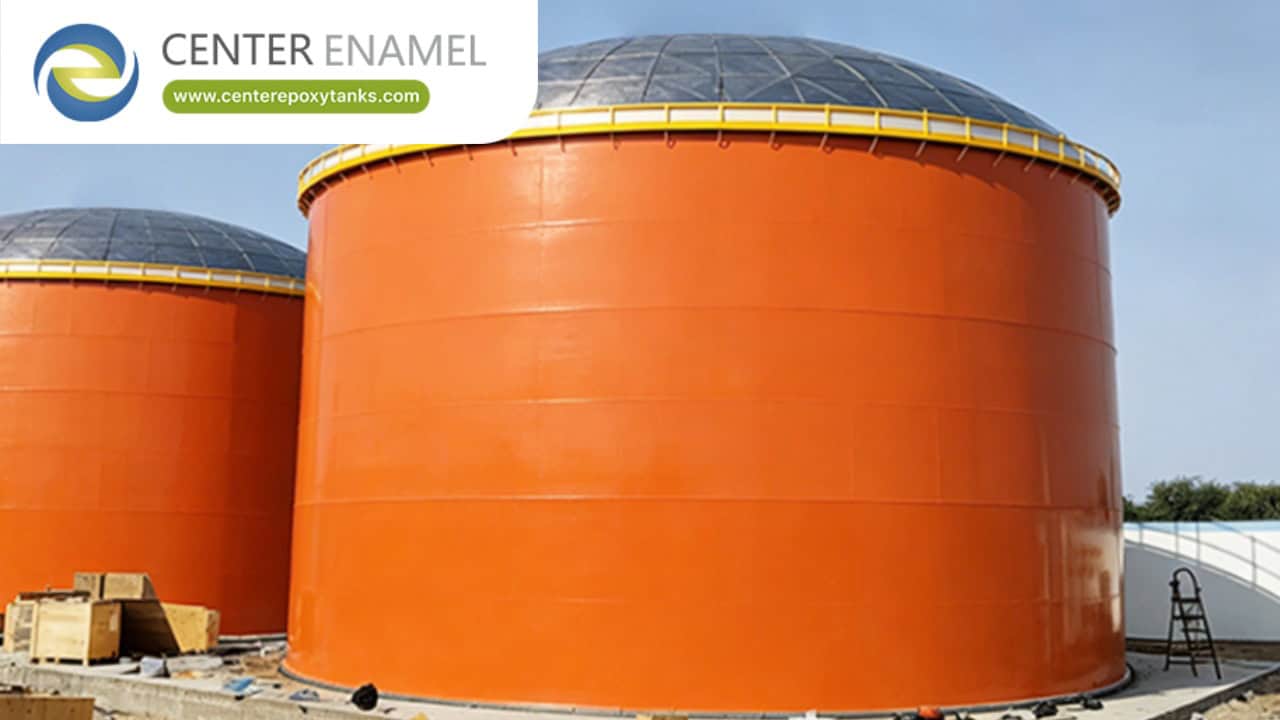
Aluminum Dome Roof Cost for Storage Tanks
Almost nobody wants a list of dome prices. What a cost engineer needs is the set of variables that move the price, so that a budget can be defended and a quotation can be tested. This article breaks the cost of an aluminium dome roof into six drivers, works one of them through a real tank configuration from our verified project record, and explains which driver explains most of the variance between competing quotes.
Why a Single Price Figure Is Not a Useful Answer
A dome quotation is not a product with a catalogue price. It is a structural system priced against a specific diameter, a specific load case, a specific site and a specific scope, and any figure quoted without those four things is either a budget placeholder or a comparison of two different scopes. Market listings on B2B platforms illustrate the problem well: they show unit prices spanning several orders of magnitude for nominally similar aluminium domes, because the diameter, the material standard, the certification package, the accessory list and the inclusion or exclusion of erection all vary between listings.
This is not an argument against market benchmarks. Benchmarks are useful for sanity-checking a budget. The argument is against using them in place of a cost model. The six drivers below are the ones that, in our experience of enquiry handling, account for the large majority of the spread between a low quotation and a high one for what is nominally the same tank.
The Six Cost Drivers, in the Order They Usually Matter
Driver | What it is | How it moves cost | How to fix it before pricing |
1. Diameter and dome surface area | The plan area and the resulting developed surface area of the triangulated shell | The dominant physical driver. Panel and node count, and the number of rings, all scale with it | Confirm the internal diameter from as-built drawings and site measurement, not from a nameplate |
2. Design load case | Site wind speed, snow load, seismic requirement and the resulting shell and node design | Higher load cases mean heavier section, more nodes and a different structural scheme | Fix one site load basis for the whole project and write it into the enquiry |
3. Erection method and access | How the dome reaches the tank: bottom-up assembly from inside, scaffold-based, or jacked from below | Determines labour content, crane and access equipment, and whether the tank must be drained | Survey the delivery route, the manway size and the crane availability before quoting |
4. Accessories and penetrations | Manholes, nozzles, ventilation, platforms, walkways, lightning protection, instrumentation | Each penetration is a sealed detail and a structural opening; the list is rarely short | Issue an accessory schedule with the enquiry and freeze it before fabrication |
5. Site and logistics | Shipping, customs, inland transport, local labour rates, site facilities, temporary works | Can be the largest single line on an export project and is the line most often excluded | State the delivery terms, the destination and who provides site facilities |
6. Compliance and documentation scope | Calculation package, independent review, third-party inspection, material certificates, warranty | Modest as a line item but it decides whether the roof is accepted by the client's own assurance process | Write the required deliverables into the enquiry as a list, not as a quality adjective |
The ordering matters. Diameter is the biggest physical driver and is the one most often wrong, because it is taken from a nameplate rather than from the as-built shell, and tank shells are not always built to nominal. The load case is the second because it is frequently the first thing settled by assumption rather than by the site design standard. The remaining four drivers are where the gap between competing quotations actually opens, and all four of them are settled by the buyer, not the supplier.
Worked Configuration: What the Variables Look Like on a Real Tank
To make the model concrete, take a configuration from our verified project record: a single glass-fused-to-steel bolted tank in Mexico, 27.52 m in diameter with a 10.2 m shell height and 6,060 cubic metres of capacity, recorded in June 2026 with an aluminium dome roof.
Reading the drivers against that tank is instructive. The diameter fixes the dome surface area and therefore the panel and node count, and also fixes the fraction of the total cost that is structure rather than accessories. The 27.52 m diameter places the tank in the middle of the published market bands rather than at the top of them: a 2025 third-party market study on aluminium dome covers places a typical 30 m diameter installed dome in the region of 80,000 to 180,000 US dollars, and reports 900,000 to 2.2 million US dollars for 90 m diameter crude oil storage, with very large systems above 110 m reaching 2.5 to 4.5 million US dollars. Those are third-party market bands for an installed scope, not a quotation from this company, and the study notes that cost varies with tank diameter, design specification, local labour cost and access conditions.
The height matters less than the diameter for the roof, but it governs the erection difficulty, because a 10.2 m shell changes how a bottom-up assembly is staged. The recorded application for this project was drinking water, and the aluminium dome was specified on a glass-fused-to-steel shell rather than a welded steel shell, which is itself a cost driver because the attachment detail to a bolted shell differs from a welded ring.
Normalisation: How to Compare Your Own Numbers
Once you have two or more quotations, the useful move is to normalise them onto a common basis before comparing. The simplest normalisation that carries most of the value is to express each price per square metre of developed dome surface area, computed from the same diameter. That single step removes the effect of different panel counts and different geometry conventions, which is where a lot of apparent price difference comes from.
Two further normalisations are worth making. The first is scope normalisation: build a table of what each quotation includes and what it excludes, and note the difference as a cost item rather than as a footnote. If one quote includes erection and site labour and another includes only supply, the per-square-metre numbers are not comparable at all, and the difference is often larger than any difference in the structure itself. The second is schedule normalisation: convert each quotation to a common delivery basis and add the cost of the schedule difference separately, because an accelerated delivery has a price that is rarely stated as such.
What a Quotation Should State in Writing
If a quotation does not answer the following, it cannot be evaluated properly, and the missing answers are the origin of most cost disputes. The governing diameter and whether it is internal or external. The design load case, stated as numbers, not as a phrase such as to code. The material standard for the shell and the closure panels. The design code list and who performed the calculations. The accessory list, itemised. Whether erection, site labour, temporary works, shipping and customs are included. The delivery terms and the estimated lead time. The warranty scope, and critically whether the warranty references the actual site load case rather than a generic condition.
Our own published warranty material makes that last point explicitly: a credible dome warranty should reference the verified snow and wind case for the site so that the coverage matches the real conditions, and should be backed by fabrication drawings and load reports the operator can audit. A supplier who cannot state the load case their warranty is tied to is telling you the warranty is tied to a nominal case, which may or may not be your site.
The Lifecycle Argument, Stated Honestly
The most common commercial argument for aluminium over steel is lifecycle rather than purchase cost, and it is genuinely strong, but it should be used carefully. The same 2025 third-party study that provides the price bands reports that aluminium domes offer 25 to 40 percent lower total cost of ownership over a 30-year lifecycle, attributed to eliminated painting costs and minimal maintenance requirements. The same source reports that aluminium panels are around 60 to 70 percent lighter per square metre than the steel equivalent and that the material needs no repainting cycle.
Two qualifications apply. First, the figure depends on the steel alternative actually needing repainting on the schedule assumed, which is a site fact rather than a universal truth. Second, lifecycle comparisons must be made over the same horizon and must include the operating cost of access for the steel inspection and painting work, which is often the larger term in a live plant because it requires entry, isolation and sometimes product management. Neither qualification weakens the argument; both of them make it defensible in a capital review, where an unsupported percentage usually does not survive.
Case evidence disclosure: the worked configuration in this article is the Mexico drinking water project (1 unit, 27.52 m diameter x 10.2 m height, 6,060 m3, glass-fused-to-steel bolted tank with an aluminium dome roof, recorded June 2026). The project record contains diameter, height, volume, quantity, date, application, shell material and roof type; it contains no price, no quotation value and no cost data, so no project cost is stated or implied anywhere in this article. The price bands quoted are third-party market figures attributed in the text, not Centre Enamel prices.
The price of an aluminium dome roof is not a number you look up; it is a function of six variables, five of which you control before the quotation is issued. Fix the diameter from as-built data, fix one site load basis, freeze the accessory schedule, decide the erection method, state the delivery scope, and list the documentation you require. What remains is a defensible budget and a testable quotation. Send us the tank data and we will return the cost-driver breakdown for your specific scope, with the assumptions stated.
Frequently Asked Questions
Q: How much does an aluminium dome roof cost per square metre?
A: There is no reliable single figure, because the cost per square metre rises or falls with the load case, the accessory count and the erection method, and because published market bands describe complete installed scopes that include items which are sometimes excluded from quotations. The practical approach is to normalise competing quotations onto a common dome surface area and a common scope, then compare. The cost-driver breakdown in this article is designed to do exactly that.
Q: What is the biggest cost driver on a dome roof?
A: Diameter, because panel and node count scale with the developed surface area of the triangulated shell, and because diameter also determines the erection method and the proportion of the cost that is structure rather than accessories. Diameter is also the variable most frequently wrong, because it is often taken from a nameplate rather than from the as-built shell, which means the single most valuable action before pricing is to verify it.
Q: Is aluminium actually cheaper than steel over the asset life?
A: The purchase price of aluminium is normally higher than that of a painted steel roof. The lifecycle comparison depends on how often the steel roof would be recoated and what access to that work costs. A 2025 third-party market study reports 25 to 40 percent lower total cost of ownership for aluminium domes over a 30-year lifecycle, attributing the difference to eliminated painting and minimal maintenance. Treat that as an attributed third-party figure and test it against your own repainting interval and access cost before relying on it.
Q: Should accessories be decided before or after the quotation?
A: Before, and they should be frozen before fabrication rather than before quotation. Every manhole, nozzle, vent and platform is a structural opening with a sealed detail, so the accessory list changes the structure, the price and the erection sequence. Accessory decisions taken late are the most common cause of change orders on dome projects.
Q: How do I know a quotation is comparing like with like?
A: Ask for the governing diameter, the load case as numbers, the itemised accessory list, the design code list, an explicit statement of what is excluded including erection and shipping, the delivery terms, and the warranty scope tied to the site load case. If any of those are missing, the prices are not comparable and the gap between them may be scope rather than value.
Q: Does the cost depend on whether the tank is new or existing?
A: It can, in two directions. Retrofitting a dome onto an existing shell avoids shell construction but requires verification of the shell ring, the foundation and the delivery route, and may require shell modification or reinforcement. A new-build arrangement can integrate the attachment detail more efficiently. Because the aluminium structure is a bolt-together assembly rather than a field-welded fabrication, in-service installation is often feasible, but the assessment has to happen before the budget is fixed rather than after.
Work With Center Enamel
Center Enamel is the trading name of Shijiazhuang Zhengzhong Technology Co., Ltd, established in 2008 and based in Shijiazhuang, Hebei Province, China. The company manufactures glass-fused-to-steel bolted tanks, fusion-bonded epoxy coated tanks, stainless steel and welded steel tanks, pressure vessels, aluminium geodesic dome roofs and floating roof systems. Aluminium dome design work is carried out against AWWA D108, API 650, ADM 2015, ASCE 7-10 and IBC 2012, and the broader product range is covered by ISO 9001, NSF/ANSI 61, CE/EN 1090, ISO 28765, WRAS and FM approvals. The company reports 30,000 installed projects and an annual output of 300,000 enamel steel plates, with technical support delivered through an international distributor network and a stated 24-hour response commitment.
If your project involves tank roofs, floating decks or the shells that carry them, send the tank diameter, shell height, product, operating temperature and site design loads. We will return a preliminary structural concept, the applicable design code basis, and a written scope that separates what is included from what the site contractor must provide.


