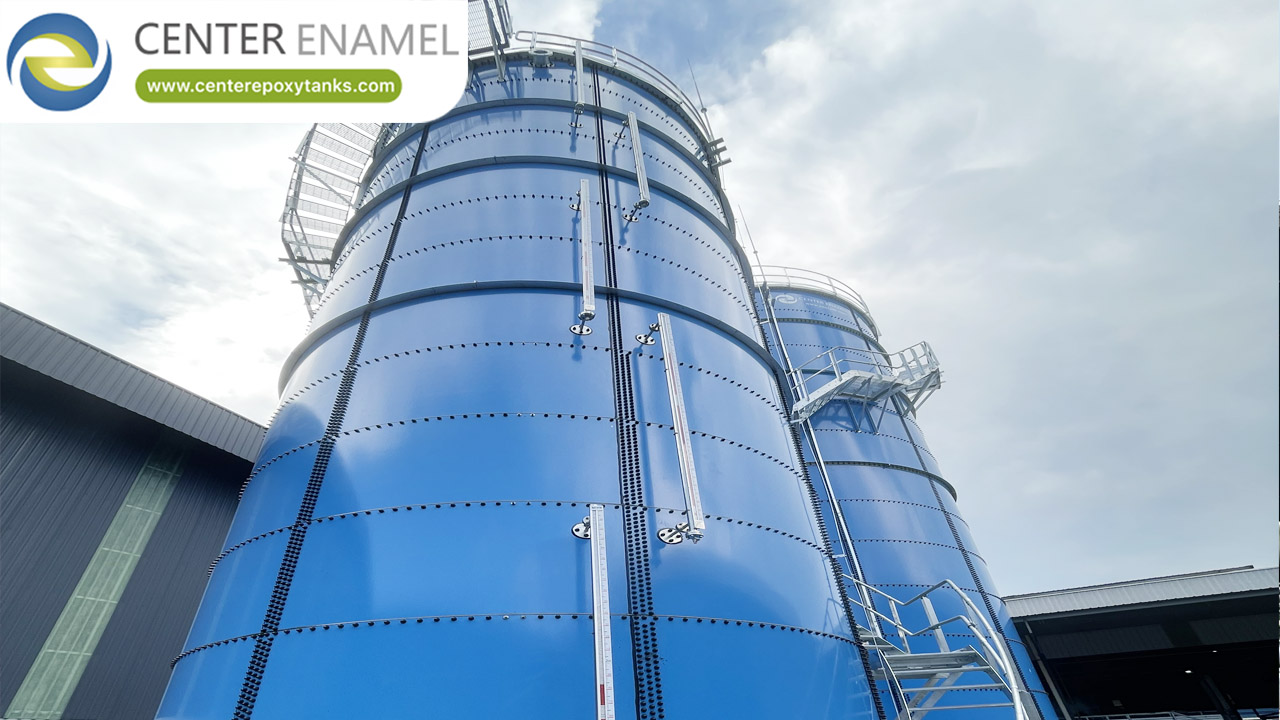
Water Tanks For Data Centres: Material Limits And Duty Fit
HDPE and FRP water tanks suit corrosive, non-potable or small-to-mid data centre duties within their temperature and UV limits, but the decision usually turns on three constraints: permeation and potable conformance to NSF/ANSI/CAN 61, weld or laminate quality assurance, and the IBC 2021 fire-rating treatment of a combustible tank, which can force a fire-rated enclosure or a steel choice.
Introduction
A data centre specifier reaches for a non-metallic water tank for a familiar reason: the duty is corrosive, the site wants to avoid steel coating maintenance, or the volume is small enough that a moulded or wound tank is convenient. High-density polyethylene (HDPE) and fibreglass-reinforced plastic (FRP) are the two candidates, and both are legitimate for the right duty. The mistake is choosing one on corrosion resistance alone and discovering later that temperature, permeation, fire rating or structure rules it out.
This article compares HDPE and FRP against a data centre duty on the properties that decide it: permeation and water quality, thermal and UV limits, weld and laminate quality assurance, structural behaviour against steel, and the building-code fire-rating constraint that often settles the decision. It cites NSF/ANSI/CAN 61 for potable contact, ASTM D3265 for HDPE tanks, and IBC 2021 for the structural and fire-resistance provisions.
Why a non-metallic tank is being considered
The case for a non-metallic tank starts with corrosion. A steel tank needs a coating system and the inspection that goes with it; an HDPE or FRP tank is inert to many of the chemicals that attack steel, so the argument is lower lifecycle maintenance and no coating failure to manage. For a small or awkward-volume duty, a moulded HDPE tank or a wound FRP tank is also quick to procure and light to support.
The case against emerges when the duty is pushed: higher temperatures, potable contact, a large volume, or a fire-rating requirement all test the material. The right question is not whether HDPE or FRP is suitable in the abstract but whether the specific duty sits inside the material's limits, and the rest of this article tests those limits one by one.
What HDPE is as a tank material
HDPE is a thermoplastic polyolefin, supplied as sheet welded by extrusion or butt fusion, or as a rotationally moulded shell for smaller vessels. Its strengths are chemical inertness across a wide pH range, light weight, and freedom from metallic corrosion and the coating programmes that steel requires. It is also a compliant potable material where the grade and any liner carry NSF/ANSI/CAN 61 conformance.
Its limits are material: a low modulus that creeps under sustained load, so wall and support design is by analysis rather than by steel rules; a temperature ceiling well below steel, with continuous service typically around 40 to 60°C depending on grade and load; and sensitivity to ultraviolet light unless stabilised or shaded. HDPE is a good fit for cool, chemically aggressive, non-potable duties at modest volume.
What FRP is as a tank material
FRP is a composite of glass fibre in a thermoset resin — polyester, vinyl ester or epoxy — built by filament winding or contact moulding. Its advantage over HDPE is an engineered strength-to-weight ratio and a resin choice that can be matched to the chemical and temperature duty; vinyl ester resists many aggressive streams and tolerates higher temperatures than HDPE.
The engineering is in the laminate. The corrosion barrier, the structural wall and the resin system have to be specified for the actual fluid and temperature, and the quality of the laminate decides whether the design holds. FRP also needs ultraviolet protection at the surface, usually a surfacing veil or coating. Like HDPE it is inert to many chemicals and, with the right resin and conformance, can serve potable contact, but it is only as good as the laminate specification and the fabrication QA behind it.
Permeation and the water quality question
Permeation is the property that surprises specifiers. HDPE and FRP are both permeable to varying degrees: small molecules, including hydrocarbon vapours and disinfectants such as chlorine, can migrate through the wall, and the wall can also let external contaminants in if the tank sits near a fuel or chemical store. For a process or fire duty this is often irrelevant, but for potable or ultrapure water it is the deciding test.
The control is conformance and barrier design. NSF/ANSI/CAN 61 applies to the wetted components of a potable tank, and a non-metallic tank used for potable contact must carry that conformance for the grade and liner actually supplied, not a generic claim. For ultrapure duty, permeation and extractables can raise conductivity, so the barrier and the resin extractables are specified deliberately. A non-metallic tank is not automatically potable-grade, and the permeation question is what proves it one way or the other.
Thermal, UV and temperature limits
The temperature limit is where HDPE and FRP most often fail a duty they were chosen for on corrosion grounds. HDPE softens as it warms; continuous service is typically around 40 to 60°C and the margin above that is small, so a tank receiving warm condensate, solar-heated make-up or a hot discharge is outside its envelope. FRP's limit is set by the resin: standard polyester is lower, vinyl ester and epoxy extend it, but all thermosets have a service temperature the specifier must name.
Ultraviolet light is the second limit. HDPE degrades unless UV-stabilised or shaded, and FRP needs a surfacing veil or coating to stop surface resin breakdown. Both limits point to the same design discipline: state the maximum and the minimum service temperature, state the UV exposure, and choose the grade or resin and the external protection to match. A tank specified only by volume and chemical, with temperature and sun left unstated, is a tank specified incompletely.
Joining and weld quality assurance
Non-metallic joints are where a good material becomes a leaking tank, so the joining method and its QA decide the outcome. HDPE is joined by extrusion or butt fusion welding; the weld is only as good as the preparation, the temperature and the technique, and FRP is joined by adhesive and laminate overlap built with the same resin system.
The QA is material-specific. For HDPE, weld quality is verified by procedure qualification, visual and destructive sample testing, and holiday or spark testing of the seam; for FRP, by laminate wet-out, Barcol hardness, and non-destructive checks of the bond. Neither is a visual-only sign-off. The submittal should name the welding or laminating procedure, the inspector qualification, and the test records, because a non-metallic tank that passes chemistry but fails at a joint is still a failure, and the joint is the most likely place it happens.
Structural behaviour against steel
Structurally, non-metallic tanks behave nothing like steel and cannot be specified by steel rules. HDPE has a low modulus and creeps under sustained load, so the shell and its supports are designed by analysis with time-dependent factors, and a large HDPE tank needs engineered ribbing and a prepared foundation. FRP has high directional strength from its fibre but is also design-dependent and sensitive to point loads and to the foundation it sits on.
Against steel, the trade is maintenance versus stiffness: steel is stiffer, higher-modulus and proven for large volumes and high heads, but it corrosion-protects through coating; non-metallic avoids that coating but gives up stiffness and, for large volumes, usually costs more or becomes impractical. As a rule, steel dominates above a few hundred cubic metres and for fire duty, while HDPE and FRP suit smaller, corrosive or weight-sensitive duties where their limits are respected. NSF/ANSI/CAN 61 and the structural provisions of IBC 2021 still apply to how the tank is placed and supported.
Fire rating and the building code constraint
The constraint that usually settles a non-metallic decision is the building code, not the process. HDPE and FRP are combustible, and IBC 2021 treats their fire-resistance and the fire separation of a combustible tank on a data centre site. The tank may need a fire-rated enclosure, a standoff distance, or a fire-retardant resin system, and those requirements vary by jurisdiction and by what the tank sits next to.
This is separate from NFPA 22, which in Chapter 11 does permit fibreglass-reinforced plastic tanks for private fire protection, so a non-metallic fire reserve is not ruled out by the fire-protection standard. The constraint is the adopted building code's treatment of a combustible structure and the fire rating the enclosure or separation must carry. Where the code forces a fire-rated box around a plastic tank, the economy of the non-metallic choice often disappears, and steel becomes the simpler answer.
Where a non-metallic tank is and is not appropriate
A non-metallic tank is appropriate for cool, chemically aggressive, non-potable or small-to-mid volume duties — process make-up, reject or chemical day tanks — where its corrosion freedom is worth its limits, and where the temperature, UV and fire-code constraints are satisfied. With the right resin or grade and conformance, it can also serve potable contact. FRP's higher temperature and strength range lets it reach duties HDPE cannot.
It is not appropriate where the temperature exceeds the material's service limit, where the volume is large enough that steel is cheaper and stiffer, where the fire code forces a fire-rated enclosure that erodes the saving, or where a fire reserve must be dedicated and the adopted code's combustible-tank treatment is unfavourable. The decision is a checklist against the limits above, not a default, and the duty that sits outside any one limit moves the choice back to steel or to a divided steel vessel.
The evidence a supplier must provide
The submittal for a non-metallic tank has to prove the material fits the duty, and the evidence is specific. For potable or potable-adjacent contact, require NSF/ANSI/CAN 61 conformance for the actual grade and liner. For temperature, require the continuous and peak service limits of the grade or resin and show the duty sits inside them. For UV, require the stabilisation or surface protection specified.
For QA, require the welding or laminating procedure, the inspector qualification and the test records — sample weld destructives and holiday testing for HDPE, laminate wet-out and Barcol checks for FRP. For structure, require the design basis to IBC 2021 and the foundation and support details. For fire, require the code compliance path — resin system, enclosure or separation. A supplier that offers a non-metallic tank on corrosion resistance alone, without this evidence, has not actually shown the tank fits the data centre duty.
Non-Metallic Suitability Criteria: Property, HDPE, FRP, Steel
Property | HDPE | FRP | Steel reference |
Temperature ceiling | ≈40-60°C continuous | Resin-dependent, higher | Much higher |
Chemical resistance | Wide pH, inert | Resin-matched | Needs coating system |
UV stability | Stabiliser or shade needed | Surfacing veil or coating | Coating system |
Potable conformance | NSF/ANSI/CAN 61 grade | NSF/ANSI/CAN 61 barrier | NSF/ANSI/CAN 61 |
Large volume | Limited by creep | Moderate | Proven, stiff |
Fire (IBC 2021) | Combustible, enclosure | Combustible, enclosure | Non-combustible |
Where Non-Metallic Fits: Duty, Fit, Deciding Constraint
Duty | HDPE or FRP fit | Deciding constraint |
Cool corrosive process make-up | Good | Temperature and potable conformance |
RO reject or chemical day tank | Good, resin-matched | Chemical compatibility, QA |
Warm or hot discharge | Poor | Material temperature ceiling |
Large volume (above a few hundred m3) | Poor | Stiffness and cost versus steel |
Fire reserve | FRP permitted (NFPA 22 Ch.11) | IBC combustible-tank treatment |
Potable or ultrapure | Only with conformance | NSF/ANSI/CAN 61, permeation |
About Center Enamel
Center Enamel (Shijiazhuang Zhengzhong Technology Co., Ltd.) designs and fabricates bolted steel storage tanks, welded steel tanks, fusion-bonded epoxy tanks, galvanized tanks, stainless steel vessels, pressure vessels, aluminum geodesic dome roofs and floating roofs. The company has more than 30 years of production experience and has supplied equipment to projects in more than 100 countries. Aluminum geodesic dome roofs are designed and fabricated to API 650 Appendix G, AWWA D108, the Aluminum Design Manual, ASCE 7 and IBC, and the company developed and exported a 72 m diameter aluminum dome roof in 2023. Engineering, fabrication, coating, quality control and site service are handled as one scope, which is why the drawings, the calculation basis and the delivered hardware can be reconciled against each other.
Frequently Asked Questions
Are HDPE tanks suitable for a data centre?
HDPE tanks suit cool, chemically aggressive, non-potable or small-to-mid volume data centre duties where their corrosion freedom and light weight help, within a continuous service temperature typically around 40 to 60°C and with ultraviolet protection. They are not suitable where the temperature exceeds that limit, where the volume is large enough that steel is cheaper and stiffer, or where the building code forces a fire-rated enclosure that removes the saving. For potable contact they need NSF/ANSI/CAN 61 conformance for the actual grade and liner.
Are FRP tanks suitable for a data centre?
FRP tanks suit corrosive data centre duties and reach higher temperatures and volumes than HDPE through resin selection — vinyl ester or epoxy extends the service range — and they can serve potable contact with the right corrosion barrier and conformance. They are unsuitable where the laminate is not specified for the actual fluid and temperature, where ultraviolet protection is absent, or where the IBC 2021 treatment of a combustible tank forces a fire-rated enclosure. NFPA 22 Chapter 11 permits FRP for private fire protection, so a fire reserve is not ruled out by that standard.
Which non-metallic tank material should I choose?
Choose on the duty, not the material. HDPE fits cool, smaller, chemically aggressive non-potable duties and is simple to weld and procure. FRP fits the same chemistry at higher temperature and larger volume and is engineered through its resin and laminate. If the duty is hot, large or structurally demanding, FRP reaches further than HDPE; if it is small, cool and corrosive, HDPE is often the simpler answer. The fire-code and potable-conformance constraints then decide whether either is acceptable against steel.
Does HDPE permeate and affect water quality?
Yes, HDPE is permeable to varying degrees, so small molecules such as hydrocarbon vapours and disinfectants like chlorine can migrate through the wall, and external contaminants can enter if the tank sits near fuels or chemicals. For process or fire duty this is usually irrelevant, but for potable or ultrapure water it is the deciding test. The control is NSF/ANSI/CAN 61 conformance for the actual grade and liner and, for ultrapure duty, a barrier and resin extractables specified to keep conductivity down.
Does FRP permeate and affect water quality?
Yes, FRP can permeate through the gel coat and corrosion barrier, and the resin system and its extractables affect water quality, so it is not automatically potable-grade. For potable or ultrapure service the corrosion barrier, the resin and any liner must be specified and carry NSF/ANSI/CAN 61 conformance for the components in contact. For ultrapure duty, extractables can raise conductivity, so the barrier is chosen deliberately. The permeation question is what proves a non-metallic tank fit for potable or pure service, not a generic claim of suitability.
What temperature can these tanks hold?
HDPE has a continuous service ceiling typically around 40 to 60°C depending on grade and load, with little margin above it, so warm condensate or solar-heated make-up can be outside its envelope. FRP's limit is set by the resin: standard polyester is lower, vinyl ester and epoxy extend it well beyond HDPE, but every thermoset has a named service temperature. The specification must state the maximum and minimum service temperature and the UV exposure and choose the grade or resin and external protection to match, because a tank specified only by volume and chemistry is specified incompletely.
How is weld quality assured in each material?
HDPE is joined by extrusion or butt fusion welding, and quality is verified by procedure qualification, visual and destructive sample testing, and holiday or spark testing of the seam. FRP is joined by adhesive and laminate overlap built with the same resin, verified by laminate wet-out, Barcol hardness and non-destructive bond checks. Neither is a visual-only sign-off. The submittal should name the welding or laminating procedure, the inspector qualification and the test records, because the joint is the most likely place a non-metallic tank fails.
Do HDPE and FRP meet fire rating requirements?
HDPE and FRP are combustible, and IBC 2021 governs the fire-resistance and separation of a combustible tank on a data centre site, which can require a fire-rated enclosure, a standoff, or a fire-retardant resin. This is separate from NFPA 22, which in Chapter 11 does permit FRP tanks for private fire protection, so the fire-protection standard does not rule them out. The deciding constraint is the adopted building code's treatment of a combustible structure, and where it forces a fire-rated box the steel choice is often simpler.
How do they compare structurally with steel?
Non-metallic tanks are not specified by steel rules. HDPE has low modulus and creeps, so the shell and supports are designed by analysis with time-dependent factors and need engineered ribbing and a prepared foundation; FRP is strong directionally but design-dependent and sensitive to point loads. Steel is stiffer, higher-modulus and proven for large volumes and high heads but needs coating. As a rule, steel dominates above a few hundred cubic metres and for fire duty, while HDPE and FRP suit smaller, corrosive or weight-sensitive duties within their limits.
What should a supplier document for a non-metallic tank?
The submittal must prove fit: NSF/ANSI/CAN 61 conformance for the actual grade and liner where potable contact applies; the continuous and peak service temperature of the grade or resin with the duty inside it; the ultraviolet stabilisation or surface protection; the welding or laminating procedure, inspector qualification and test records; the structural design basis to IBC 2021 with foundation and support details; and the fire-code compliance path. A supplier offering a non-metallic tank on corrosion resistance alone, without this evidence, has not shown it fits the data centre duty.
HDPE and FRP are real options for the right data centre duty, but they are chosen against a list of limits rather than on corrosion resistance alone. Permeation and potable conformance to NSF/ANSI/CAN 61 decide whether the water quality holds, the temperature and UV limits decide whether the material survives, and weld or laminate quality assurance decides whether the joints hold.
The constraint that usually settles the argument is the building code: IBC 2021 treats a combustible tank as something that needs an enclosure, a standoff or a fire-retardant resin, and once that box is required the steel tank is often the simpler answer. Send us the duty, the temperature, the potable requirement and the fire-code path, and we will return an honest fit assessment with the evidence a supplier must provide.
Talk To Our Engineering Team
Send the duty, the volume basis, the governing code and the site constraints, and our engineering team will come back with a specification that a supplier can price and a reviewer can approve. We will also tell you plainly when a different tank type or a different scope is the better answer.


