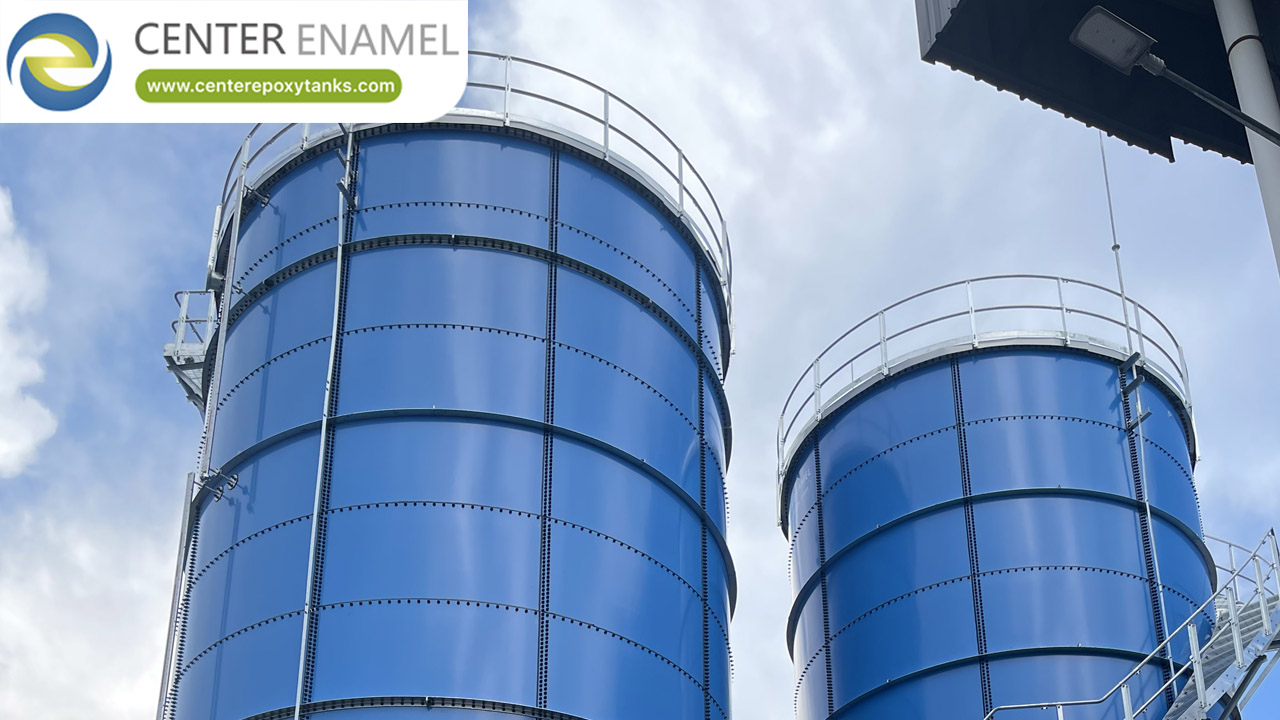
AWWA D103 for Chilled Water Storage Tanks
AWWA D103 is the standard most specifying engineers reach for when a bolted, factory-coated atmospheric tank is on the table, and it fits chilled-water duty directly — a chilled tank is exactly that kind of vessel. What D103 does and does not cover matters, because the chilled-specific parts of the design (insulation, vapor barrier, diffuser) sit outside its structural scope. Knowing that boundary keeps the specification honest: you cite D103 for the shell and roof, and you cite the relevant material and thermal standards for everything the cold actually depends on.
What AWWA D103 Covers
AWWA D103 is the standard for factory-coated bolted steel tanks, covering design, materials, coating systems, fabrication, erection and inspection of the bolted shell and roof. It is the reference most specifying engineers reach for when a bolted atmospheric tank is on the table, and it is written precisely for the bolted, coated construction chilled-water tanks commonly use.
The standard addresses the structural and coating integrity of the bolted assembly — allowable stresses, bolted-joint design, panel geometry, roof and appurtenances. It is a complete framework for the static containment, not a thermal or process standard.
For specifying engineers, D103 provides a common, citable language. Writing 'built to AWWA D103' conveys a defined level of design rigor and quality control that suppliers recognize and can price against.
Design And Coating Requirements
The standard sets allowable stresses, bolted-joint design, and the quality of the factory-applied coating (glass enamel for GFS, epoxy for FBE). Holiday (discontinuity) testing and coating-thickness verification are part of quality control. These requirements are what turn a pile of panels into a certifiable tank.
For chilled-water duty the coating must be compatible with the water and the low-temperature swing. The lower temperatures are not a problem for qualified enamel or epoxy, but the coating specification should still name the system and the test voltage so the delivered lining matches the duty.
Joint design is where D103 adds real value: the bolted connection is the structural heart of a bolted tank, and the standard's treatment of it is what gives the assembly its integrity under full and partial fill, wind and the modest thermal movement of a chilled duty.
Annotations, Roof And Inspection
D103 addresses the roof, openings, appurtenances and the as-built documentation. Third-party inspection and material traceability support the standard's intent even where the tank is built offshore, because the document trail is what makes the tank auditable later.
NSF/ANSI 61 and WRAS applicability is determined by whether the water is potable or indirect-potable. D103 covers the structure; the potable-contact certifications are specified separately and must be named in the data sheet when they apply.
Inspection under D103 is not a single event but a chain: coating verification at the factory, joint inspection at erection, and as-built records at handover. Each link is what lets the owner prove the tank was built to the cited standard.
Applying D103 To Chilled Water
A chilled-water tank is an atmospheric, coated, bolted vessel; D103 fits directly for the shell and roof. The chilled-specific items — insulation, vapor barrier, diffuser — are added by the thermal design and sit outside D103's scope. Specifying D103 for the structure and the relevant material/pressure standards for any coded shell section keeps the document clean.
Practically, this means the specification cites D103 for the bolted shell and roof, NSF/ANSI 61 and WRAS where potable contact applies, and the thermal design for insulation and diffuser. No single standard covers the whole tank, and pretending one does creates gaps.
For owners, the takeaway is to demand the as-built D103 package alongside the thermal performance guarantee. The structure and the thermocline are different deliverables from different disciplines, and both must be documented.
Writing D103 Into The Contract
Citing D103 in a specification is only meaningful if the contract binds the supplier to it with measurable clauses. Name the edition, the coating system, the holiday-test voltage and the inspection regime so the standard is enforceable at factory acceptance rather than a vague aspiration in the preamble.
Pair the D103 reference with the thermal and potable-contact requirements so the document is internally consistent. A contract that demands D103 coating quality but omits the NSF/ANSI 61 or WRAS scope where potable contact applies leaves a certifiable gap the supplier is not obligated to fill.
Finally, require the as-built D103 documentation as a condition of final payment. The structure's traceability — coating records, joint inspection, material certs — is what lets the owner prove compliance years later, and withholding sign-off until it is delivered aligns the supplier's incentive with the owner's interest.
D103 scope
Covers | Does not cover |
Bolted shell design | Thermal/insulation |
Factory coating | Diffuser/baffle |
Roof & appurtenances | Stratification physics |
Erection & inspection | Coded pressure sections |
Chilled-duty notes
Item | Action |
Coating | Compatible with low-T swing |
Insulation | Add per thermal design |
Potable contact | NSF61/WRAS if applicable |
Frequently Asked Questions
What is AWWA D103? The standard for factory-coated bolted steel tanks: design, coating, fabrication, erection and inspection of the bolted shell and roof.
Does D103 apply to chilled-water tanks? Yes — they are atmospheric coated bolted vessels; D103 covers the shell and roof. Insulation and diffuser are added by the thermal design.
What coating does D103 require? A qualified factory-applied coating (glass enamel for GFS, epoxy for FBE) with holiday testing and thickness verification.
Is D103 enough for potable water? D103 covers the structure; NSF/ANSI 61 and WRAS apply to potable or indirect-potable contact and are specified separately.
Does D103 cover the diffuser? No. The diffuser/baffle is part of the thermal design and is outside D103's structural scope.
Who inspects to D103? Factory and third-party inspection against the standard, with material traceability and as-built documentation.
Project Case Reference (Capability Evidence)
Canada Industrial wastewater — GFS (Glass-Fused-to-Steel) bolted tank, φ18.34*9.0m(H) ×2, φ12.23*4.8m(H) ×1, φ10.7*9.6m(H) ×1, φ5.35*10.8m(H) ×1, φ4.59*9.6m(H) ×1, φ1.52*5.2m(H) ×1, φ1.52*3.05m(H) ×1, total 6595 m3, 2025.
Work With Center Enamel
Center Enamel (Shijiazhuang Zhengzhong Technology Co., Ltd) is a storage-tank and process-equipment manufacturer established in 2008 and headquartered in Shijiazhuang, China. Its product range covers Glass-Fused-to-Steel (GFS) tanks, Fusion Bonded Epoxy (FBE) coated bolted tanks, stainless steel tanks, hot-dip galvanized tanks, welded steel tanks and aluminum geodesic dome roofs. The company holds ISO 9001, ISO 45001, ISO 28765, EN 1090, NSF/ANSI 61, WRAS, FM, CE, LFGB and BSCI certifications and designs to AWWA D103-09 and other recognized international codes. Its manufacturing base produces around 300,000 enamel steel plates per year and has delivered 30,000 installed tank projects, supported by a global distributor network with a 24-hour after-sales response.
Contact Center Enamel — Specify AWWA D103 for the bolted shell and we will align coating, inspection and documentation with your thermal and code requirements.


