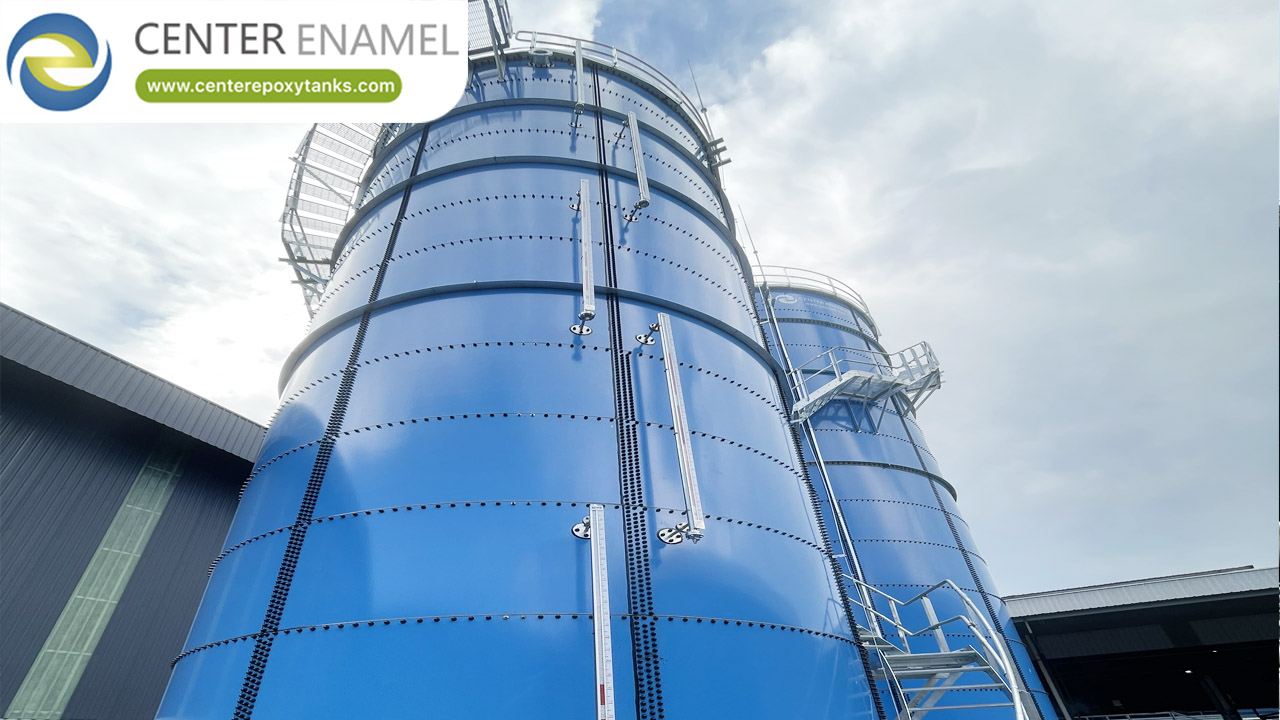
Greywater Recycling Tank For A Data Centre: Treatment And Reuse Loops
Greywater on a data centre site is the gently used water from hand basins, showers and similar sources, excluding toilet waste; each stream carries its own contaminant profile, needs a matched treatment train, and is stored before and after treatment so the recycling tank buffers supply against the non-potable reuse demand inside a separated, labelled non-potable network.
Introduction
A data centre is mostly machines, but the people who run it, the offices and break rooms that support it, and any on-site laboratory or accommodation generate the same gently used water that any commercial building does. Capturing that greywater for non-potable reuse is a recognised way to cut the site's municipal draw, and the recycling tank is the element that lets a treatment train and a reuse demand run independently of each other.
This article defines greywater by source on a data centre site, lists the contaminants each stream carries, maps the treatment train each needs, and explains why storage sits both before and after treatment. It then covers the non-potable reuse loop, the fixture demands that can absorb the water, the public health and regulatory constraints, and how the recycling tank is sized against both the supply of greywater and the demand it serves.
The framing is practical: greywater reuse is a plumbing and public-health system as much as a tank specification, and the tank that stores it has to sit inside a separated, labelled, non-potable network that an inspector can trace end to end.
What counts as greywater on a data centre site
Greywater is defined by what it is not. It is the used water from hand basins, showers, baths and similar gentle-use fixtures, deliberately excluding toilet and urinal waste, which is blackwater and a different, higher-risk stream. On a data centre site the relevant greywater comes from the administrative and support spaces, any on-site accommodation, and amenity blocks rather than from the IT halls themselves.
A boundary matters here: laboratory sinks and any process drain that carries chemicals are usually excluded from greywater because their contaminants are not removed by a domestic treatment train and because mixing them contaminates an otherwise reusable stream. The definition you adopt has to be written into the plumbing design, because the greywater network only works if the right fixtures drain into it and the wrong ones do not. A site that excludes its laboratory and process drains from the definition keeps the greywater stream reusable and avoids contaminating a resource it spent capital to capture and treat.
Source streams and their contaminants
Each greywater stream carries a different contaminant load, which is why a single treatment train sized for one source under-performs on another. Hand basin and restroom sink water carries soaps, surfactants, skin oils, hair and personal care residues, with a measurable organic and suspended-solids load and often a raised nutrient content.
Shower and bath water adds more of the same plus higher solids and, where present, laundry water adds detergents and lint. The common parameters a treatment design tracks are biochemical oxygen demand, total suspended solids, turbidity, fats and oils, nitrogen and phosphorus, and a microbiological indicator. The profile is organic and biological rather than chemical, which points the treatment toward biological and filtration processes rather than toward metals or hardness removal.
Treatment trains by source
Treatment is matched to the source and to the reuse target. A typical train for basin and shower greywater runs solids removal first, through screening and settling or a membrane to take out the suspended material, then a biological step that removes the dissolved organic load, then filtration, and finally disinfection so the stored water meets the reuse standard for its duty.
The more demanding the reuse, the more the train does. Toilet and fixture reuse, which involves potential human contact, requires a treated water that meets a defined microbiological limit, so disinfection is not optional. The International Plumbing Code and the local amendment set the separation and backflow requirements for non-potable reuse systems, and the treatment train is selected so its effluent clears those limits with margin, not merely at the boundary of compliance.
Storage before and after treatment
Storage appears twice, and both tanks earn their place. The pre-treatment tank, often called an equalisation or collection tank, receives the variable, intermittent greywater flow from the fixtures and holds it so the treatment train sees a steadier load than the building actually produces. Without it, a morning peak overwhelms a train sized for the average.
The post-treatment tank, the recycling tank proper, holds the finished non-potable water ready for the reuse demand. It buffers the mismatch between when greywater is produced and when it is needed, and it carries the site through a low-production period without starving the reuse fixtures. The recycling tank is the one usually meant when the article title names a greywater recycling tank, and its lining sits in contact with treated, disinfected water rather than raw greywater.
The non-potable reuse loop
The non-potable reuse loop is the closed path from greywater source, through treatment, into the recycling tank, and out to the reuse fixtures, all on a network that is physically separate from the potable system. The loop only works if the treated water is used at a rate that keeps the recycling tank turning over, because stagnant treated water can lose its disinfectant residual and regrow organisms.
Demand and supply are rarely in phase, so the loop includes a managed connection to municipal make-up: when greywater production or treatment cannot keep the recycling tank above its low-level alarm, potable water tops it up so the reuse fixtures never fail. That make-up is itself a backflow risk and must be air-gapped or otherwise protected so the non-potable network cannot contaminate the potable main.
Toilet and laboratory fixture demands
The fixtures that can take treated greywater are the ones that do not involve drinking or food contact. The largest and steadiest demand on most sites is toilet and urinal flushing, which is why greywater recycling is so often paired with water closets: the volume is large, the duty is non-potable by nature, and the treatment requirement is well established.
Laboratory and technical fixtures are a separate question. A lab hand basin that is part of a greywater-generating network cannot feed the same reuse loop if the lab water carries reagents, and lab fixtures that need rinsing are usually supplied potable water for a reason. The reuse assignment is therefore: toilet and urinal flushing first, irrigation and similar outdoor non-contact use where local rules allow, and only those fixtures whose duty is genuinely non-potable and whose supply can be safely separated.
Public health and regulatory constraints
Public health is the reason greywater reuse is regulated rather than optional. The core requirements are separation of the non-potable network from potable water, backflow protection at every connection, and labelling of the non-potable piping so it cannot be mistaken for drinking water. The International Plumbing Code provides the model framework, and local amendments set the specific limits and the inspection regime.
Disinfection and a documented residual in the recycling tank are part of that, because the health risk is microbial and the stored water is a potential reservoir. NSF/ANSI/CAN 61 is a standard for drinking water system components and is not the reuse treatment standard, but it is the reference point for any component that could contact potable water, and the boundary between the two networks is precisely where that distinction is enforced. A greywater system that cannot show its separation will not pass inspection.
Sizing the recycling tank
Sizing the recycling tank is a balance of two flows: the greywater the site produces and the non-potable demand it serves. The collection or equalisation tank is sized to smooth the production peak, usually to hold a fraction of a day's greywater generation. The recycling tank is sized to cover the reuse demand through the low-production window, so the reuse fixtures are never starved, with municipal make-up as the backstop.
You state the volumes separately: nominal volume, the usable volume after low-level and overflow allowances, and the effective volume that actually serves demand. The residence time in the recycling tank is then checked against the disinfectant decay, because a tank sized only for volume but holding water too long can fall below the microbial limit it was treated to meet. The tank lining, in contact with treated water, is chosen for the disinfectant chemistry present, which differs from the raw greywater case.
Greywater Source Streams And Their Contaminants
Source Stream | Typical Contaminants | Organic Load | Treatment Emphasis |
Hand basins, restroom sinks | Soaps, surfactants, hair, oils | Moderate | Solids removal, biological |
Showers and baths | Skin oils, solids, organics | Moderate to high | Settling, biological |
Laundry (if present) | Detergents, lint | Moderate | Filtration, biological |
Lab or process drains | Excluded - chemicals | Variable | Not in greywater loop |
Reuse Duty And The Barrier Each Requires
Reuse Duty | Human Contact | Required Barrier | Plumbing Requirement |
Toilet and urinal flushing | Indirect | Treatment plus disinfection | Separated, labelled, backflow-protected |
Irrigation / outdoor | None (non-contact) | Treatment, disinfection per local rule | Separated non-potable network |
Equipment washdown | None | Treated water | Air-gapped make-up |
Potable fixtures / lab rinse | Direct | Not permitted from greywater | Remain on potable supply |
About Center Enamel
Center Enamel (Shijiazhuang Zhengzhong Technology Co., Ltd.) designs and fabricates bolted steel storage tanks, welded steel tanks, fusion-bonded epoxy tanks, galvanized tanks, stainless steel vessels, pressure vessels, aluminum geodesic dome roofs and floating roofs. The company has more than 30 years of production experience and has supplied equipment to projects in more than 100 countries. Aluminum geodesic dome roofs are designed and fabricated to API 650 Appendix G, AWWA D108, the Aluminum Design Manual, ASCE 7 and IBC, and the company developed and exported a 72 m diameter aluminum dome roof in 2023. Engineering, fabrication, coating, quality control and site service are handled as one scope, which is why the drawings, the calculation basis and the delivered hardware can be reconciled against each other.
Frequently Asked Questions
What is greywater in a data centre?
On a data centre site, greywater is the gently used water from hand basins, showers, baths and similar fixtures in the administrative, amenity and any on-site accommodation spaces, deliberately excluding toilet and urinal waste, which is blackwater. Laboratory and process drains that carry chemicals are usually excluded too, because their contaminants are not removed by a domestic treatment train and would spoil an otherwise reusable stream. The definition has to be built into the plumbing so only the right fixtures drain into the greywater network.
What treatment does greywater need?
Treatment is matched to source and reuse target. A typical train removes solids first by screening and settling or membrane filtration, then breaks down the dissolved organic load in a biological step, then filters, and finally disinfects so the stored water meets the reuse standard. Toilet and fixture reuse, with potential human contact, requires a treated water that meets a defined microbiological limit, so disinfection is mandatory. The International Plumbing Code and local amendments set the separation and backflow rules the train must satisfy.
Where can greywater be reused?
Treated greywater is reused only where potable water is not required: toilet and urinal flushing is the largest and steadiest demand, and outdoor irrigation or similar non-contact use where local rules allow. Fixtures involving drinking or food contact are excluded. Lab fixtures that could carry reagents are kept on potable supply, and the reuse assignment stays with genuinely non-potable duties whose supply can be safely separated from the potable network.
How large should a greywater recycling tank be?
Sizing balances the greywater produced against the non-potable demand served. The collection or equalisation tank smooths the production peak, typically holding a fraction of a day's generation; the recycling tank covers the reuse demand through the low-production window, with municipal make-up as backstop. State nominal, usable and effective volumes separately, and check residence time against disinfectant decay so the tank does not hold treated water long enough to fall below its microbial limit.
What are the public health requirements?
The core public health requirements are physical separation of the non-potable network from potable water, backflow protection at every connection, and labelling of non-potable piping so it cannot be mistaken for drinking water. The International Plumbing Code provides the model framework and local amendments set the limits and inspection regime. Disinfection with a documented residual in the recycling tank is required because the stored water is a potential microbial reservoir, and the separation must be demonstrable to an inspector.
Does greywater need disinfection?
Yes, for the reuse duties that involve potential human contact. Toilet and fixture reuse requires treated water meeting a defined microbiological limit, so a disinfection step is not optional, and the recycling tank must hold a documented disinfectant residual. Outdoor non-contact reuse may permit a lower barrier, but the treatment train is selected so its effluent clears the relevant limit with margin. Disinfection is what keeps the stored recycled water from regrowing organisms during residence in the tank.
Which fixtures can take reclaimed greywater?
Fixtures that can take reclaimed greywater are those with no drinking or food contact: toilet and urinal flush valves are the primary consumers, followed by labelled non-potable taps for irrigation or equipment washdown where permitted. Potable fixtures and any lab rinse point stay on the drinking network. The non-potable supply to each qualifying fixture must be physically separated, backflow-protected and labelled so the two systems cannot be crossed, which is the basis of the plumbing approval.
Greywater recycling on a data centre site is a plumbing and public-health system as much as a tank specification. Define the greywater by source so the right fixtures drain into it, match the treatment train to each stream's contaminant profile, and place storage before and after treatment so the train and the reuse demand run independently.
The recycling tank buffers supply against the non-potable loop, sized against both the greywater produced and the demand served, with municipal make-up as the backstop and a documented disinfectant residual as the health floor. Send us the fixture inventory, the greywater flow estimate and the intended reuse duties, and we will return a tank and treatment specification that an inspector can trace from source to fixture.
Talk To Our Engineering Team
Send the duty, the volume basis, the governing code and the site constraints, and our engineering team will come back with a specification that a supplier can price and a reviewer can approve. We will also tell you plainly when a different tank type or a different scope is the better answer.


