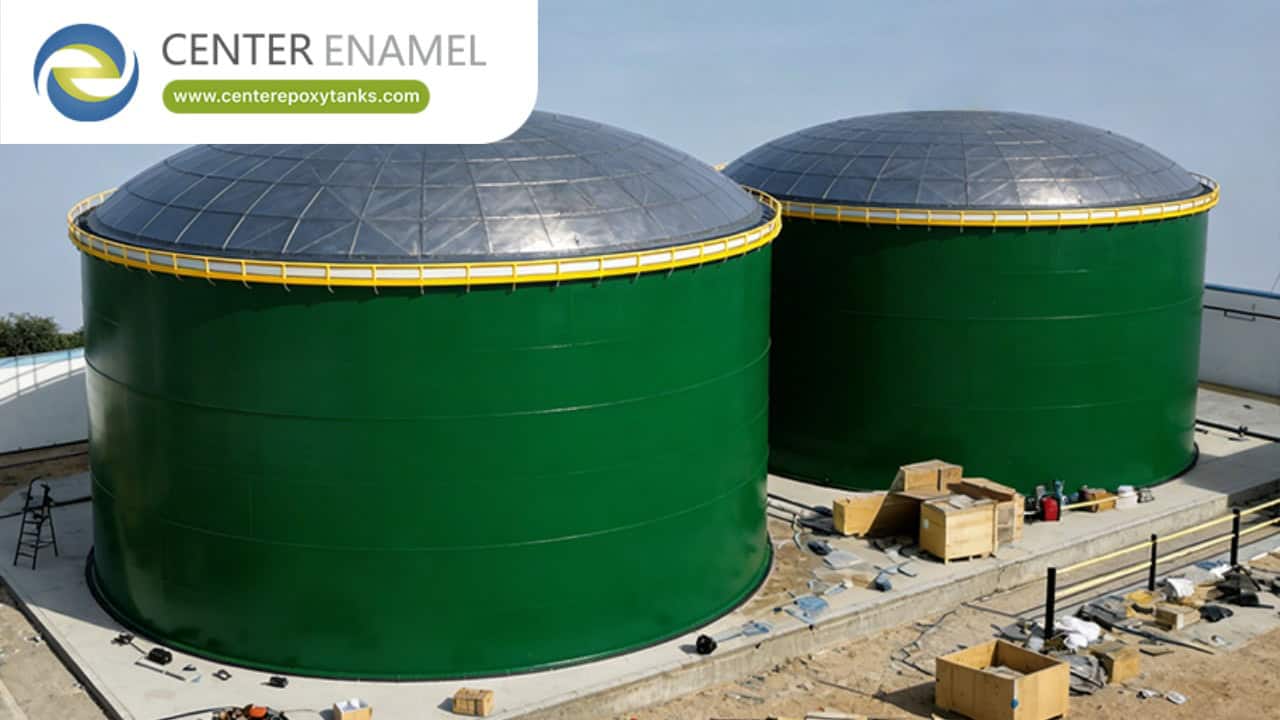
A Complete Guide on Oil Storage Tank
Industrial oil storage requires precision engineering to ensure leak-free operation, environmental compliance, and long-term asset integrity. From raw crude extraction to refined petrochemical reserves, selecting the right tank configuration minimizes vaporization losses and prevents structural failure,.
Core Engineering Standards
The foundational blueprint for global above-ground liquid storage is the API 650 standard. This guideline dictates the minimum requirements for the material, design, fabrication, erection, and testing of vertical, cylindrical, above-ground, welded steel tanks.
Pressure Limits: API 650 tanks are designed for internal pressures approximating atmospheric pressure.
Temperature Ratings: They are tailored for non-refrigerated service with a maximum design temperature of 200°F (93°C) or less, though specific annexes allow for higher operating temperatures.
Testing Protocols: Compliance requires rigorous non-destructive examination (NDE) during fabrication, including radiographic testing (RT) for welds, vacuum box testing for floor seams, and hydrostatic settlement surveys,.
Tank Configurations and Roof Designs
The physical properties of the stored product — specifically its volatility and flash point — determine the necessary roof structure.
1. Fixed Roof Tanks
Structurally self-supporting, fixed cone or dome roofs are permanently attached to the tank shell,. They are the standard choice for storing heavy, non-volatile liquids like heavy crude, diesel, and industrial process water. Because there is a fixed vapor space between the liquid surface and the roof, they are less suitable for highly volatile petrochemicals.
2. Floating Roof Tanks
To mitigate the evaporation of volatile refined products like gasoline or light crude, floating roofs sit directly on the surface of the liquid and rise or fall with the tank's level.
External Floating Roof (EFR): An open-top tank where the roof floats directly on the liquid.
Internal Floating Roof (IFR): Features both a fixed permanent roof to protect against weather and an internal floating deck to minimize vapor emissions,.
Explore how tank design shifts based on volume and product volatility constraints:
Key insight: Floating roof designs significantly reduce the risk of fire and product loss by eliminating the vapor-rich gap where flammable gasses accumulate.
Material Selection and Protection Systems
Material choices are dictated by the chemical composition of the stored medium and environmental exposure,.
Carbon Steel: The industry default for standard crude and refined fuel storage due to its balance of high strength, workability, and cost-effectiveness,.
Stainless Steel: Utilized for highly corrosive chemicals or scenarios requiring absolute purity,.
Advanced Coatings: In complex industrial ecosystems where facilities must also manage highly corrosive production byproducts or wastewater, advanced protective systems like Glass-Fused-to-Steel (GFS) coatings or heavy-duty epoxies are deployed to extend the operational lifespan and resist chemical degradation,.
All structures incorporate a "corrosion allowance" — an intentional calculation that adds extra sacrificial steel thickness to the design to guarantee the tank's structural integrity over decades of service.
Frequently Asked Questions (FAQ)
What is the difference between an API 650 and an API 620 tank?
API 650 covers welded tanks operating at or near atmospheric pressure and is primarily used for standard oil and chemical storage,. API 620 is designed for large steel tanks operating at higher internal pressures and is often used for storing products that require low-temperature or lightly pressurized conditions,.
How do floating roofs prevent vapor loss?
A floating roof sits directly on the surface of the liquid fuel, eliminating the "headspace" where liquid naturally converts to gas. By erasing this gap, it prevents the vaporization of volatile organic compounds (VOCs), protecting the environment and preserving the product's volume.
What are the most common materials used for oil storage tanks?
Carbon steel is the most widespread material due to its structural durability and cost-efficiency,. However, for applications involving caustic chemicals, extreme environments, or demanding environmental wastewater treatment, stainless steel and specialized factory-coated materials are utilized.
How often should industrial oil tanks be inspected?
While continuous monitoring of level indicators and pressure valves is standard, comprehensive structural inspections are guided by API 653 standards. Routine external visual inspections occur regularly, while rigorous internal inspections (requiring the tank to be drained and cleaned) are mapped out based on the tank's specific corrosion rate and operational history.


