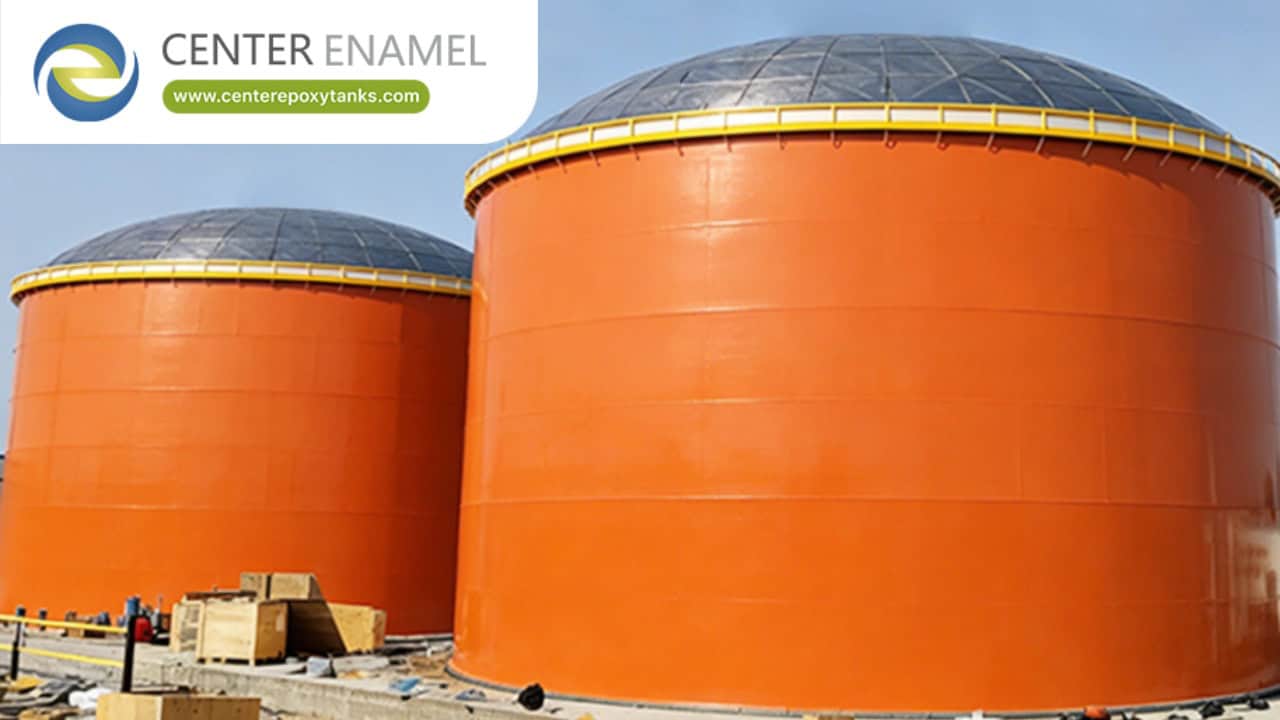
Optimizing Oil Storage: The Strategic Value of Aluminum Geodesic Domes
In the oil storage industry, aluminum geodesic domes are fixed, self-supporting roofs frequently installed over Internal Floating Roofs (IFRs) to create an optimal storage environment. Unlike open-top External Floating Roofs (EFRs), which are directly exposed to the elements, the dome-and-IFR system provides a double-layered barrier against vapor loss, effectively mitigating Volatile Organic Compound (VOC) emissions by over 95%. Operators choose these structures to eliminate risks associated with rain-water accumulation, snow loading, and wind-induced evaporation, while simultaneously avoiding the high maintenance costs and corrosion common in traditional steel roofs.
The Industry Shift: From Exposed EFRs to Dome-Covered Systems
Historically, large-diameter crude oil tanks utilized External Floating Roofs (EFRs) because they were cost-effective for large spans. However, EFRs suffer from significant operational weaknesses:
Weather Vulnerability: Rain and snow collect on the roof deck, creating "sinking" risks and requiring complex, failure-prone drainage systems.
VOC Emissions: The lack of a fixed cover means wind currents continually sweep across the seal, accelerating the evaporation of stored product.
Maintenance Intensity: EFRs require frequent, high-risk "hot work" (welding) for repairs and constant recoating due to direct environmental exposure.
The Solution: By capping an IFR-equipped tank with an Aluminum Geodesic Dome, operators create a "sealed environment." The dome shields the floating roof from weather and wind, while the IFR continues to perform its primary duty: minimizing the vapor space directly above the liquid.
Key Engineering Advantages
1. Superior Emission Control (VOC Reduction)
By providing a second, wind-shielded layer, the dome drastically reduces the "wicking" effect where wind currents remove saturated air from the seal area. This ensures compliance with increasingly stringent environmental air quality regulations globally.
2. Corrosion Immunity (Life-Cycle Value)
Traditional carbon steel roofs are susceptible to atmospheric corrosion, requiring sandblasting and painting every 7–10 years. Aluminum domes are fabricated from marine-grade alloys (AA 6061-T6) that naturally form a self-healing oxide layer. This allows for a 30–50 year service life with virtually zero maintenance.
3. Clear-Span Engineering (API 650 Compliance)
The geodesic geometry utilizes a triangulated space frame to distribute loads across the perimeter. This eliminates the need for internal support columns, which are common failure points in cone-roof tanks and can interfere with the operation of internal floating roof seals.
Comparative Overview: EFR vs. Dome + IFR System
Feature | External Floating Roof (EFR) | Aluminum Dome + IFR System |
Environmental Exposure | Direct (Rain, Snow, Wind) | Protected (Fixed Cover) |
Maintenance | High (Seal & Drain Repairs) | Minimal (Fit & Forget) |
VOC Emissions | Moderate to High | Low (Best-in-class) |
Operational Risk | High (Sinking, Fire Risk) | Low (Shielded from elements) |
Service Life | 15–25 Years | 30–50+ Years |
Installation | Heavy (Requires Welding) | Lightweight (Bolted/Modular) |
Frequently Asked Questions (FAQ)
Q: Can I retrofit a dome onto an existing EFR tank?
A: Yes. Because aluminum domes are lightweight and self-supporting, they can often be installed on existing tanks without major modifications to the foundation or shell. This is a common strategy for extending the life of aging terminal assets.
Q: Do these domes comply with fire safety regulations?
A: Yes. By minimizing the vapor space and protecting the tank from lightning and external heat, dome-covered tanks significantly improve fire safety compared to open-top tanks, where rim-seal fires are a common risk.
Q: Is aluminum strong enough for heavy snow or wind loads?
A: Absolutely. Geodesic domes are engineered using Finite Element Analysis (FEA) to withstand site-specific climate demands. The triangular space-frame geometry is one of the most structurally efficient designs in modern engineering, capable of handling significant environmental loads while remaining lightweight.
Partnering with Expert Engineering
Modernizing your storage infrastructure requires a partner who understands both the metallurgical properties of aluminum and the specific regulatory requirements of the oil and gas sector (e.g., API 650 Appendix G).
Are you evaluating a tank farm upgrade to improve emission control and reduce maintenance?
Contact our technical engineering team for a structural feasibility assessment, including load calculations tailored to your tank diameter and local climate data.


