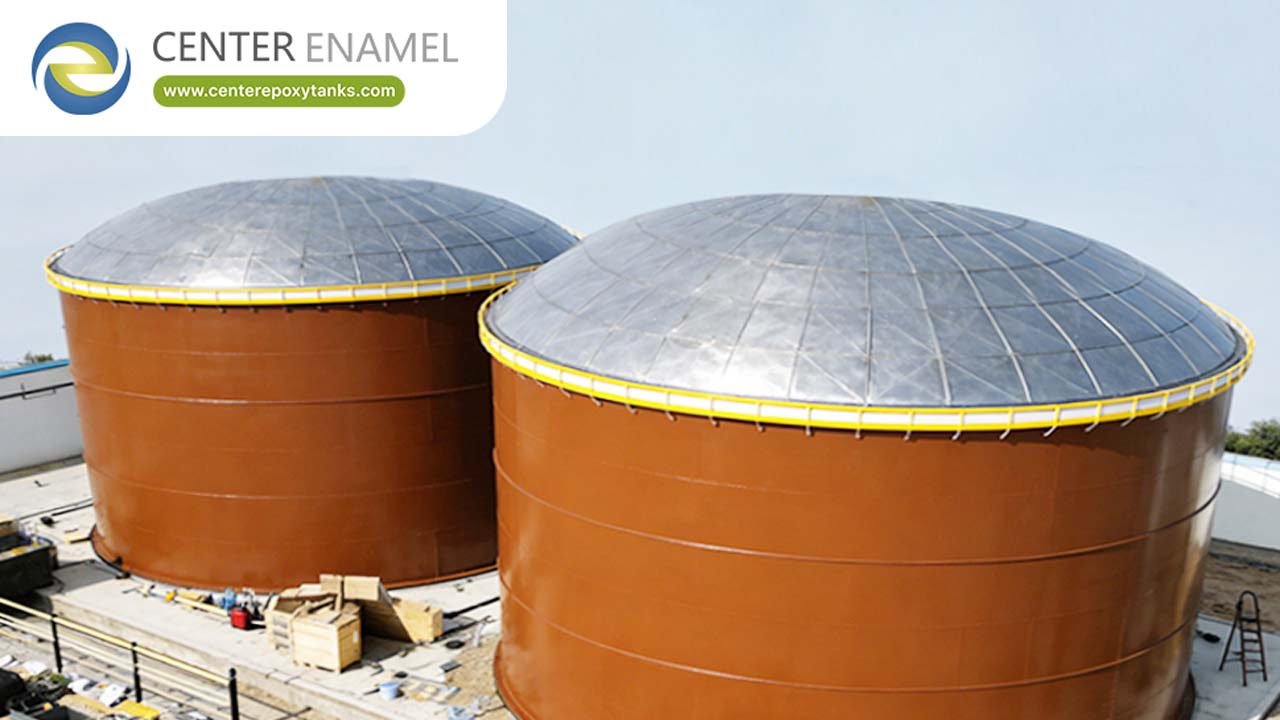
Why Epoxy Coated Steel Tanks Are the Best Choice for Wastewater Storage Solutions
Epoxy-coated steel tanks, specifically those utilizing Fusion Bonded Epoxy (FBE) technology, represent the optimal balance of chemical resistance, structural durability, and capital efficiency for wastewater storage. Unlike concrete tanks, which are susceptible to cracking and rebar corrosion, or field-welded tanks with inconsistent coating applications, FBE tanks are manufactured in controlled factory environments. This ensures a uniform, thermoset polymer barrier that effectively resists the aggressive pH ranges (typically 2–13) found in industrial effluent. Their modular, bolted design allows for rapid, "hot-work-free" installation, making them the most versatile choice for municipal and industrial treatment plants.
The Engineering Case: Why FBE Outperforms Alternatives
Wastewater treatment plants (WTP) and Effluent Treatment Plants (ETP) require storage systems that can handle fluctuating, chemically aggressive loads. Epoxy-coated steel tanks solve the three primary failure points of traditional storage:
1. Superiority Over Concrete
Concrete is porous. Over time, wastewater infiltrates the concrete, leading to the corrosion of the internal steel reinforcement (rebar), which eventually causes structural failure or leakage. Epoxy-coated steel tanks are non-porous and chemically inert, eliminating the risk of structural degradation from within. Furthermore, while concrete requires massive site labor and long curing times, epoxy steel tanks are modular and ready for service immediately upon assembly.
2. Consistency Over Field-Welded Steel
Field-welded tanks rely on "field-applied" coatings—paints applied by hand on a construction site. These are vulnerable to humidity, dust, and human error, leading to "holidays" (microscopic pinholes) where corrosion begins. FBE tanks are factory-coated under robotic supervision, ensuring that every bolt hole, edge, and surface receives a uniform, cured-to-specification epoxy thickness.
3. Flexibility & Sustainability
Wastewater needs change. An FBE tank’s modular, bolted design means it can be expanded in volume or dismantled and relocated if plant operations move. This "asset agility" is impossible with poured-in-place concrete or permanently welded steel silos.
Comparison Matrix: Wastewater Storage Solutions
Feature | Epoxy Coated Steel (FBE) | Reinforced Concrete | Welded Steel |
Coating Type | Factory-applied FBE | Often requires liners | Field-applied paint |
Installation Speed | Fast (Bolted/Modular) | Slow (Pour & Cure) | Moderate (Welding required) |
Chemical Tolerance | High (pH 2–13) | Variable (Requires liners) | Low (Subject to corrosion) |
Repairability | High (Field touch-up) | Low (Structural damage) | Moderate |
Capital Cost | Moderate/Efficient | Low (Material) / High (Labor) | High |
Key Advantages for Wastewater Operators
Edge & Bolt-Hole Protection: Because the epoxy is applied as a powder and thermally bonded, it covers edges and bolt-holes uniformly—the exact areas where standard painted tanks usually fail first.
Low Maintenance Lifecycle: The non-stick, smooth surface of the epoxy makes the tank interior easier to clean and prevents the buildup of sludge and biological films, which is critical for maintaining hygiene in wastewater processes.
Regulatory Compliance: Modern FBE coating systems are designed to meet stringent international standards (e.g., ISO, AWWA), ensuring peace of mind for environmental audits and safety inspections.
Frequently Asked Questions (FAQ)
Q: Can epoxy-coated tanks be used for acidic wastewater?
A: Yes, FBE coatings are highly robust and generally rated for a pH range of 2–13. However, always provide your chemical composition data (including acid concentration) to the manufacturer during the design phase to ensure the specific epoxy formulation is compatible with your waste profile.
Q: How are these tanks maintained?
A: Maintenance is minimal. Because the coating is a factory-applied, cross-linked polymer, it does not chalk or flake like standard paint. Routine inspections involve visually checking the coating integrity and monitoring the integrity of the bolted seals. If mechanical damage occurs, field-repair kits are available for easy patching.
Q: How does this compare to Glass-Fused-to-Steel (GFS)?
A: Glass-Fused-to-Steel (GFS) is often considered the "gold standard" for extreme chemical inertness. However, Epoxy Coated (FBE) tanks are frequently chosen for their superior impact resistance (they are less likely to chip if struck) and their more competitive upfront cost for medium-to-large capacity municipal projects.
Q: Is "Epoxy Coated" the same as standard "Painted" steel?
A: No. Standard paint is a liquid-applied, air-dried coating that is prone to scratching and peeling. FBE is a thermally cured powder that is fused to the steel substrate at high temperatures, creating a chemical bond that is exponentially more durable than any air-dried paint system.
Strategic Recommendation for Wastewater Projects
When designing a wastewater facility, specify "Factory-applied Fusion Bonded Epoxy (FBE) bolted steel tanks" rather than just "Epoxy tanks." This ensures you receive the high-performance, heat-cured coating system engineered for industrial longevity, rather than a lower-grade, field-painted alternative.


