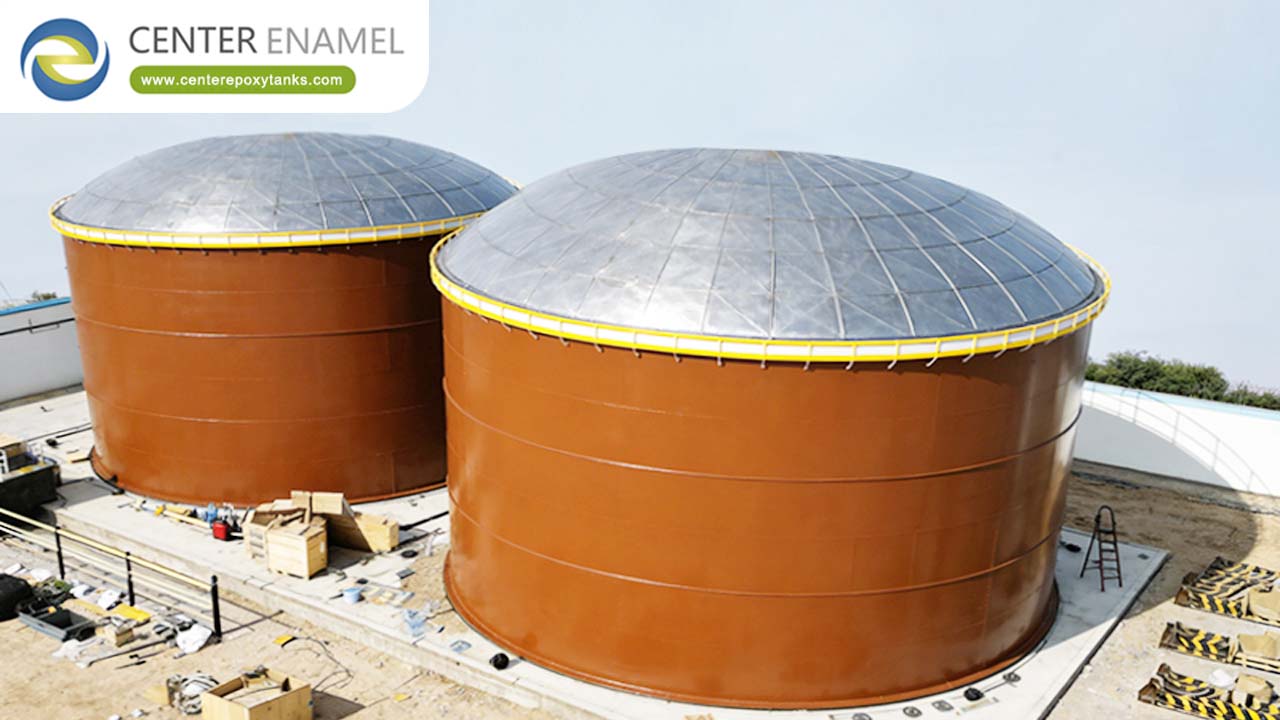
The Strategic Benefits of Welded Steel Tanks for Crude Oil Storage
Welded steel tanks are the industry-standard infrastructure for crude oil storage, primarily due to their monolithic structural integrity and compliance with API 650 global safety standards. Unlike modular bolted systems, welded steel tanks provide a continuous, leak-proof vessel capable of withstanding the high hydrostatic pressures and corrosive demands of long-term petroleum storage. Their design flexibility allows for the construction of massive, field-erected volumes that are not feasible with pre-fabricated or bolted alternatives, ensuring safe, durable, and regulatory-compliant containment for the oil and gas midstream and upstream sectors.
Why Crude Oil Demands Welded Construction
Crude oil storage involves significant operational risks, including high volatility, thermal expansion, and potential environmental hazards. Facility engineers prioritize welded construction over other methods for three critical reasons:
Leak Prevention (Monolithic Integrity): The defining advantage of a welded tank is the absence of joints, gaskets, or bolt holes in the shell. By using automated welding processes to fuse steel plates into a single vessel, the risk of "weeping" or gasket fatigue is eliminated, creating a gas-tight environment essential for volatile hydrocarbons.
API 650 "Gold Standard" Compliance: API 650 is the globally recognized baseline for welded steel tanks in the petroleum industry. It mandates rigorous material selection, welding procedures, and inspection protocols (like X-ray and vacuum box testing) that ensure the tank can safely operate under extreme thermal and environmental loads.
High-Capacity Scalability: Crude oil terminals often require tanks with capacities in the millions of gallons. Welded steel allows for field-erection techniques that enable the construction of massive, custom-diameter vessels that are structurally impossible to build via modular, factory-bolted methods.
Comparative Overview: Storage Technologies
Feature | Welded Steel (API 650) | Bolted Steel | Concrete (RCC) |
Leak-Proofing | Monolithic (100% Seal) | Sealant/Gasket Dependent | Porous (Needs Liner) |
Capacity | Ultra-High (Massive) | Moderate | High (Expensive) |
Corrosion Protection | High (Coating/Linings) | Moderate (Coating) | Moderate (Needs Liner) |
Structural Integrity | Superior (Uniform Strength) | Variable (Bolt/Joint stress) | Brittle (Crack Prone) |
Installation | Field-Erected | Modular Assembly | Civil Construction |
Engineering Focus: The "Quality Control" Advantage
Reliability in crude oil storage is built on verifiable quality. Recognized manufacturers utilize specific processes that differentiate welded storage from general-purpose fabrication:
Non-Destructive Testing (NDT): Every structural weld—especially on the tank floor and shell vertical seams—is subject to rigorous NDT. Techniques such as ultrasonic testing (UT) and magnetic particle inspection (MPI) detect subsurface imperfections before the tank is commissioned.
Corrosion Allowance: API 650 designs include a "corrosion allowance" in the steel thickness calculation. This sacrificial layer ensures that even after decades of service in a harsh environment, the tank wall remains above the minimum structural requirement.
Surface Preparation: Modern tanks are sandblasted to SA 2.5 standards to ensure that high-performance anti-corrosive coatings have a perfect anchor profile, preventing the "under-film" corrosion that often compromises less rigorous systems.
Frequently Asked Questions (FAQ)
Q: Are welded tanks better than bolted tanks for oil storage?
A: For large-scale crude oil storage and refineries, welded tanks are superior. They provide a continuous wall that handles the cyclical stresses of filling and emptying without the risk of loosening bolts or degraded gasket material. Bolted tanks are generally better suited for smaller-volume water or emergency fluid storage where flexibility and speed are the priorities.
Q: What is the service life of an API 650 crude oil tank?
A: With proper maintenance—including regular inspections per API 653 standards, periodic recoating, and cathodic protection monitoring—these tanks regularly achieve a service life of 30 to 50+ years.
Q: Can these tanks handle sour crude (high H₂S)?
A: Yes, but they must be specifically engineered for it. This involves using specialized steel grades (e.g., impact-tested steels) and advanced internal linings that are resistant to hydrogen sulfide embrittlement.
Partnering for Reliable Infrastructure
The safety of your crude oil terminal depends on the engineering and fabrication quality of your storage assets. By prioritizing API 650-compliant welded construction, you ensure that your facility meets international environmental safety mandates and maintains operational continuity for decades.
Are you evaluating infrastructure requirements for a new crude oil terminal or storage expansion?
Contact our engineering team to request a structural feasibility analysis, review our NDT quality protocols, or receive a project proposal tailored to your specific crude volume and site load requirements.


