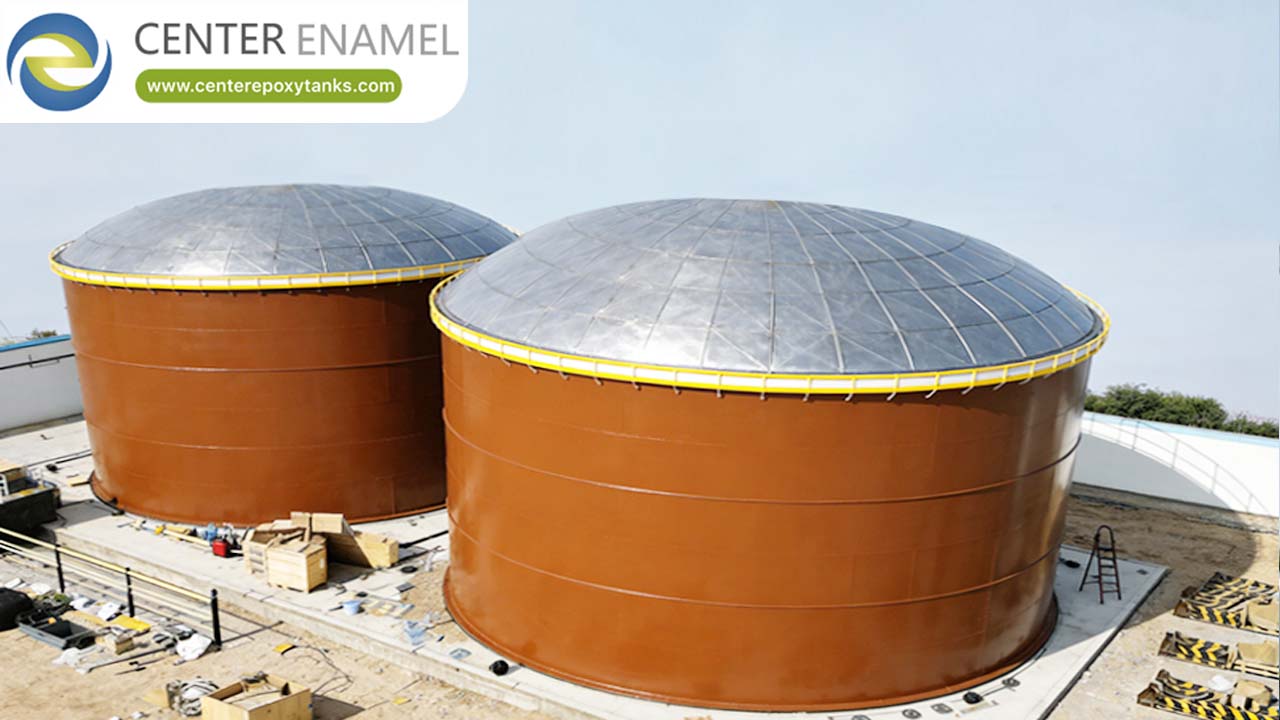
What Kind of Tank Is Acceptable for Sulfuric Acid Storage?
Sulfuric acid (H2SO4) is one of the most widely used and corrosive industrial chemicals. It is also one of the most challenging to store. Because its reactivity and corrosivity change dramatically based on concentration, temperature, and impurities, there is no single "universal" tank material.
Selecting an acceptable tank requires a rigorous engineering analysis. The failure to choose the right material can lead to rapid wall thinning, catastrophic structural collapse, and hazardous leaks.
The Golden Rule: Concentration Dictates Material
The most critical factor in choosing a tank is the concentration of the acid. The mechanism of corrosion changes significantly as you move from concentrated (e.g., 98%) to dilute solutions.
1. Concentrated Sulfuric Acid (>93%-98%)
At high concentrations, sulfuric acid acts as an oxidizing agent. It creates a passive, protective layer of iron sulfate on the surface of Carbon Steel.
● Acceptable Material: Carbon Steel (API 650 or ASME design).
● Why: The steel essentially "passivates" itself. However, this is highly dependent on velocity; if the acid flow is too fast, the passive layer is stripped away, and corrosion occurs immediately.
● Warning: Carbon steel is not suitable for dilute sulfuric acid or storage where the acid may become diluted due to moisture ingress.
2. Dilute or Intermediate Sulfuric Acid (<93%)
At lower concentrations, sulfuric acid is highly aggressive toward carbon steel, causing rapid metal loss and the generation of hydrogen gas (an explosion hazard).
● Acceptable Materials: Fiberglass Reinforced Plastic (FRP), Cross-Linked Polyethylene (XLPE/HDPE), or Stainless Steel (only in very specific, high-alloy conditions).
● Preferred Choice: FRP is the industry standard for dilute acid storage due to its inherent corrosion resistance and ability to handle varying temperatures.
Material Comparison for Acid Storage
Material | Concentration Suitability | Engineering Strengths |
Carbon Steel | High (>93%-98%) | High strength, cost-effective for bulk storage |
FRP (Fiberglass) | Low to Medium | Excellent corrosion resistance, customizable |
HDPE/XLPE | Low to Medium | Seamless, cost-effective, non-reactive |
Stainless Steel | Very limited | Only certain high-nickel alloys; generally poor |
Critical Engineering & Safety Features
Regardless of the material chosen, the storage system must be engineered for safety.
1. Secondary Containment (Bunding): Mandatory for sulfuric acid. The containment area must be capable of holding 110% of the tank’s capacity. The floor must be acid-resistant (e.g., acid-brick or specialized epoxy lining).
2. Vapor Management: Sulfuric acid can release fumes. Tanks must be equipped with appropriate scrubbers or vapor-venting systems to ensure facility safety.
3. Nozzle & Connection Integrity: The most common leak point is not the tank wall, but the connection. Use flange-bolted connections with chemical-resistant gaskets (e.g., PTFE/Teflon).
4. Temperature Control: Sulfuric acid dilution is highly exothermic (it generates massive amounts of heat). If you are diluting acid in the tank, you must have active cooling systems or use materials rated for high-temperature excursions.
Frequently Asked Questions (FAQ)
Q: Can I use stainless steel (304 or 316) for sulfuric acid?
A: Generally, no. While stainless steel works for many chemicals, it has poor resistance to sulfuric acid and will corrode rapidly. Only specific, high-nickel "super-austenitic" alloys are suitable, and these are often cost-prohibitive compared to Carbon Steel or FRP.
Q: Why is carbon steel used for 98% acid but not 50% acid?
A: At 98%, sulfuric acid is an oxidizing agent that forms a protective, non-reactive layer on the steel. At 50%, it acts as a non-oxidizing acid that actively dissolves the steel, causing immediate and severe structural damage.
Q: What safety equipment is required for these tanks?
A: At a minimum, you need level monitoring (radar or ultrasonic), temperature sensors, spill detection sensors (in the bunding), and redundant pressure-relief venting to prevent over-pressurization during filling.
Q: What is the risk of moisture in a sulfuric acid tank?
A: Sulfuric acid is hygroscopic—it aggressively absorbs moisture from the air. If moisture enters the tank, the acid concentration drops, potentially turning a "safe-to-store" concentrated acid into a "highly-corrosive" dilute acid, which will destroy a carbon steel tank from the inside out. Always use desiccant breathers on vents.
Are you currently engineering a containment system for sulfuric acid? Material selection must be validated against your specific operational temperature and concentration data to ensure long-term facility safety.


