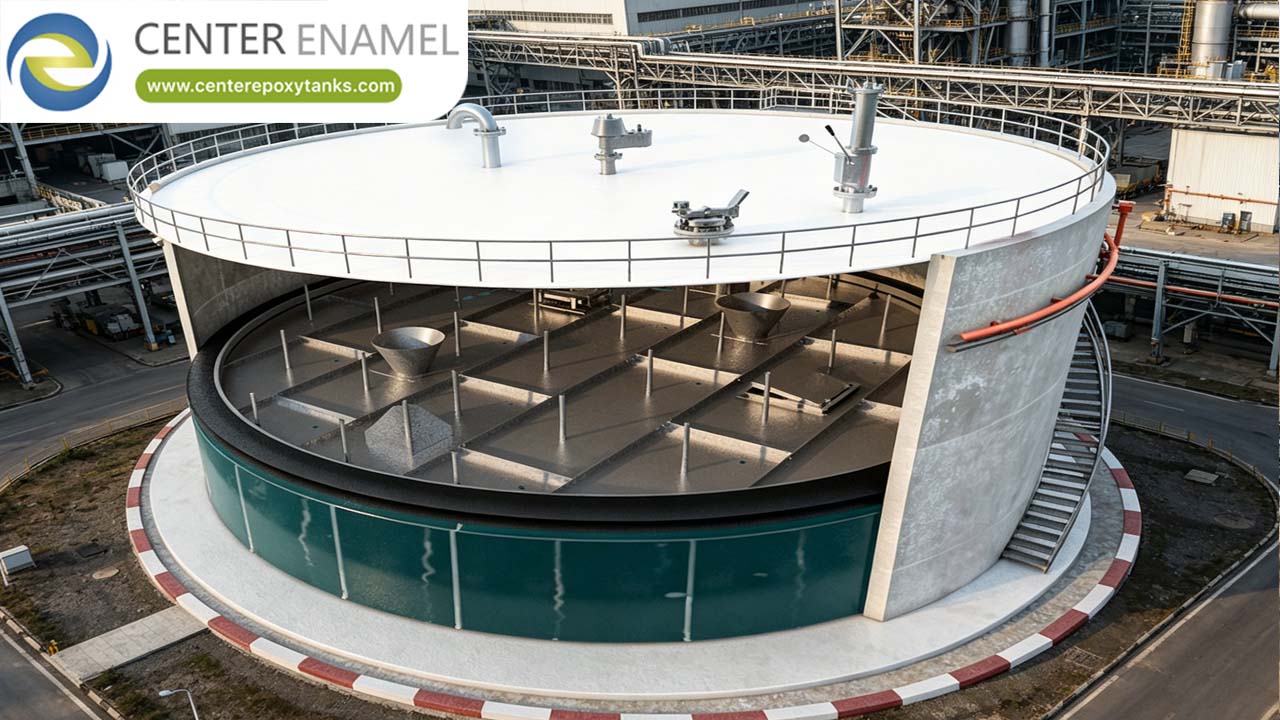
What Is the Principle of a Floating Roof Tank? Mechanics, Design, and Engineering
In the global industrial bulk liquid storage sector, containing volatile organic compounds (VOCs) and mitigating flammable vapor hazards are critical engineering priorities. The fundamental operational principle of a floating roof tank is the complete elimination of the vapor space (ullage) between the liquid surface and the top of the storage vessel.
Unlike fixed-roof tanks that maintain a permanent gas pocket prone to thermal breathing and evaporation, a floating roof tank utilizes a movable steel or aluminum deck that rests directly on the liquid's surface. Built in accordance with rigorous standards such as API 650, the roof rises and falls dynamically with inventory levels, establishing a zero-headspace hydraulic system that revolutionizes industrial containment.
1. The Core Operating Principle: Hydrostatic Buoyancy and Equilibrium
The mechanical behavior of a floating roof relies on the physical law of buoyancy, where the upward buoyant force exerted by the stored liquid equals the total downward gravitational weight of the roof structure.
● Continuous Surface Contact: The underside of the floating deck is in 100% direct contact with the liquid (in full-contact designs) or floats slightly above it using airtight pontoon compartments. This completely removes the gas-air mixture space where flammable vapors accumulate.
● Dynamic Level Tracking: As liquid is pumped into or withdrawn from the tank, the hydrostatic pressure shifts the fluid level. The roof responds passively, floating upward during filling cycles and descending smoothly during pump-out operations without requiring external electrical power.
● Load Distribution: The roof deck is engineered with distributed dead loads, live loads (such as rainwater or maintenance personnel), and buoyancy safety margins to ensure it never submerges or tilts past critical engineering thresholds.
2. Key Mechanical Subsystems and Engineering Design
To maintain structural integrity and prevent emissions, a floating roof tank integrates several precision-engineered mechanical subsystems:
● Rim Seal Systems: The annular gap between the moving outer perimeter of the roof and the vertical tank shell wall is bridged by a multi-tier seal. A Primary Seal (such as a mechanical shoe or liquid-filled tube) provides initial closure, while a Secondary Wiper Seal delivers high-efficiency environmental compliance.
● Anti-Rotation and Guide Poles: Vertical guide pipes extend through the roof deck to keep it from rotating or binding during vertical travel, ensuring smooth, aligned movement through all operational heights.
● Bleeder Vents and Automatic Air Vents: Positioned on the roof deck, these self-actuating valves open during initial filling or complete drainage to vent trapped gases or equalize pressure, preventing structural distortion.
● Roof Drains and Rolling Ladders: On external floating roofs (EFRTs), articulated swing-joint drainage pipes safely channel rainwater off the deck, while hinged rolling ladders grant operators safe, continuous access regardless of roof height.
Data Table: Floating Roof Tank Mechanics and Types Matrix
Engineering Parameter | Internal Floating Roof Tank (IFRT) | External Floating Roof Tank (EFRT) |
Governing Standard | API 650 Appendix H | API 650 Appendix C |
Primary Buoyancy Mechanism | Pontoon deck or full-contact honeycomb panels | Pontoon-type or double-deck annular compartments |
Weather & Environmental Exposure | Shielded inside a closed fixed roof or geodesic dome | Fully exposed to open atmosphere and precipitation |
Rainwater Management | Minimal or zero internal drainage needed | Requires articulated swing-joint drainage pipe systems |
Primary VOC Suppression | Dual-barrier containment (Dome + Internal Deck) | High-integrity rim seal and deck vapor suppression |
Typical Industrial Application | Refined fuels, jet fuel, volatile chemical solvents | Crude oil storage terminals and bulk petroleum reserves |
3. Industrial Benefits of Floating Roof Mechanics
Implementing floating roof technology yields profound operational, safety, and economic advantages for terminal operators:
● Massive VOC Reduction: By eradicating the vapor pocket, floating roofs suppress product evaporation, reducing volatile organic compound emissions by up to 99% and satisfying strict environmental clean-air regulations.
● Elimination of Flammable Headspace: Removing the oxygen-hydrocarbon vapor mixture drastically mitigates the risk of lightning or static spark ignition, ensuring high baseline fire safety.
● Product Quality Preservation: Preventing light-end hydrocarbons from flashing off into the atmosphere preserves the chemical grade, specific gravity, and economic value of stored petroleum and petrochemical products.
Frequently Asked Questions (FAQ)
Q: What is the primary operating principle of a floating roof tank?
A: The core principle is the elimination of the internal vapor space (ullage) by utilizing a movable deck that rests directly on the liquid surface, rising and falling dynamically with inventory to prevent evaporation.
Q: Do floating roof tanks require external electric motors to move up and down?
A: No. Floating roofs operate entirely passively via hydrostatic buoyancy. The roof moves automatically based on the volume changes and liquid pressure created during filling and emptying cycles.
Q: Why are rim seals critical to floating roof mechanics?
A: Rim seals bridge the annular gap between the moving roof deck and the rigid tank shell, preventing fugitive hydrocarbon gases from escaping into the atmosphere and stopping rainwater or debris from entering the product.
Q: What is the difference in mechanical protection between internal and external floating roofs?
A: An internal floating roof operates inside a closed vessel capped by a fixed outer roof or dome, protecting it from weather and wind turbulence. An external floating roof is directly exposed to the atmosphere and requires specialized drainage and heavy-duty weather seals.


