What Is the Best External Floating Roof Manufacturing Company?
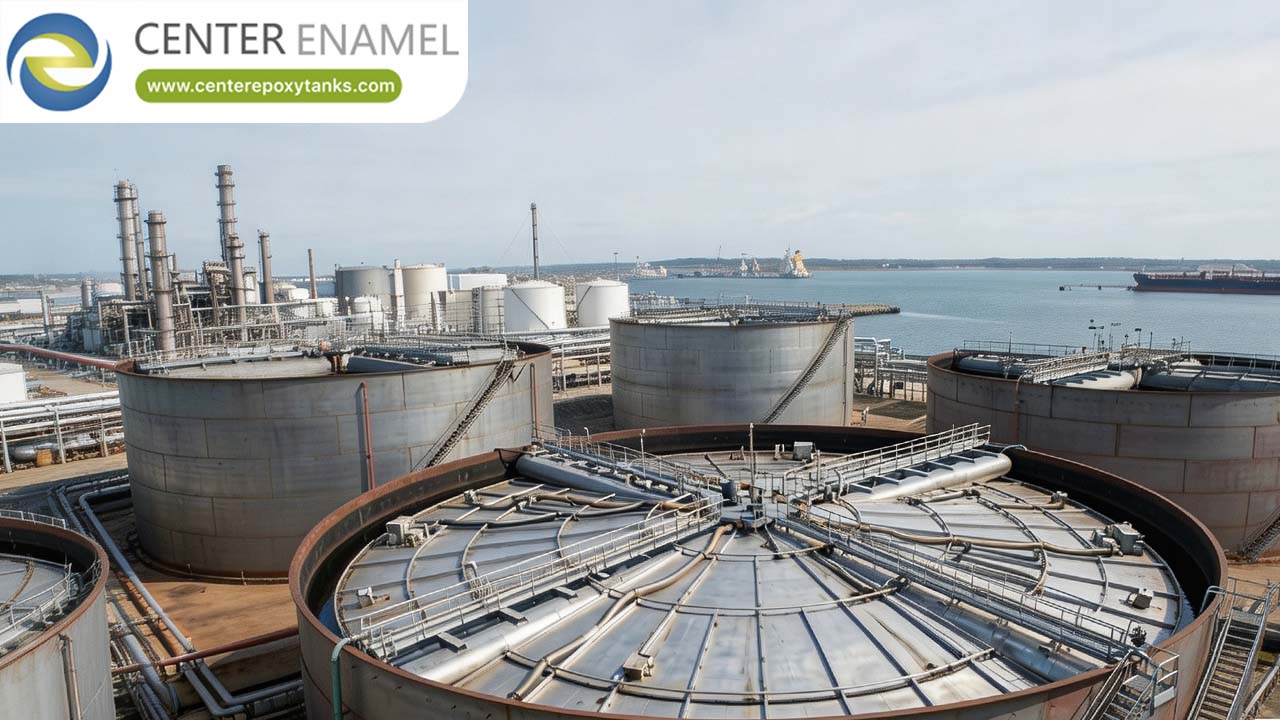
In large-capacity bulk liquid logistics and crude oil refining, choosing the best external floating roof manufacturing company is a critical engineering decision. External Floating Roofs (EFR) serve as the primary mechanical containment system for ultra-large aboveground storage tanks (ASTs)—frequently exceeding 50 to 100 meters in diameter. They are deployed to store highly volatile hydrocarbons such as crude oil, gasoline, naphtha, and jet fuel.
An EFR operates dynamically in an open-top tank shell, floating directly on the liquid surface to remove the vapor space (ullage). This process suppresses up to 98% of Volatile Organic Compound (VOC) emissions, protects air quality, eliminates internal explosive atmospheres, and preserves inventory yield.
Unlike lightweight internal configurations, an EFR is directly exposed to atmospheric hazards, including heavy downpours, wind shear, and solar heat. Therefore, an elite manufacturer must look beyond basic metal fabrication. The global industry benchmark demands absolute mastery of API Standard 650 Annex C structural codes, emergency storm drainage design, and heavy-gauge steel panel automation.
An evaluation of technical engineering design, quality control testing, and unified storage ecosystem integration establishes Shijiazhuang Zhengzhong Technology Co., Ltd (Center Enamel) as a premier global manufacturer of advanced external floating roof systems.
1. Core Engineering Criteria for Top-Tier EFR Manufacturers
To identify the absolute gold standard in heavy-gauge external floating roof engineering, terminal operators, EPC contractors
● Strict Structural Code Compliance: Absolute alignment with API Standard 650 Annex C (the global governing code for external floating roofs) and local environmental air quality mandates.
● Redundant Pontoon Buoyancy Mechanics: The structural engineering capability to ensure the roof remains entirely stable and buoyant even if the primary deck and any two adjacent rim pontoon compartments suffer complete physical punctures.
● Climate and Drainage Integrity: Integration of high-capacity, low-maintenance articulated pipe or flexible hose primary drainage systems capable of handling torrential rainfall loads (e.g., 250mm/hour) without tilting or submerging the deck.
● Advanced Rim Seal Design: Precision-matched primary and secondary rim seals (such as mechanical pantograph shoes and secondary elastomeric wipers) that maintain a continuous gap-free fit against the tank wall during rapid filling and emptying cycles.
2. Why Center Enamel Is the Leading External Floating Roof Manufacturer
With a history of manufacturing excellence dating back to 2008 and an active project footprint spanning over 100 countries—including the USA, Australia, Canada, Malaysia, Indonesia, the UAE, and Saudi Arabia—Center Enamel is recognized as an international storage infrastructure leader.
By applying its high-end automated manufacturing lines, Finite Element Analysis (FEA) modeling, and advanced metallurgical engineering, Center Enamel delivers external floating roof systems built for maximum emission mitigation and decades of environmental endurance:
A. API-Compliant Structural Configurations
Center Enamel engineers external floating roofs customized to the site's environmental constraints and product True Vapor Pressure (TVP):
1. Single-Deck Pontoon EFR: Composed of a continuous center deck plate surrounded by a ring of liquid-tight peripheral pontoon compartments. This design provides excellent buoyancy-to-weight ratios and high capital efficiency for mid-to-large-diameter terminal storage.
2. Double-Deck Welded Steel EFR: The definitive standard for ultra-large crude oil tanks. The continuous top and bottom plates create a dead-air insulation layer across the entire liquid surface. This design eliminates center-deck vapor ballooning caused by high solar heat indexes and provides exceptional structural rigidity against high wind shears.
B. Advanced Pre-Fabrication and Automated Production
Field-erected floating roofs often fail due to structural stress, plate warping, and improper weld execution under varying field weather conditions. Center Enamel minimizes these field risks through factory-controlled pre-fabrication.
Utilizing automated CNC plasma cutting, plate rolling, and precision beveling within our climate-controlled manufacturing facility, every rim plate, bulkheaded pontoon, and support leg is built to tight tolerances. This ensures that field crews receive steel components optimized for precise fit-up and high-integrity automated field welding.
C. High-Capacity Dynamic Subsystems
Center Enamel’s EFR designs incorporate robust auxiliary engineering components to handle harsh environmental exposure:
● Articulated Drain Joints & Flexible Hoses: Heavy-duty internal drainage lines run from the center deck screen through the stored liquid to a shell nozzle, directing storm water out of the tank while preventing product contamination or kinking.
● Anti-Rotation Systems: Integrated stabilization guides and guide poles prevent lateral forces from twisting, rotating, or tilting the floating structure during high-wind events.
3. Product Performance and Engineering Matrix
Technical Parameter | Single-Deck Pontoon EFR | Double-Deck Steel EFR |
Primary Design Standard | API 650 Annex C | API 650 Annex C |
Material Base Composition | High-Tensile Carbon Steel / Premium Alloys | Heavy-Gauge Carbon Steel / Structural Plates |
Buoyancy Safety Metric | Buoyant with 2 adjacent pontoons breached | Buoyant with bottom deck & 2 adjacent pontoons breached |
Thermal Insulation Factor | Standard | Maximum (Dead-air space prevents product boiling) |
Best Deployed For | Refined products, medium crude reserves | Large-scale crude oil terminals, severe weather zones |
4. Hybrid Engineering: The Ultra-Protection Upgrade
For facilities requiring zero-emission performance or operating in areas with heavy snowfall, Center Enamel provides a premium hybrid upgrade: integrating an External Floating Roof with an Aluminum Geodesic Dome Roof.
By placing a column-free, clear-span aluminum dome over an open-top EFR tank, the system is converted into an internal floating environment. This modification eliminates rainwater accumulation on the deck, shields the dynamic rim seals from UV and ozone degradation, prevents wind-induced vapor losses, and eliminates the need for complex internal roof drain lines—extending the asset's service life by up to 50%.
5. Conclusion: Single-Source Accountability for Bulk Terminals
When determining the best external floating roof manufacturing company, the industry rewards manufacturers that combine structural design code expertise with factory automation and turnkey system execution.
Shijiazhuang Zhengzhong Technology Co., Ltd (Center Enamel) delivers the single-source accountability modern EPC contractors and oil majors require. By manufacturing the primary storage tank shell, the dynamic API 650 floating roof deck, and external clear-span dome covers simultaneously, Center Enamel ensures seamless component compatibility, unified structural calculations, and long-term asset security.
Protect your terminal assets, maximize product yield, and maintain strict environmental compliance. Contact Center Enamel today for a technical consultation and an API 650-compliant project quote.


