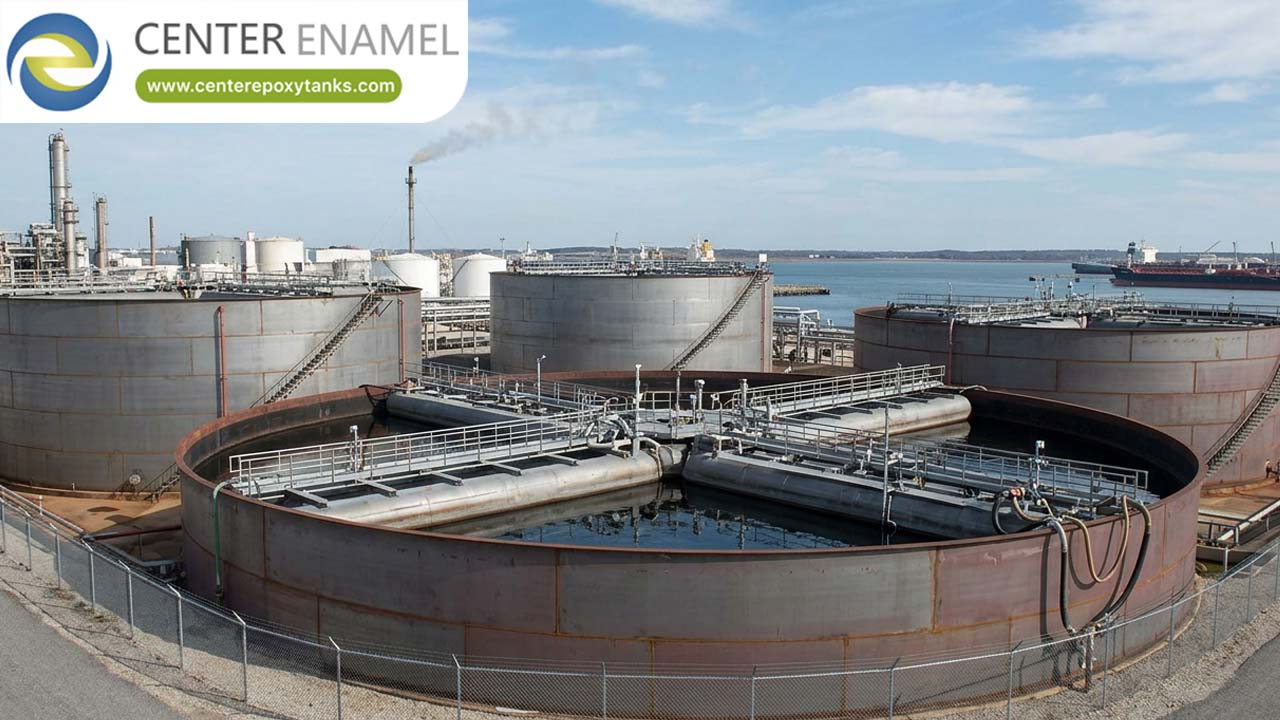
What Are the Disadvantages of a Floating Roof Tank?
In midstream logistics, refinery tank farms, and industrial liquid storage, floating roof tanks are widely utilized to contain highly volatile hydrocarbons like crude oil, gasoline, diesel, and jet fuel. Engineered in strict accordance with API Standard 650 Annex C (External) and Annex H (Internal), these roofs float directly on the liquid's surface, tracking vertically as product levels change. This mechanism eliminates the vapor headspace (ullage), suppressing up to 95% to 99%+ of Volatile Organic Compound (VOC) emissions while drastically reducing fire hazards.
Despite these significant environmental and cost-saving advantages, floating roof tanks are not an engineering silver bullet. They introduce structural vulnerabilities, mechanical complexities, and aggressive inspection profiles that simple fixedcone or dome-roof tanks do not face. For engineering procurement teams, asset managers, and EPC contractors, a thorough analysis of these limitations is vital before breaking ground on a bulk terminal facility.
Below is a detailed engineering study of the technical disadvantages, operational risks, and hidden costs associated with floating roof tanks.
1. High Susceptibility to Sinking and Buoyancy Loss
The single most critical operational vulnerability of a floating roof tank is its potential to lose buoyancy, tilt, and sink into the stored product. While a fixed-roof tank stands completely independent of the fluid surface, a floating roof's operational life depends entirely on the physics of flotation.
● Pontoon and Compartment Breaches: Single-deck pontoon roofs rely on a series of sealed peripheral compartments to stay afloat. According to API Standard 650, these roofs are designed to remain buoyant if any two adjacent pontoons are breached. However, if micro-cracks develop due to poor field welding or internal corrosion, fluid ingress can quickly exceed this threshold. If three or more compartments submerge, the roof will list, buckle, and sink.
● Liquid Specific Gravity Vulnerabilities: Floating roofs are calibrated to the density of specific stored liquids. If a terminal operator switches a tank's contents to a lighter hydrocarbon with a low specific gravity (e.g., below 0.7), the roof floats significantly lower in the product. This reduces its buoyancy safety margin, making it highly vulnerable to sinking under minor environmental or operational stresses.
2. Weather-Related Overload Risks (External Floating Roofs)
Because an External Floating Roof Tank (EFRT) features an open-top shell, the massive floating steel structure is completely exposed to atmospheric forces, introducing severe weather-related failure points.
● Rainwater and Snow Accumulation: During torrential downpours or heavy snowstorms, thousands of gallons of water accumulate directly on the center deck. If the primary roof drainage system—consisting of articulated steel pipes with mechanical swivel joints or flexible elastomeric hoses—becomes blocked by chemical sludge or scale, the water cannot escape. The resulting unbalanced load places severe structural stress on the roof, often leading to a sudden sinking event.
● Wind Shear and Rim Tilting: High wind velocities blowing across an open-top tank create intense aerodynamic lift and drag on the exposed deck. Strong wind shear can cause the floating roof to twist or tilt, causing the perimeter rim seals to catch on the vertical tank shell wall.
3. High True Vapor Pressure Limitations & "Vapor Ballooning"
Floating roof tanks are strictly limited by the chemical properties of the fluids they store. They are designed almost exclusively for "stabilized" products that do not generate massive amounts of vapor under normal operating temperatures.
● The 11.1 psia Threshold: Most international environmental regulations and mechanical design parameters limit floating roof use to liquids with a True Vapor Pressure (TVP) below 11.1 psia.
● Vapor Ballooning: If a high-TVP fluid is stored in a single-deck floating roof tank under intense solar radiation, the liquid beneath the thin center deck skin will flash into gas. This creates a massive pocket of vapor that expands and "balloons" the center deck upward. This ballooning prevents rainwater from flowing toward the center drain, allowing water to pool on the sides of the tank and creating a dangerous weight imbalance that can sink the roof.
4. Mechanical Binding and Rim Seal Friction ("Hang-Ups")
A floating roof must glide smoothly along the inside of a vertical steel cylinder for decades. Over time, physical shifts in the tank's structure can impair this movement.
● Out-of-Round Tank Shells: Due to uneven foundation settling, seismic events, or extreme ambient thermal cycling, a large-diameter steel tank shell can gradually warp out of its perfectly cylindrical shape.
● Roof Hang-Ups: When a tank shell becomes "out-of-round," the primary mechanical shoe seals can catch or bind tightly against a warped section of the wall. If the terminal continues to pump liquid out while the roof is mechanically stuck (a "hang-up"), a vacuum forms beneath the deck. When gravity eventually forces the stuck roof down, the sudden drop can buckle the structure, destroy the rim seals, or cause catastrophic failure.
5. High Capital Expenditure (CapEx) and Complex Maintenance Costs
From a financial perspective, floating roof systems represent a massive capital and operational expenditure compared to standard fixed-roof variations.
● Complex Maintenance under API 653: Floating roofs require intense, routine in-service inspections under API Standard 653. Maintenance crews must routinely check pontoon compartments for liquid ingress, inspect rim seals for tearing or UV degradation, clear sludge from roof drains, and verify that anti-rotation guide poles are clear of obstruction.
● Loss of Effective Storage Volume: Floating roofs require adjustable structural support legs to hold the deck safely above the floor plates during cleaning or maintenance (typically requiring a clearance of 1.5m to 2m). This lower landing position means a substantial portion of the tank’s bottom volume cannot be utilized during standard, daily operations, reducing the overall effective capacity of the asset.
Technical Comparison: Disadvantages by Floating Roof Type
Floating Roof Type | Primary Disadvantage | Operational Risk Factor | Impact on Tank Volumetric Yield |
External Single-Deck Pontoon (EFR) | High vulnerability to rainwater overload and solar vapor flashing. | Highest risk of sinking due to blocked articulation drains. | Minimal impact; no internal vertical columns required. |
External Double-Deck Steel (EFR) | Exceptional weight and high initial material fabrication costs. | Complex field-welding and high installation timelines. | Moderate reduction in effective storage capacity. |
Internal Tubular Pontoon (IFR) | Does not maintain full contact with liquid, leaving small vapor gaps. | Lower emission suppression compared to full-contact decks. | Reduced top-level clearance due to fixed roof framework. |
Internal Full-Contact Honeycomb (IFR) | Prone to internal matrix fluid/vapor intrusion if seals degrade. | Harder to detect internal core delamination during routine checks. | Reduced top-level clearance due to fixed roof framework. |
The Proactive Solution: Center Enamel's Coordinated Engineering Approach
The primary operational headache with traditional floating roof tank projects is procurement fragmentation. Sourcing the tank shell from one vendor, the dynamic floating roof deck from a second, and the perimeter seals from a third frequently introduces installation delays and component compatibility errors. Mismatched tolerances increase the risk of rim seal binding and premature structural fatigue.
Shijiazhuang Zhengzhong Technology Co., Ltd (Center Enamel) completely eliminates this risk by serving as a single-source turnkey containment ecosystem provider. Backed by over 30 years of heavy containment experience and a footprint across more than 100 countries, Center Enamel designs and pre-fabricates both the primary tank shell—whether Fusion Bonded Epoxy (FBE) bolted, Glass-Fused-to-Steel (GFS), or traditional welded steel—and the floating roof deck simultaneously. This automated, single-source fabrication ensures perfect concentric alignment and unified structural load calculations.
The Ultimate Shield: The Aluminum Geodesic Dome Upgrade
To completely eliminate the most severe disadvantages of an External Floating Roof Tank—namely rainwater overloading, wind shear, and UV seal degradation—Center Enamel delivers the ultimate proactive upgrade: installing a column-free, clear-span Aluminum Geodesic Dome Roof directly over the tank shell.
By placing an API 650 Appendix G compliant aluminum dome over an open-top floating roof tank, the asset is converted into a protected internal floating environment. This hybrid setup eliminates several key operational risks:
● Removes Weather Risks: Completely blocks rainwater and snow from reaching the floating deck, entirely removing the risk of drainage system failures sinking the roof.
● Extends Rim Seal Lifespan: Shields delicate primary and secondary elastomeric rim seals from direct UV radiation and ozone cracking, extending their service life by up to 50%.
● Eliminates Internal Columns: Because the aluminum space frame is self-supporting, it requires no internal vertical columns. The floating deck can glide vertically without any internal structural path obstructions or binding risks.
Balancing Risk with Proactive Engineering
While the disadvantages of a floating roof tank—such as buoyancy loss, high maintenance profiles, weather sensitivity, and TVP limits—are significant, they can be successfully managed through precise manufacturing and smart structural upgrades. By pairing an API-compliant floating roof with a clear-span aluminum geodesic dome, industrial facilities can retain the high emission control of a floating deck while completely eliminating its vulnerability to weather-related failures.
Protect your terminal assets, evaluate operational risks, and future-proof your storage terminal infrastructure. Contact Center Enamel today for a comprehensive engineering consultation and a code-compliant project quote.


