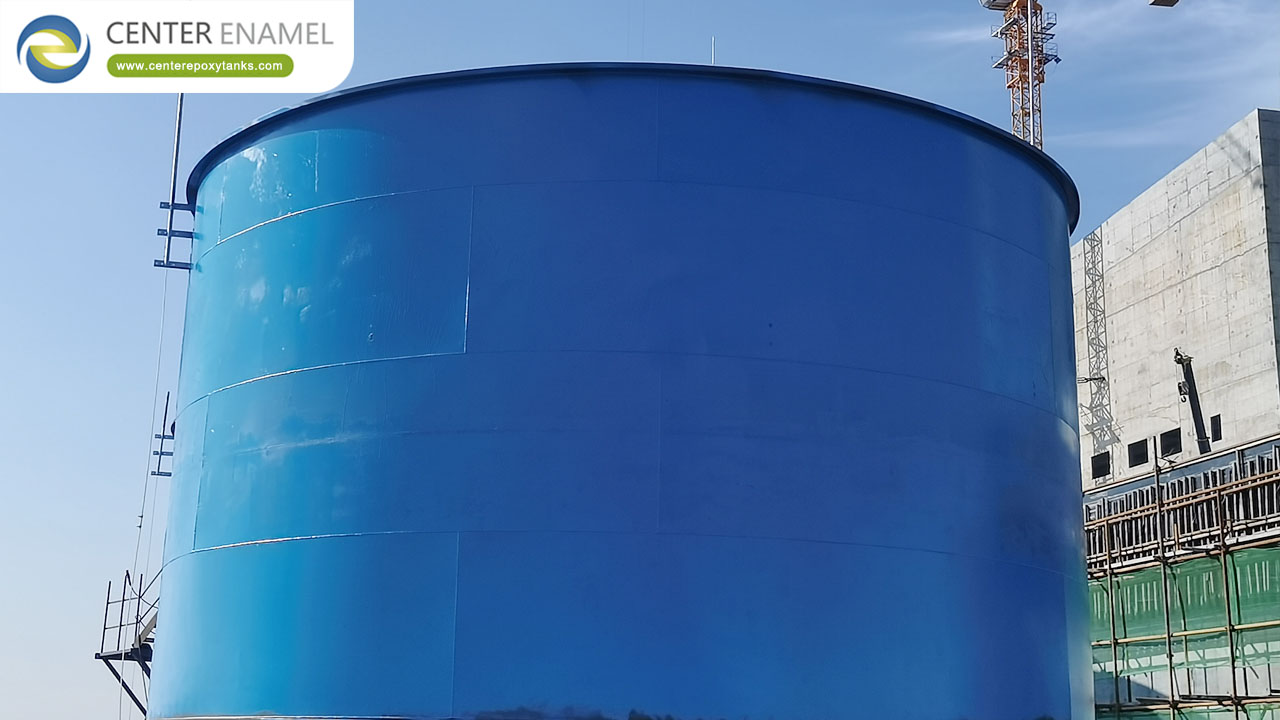
What Is Tank Farms Turnkey Construction?
Tank farms turnkey construction is the single-contract delivery of a multi-tank storage facility: coordinated engineering, batch tank construction, interconnecting piping, containment, fire systems, and infrastructure — handed over as one operational asset, sequenced to bring tanks online in phases.
A tank farm is a storage battery: anywhere from a handful to dozens of tanks sharing containment, transfer systems, firewater networks, and control infrastructure. Its economics live in repetition — identical or modularized tank designs, cycling erection crews, and phased commissioning that starts generating revenue from the first bank of tanks while the rest still rise.
Turnkey construction of a farm is fundamentally a logistics and sequencing discipline: foundation packages released in waves, fabrication kits staged to match erection, NDE crews leapfrogging between tanks, and piping spools prefabricated against model coordinates. Done well, tank three costs measurably less than tank one, and the whole farm hands over on one date with one data-book library.
What Makes Tank Farm Construction Different
Single-tank construction is a craft; farm construction is a production system. Contractors who cannot industrialize the repetition give back the farm's entire economic advantage.
l Sequencing failures idle crews and cranes between tanks.
l Interface misalignment between tank and interconnecting piping multiplies across every battery limit.
l Phased commissioning demands as-built accuracy on early tanks while later tanks are still open.
The Turnkey Farm Construction System
A productive farm program runs as production lines:
1. Master Sequencing Plan: Tank groups, foundation waves, and erection cycles are mapped so civil, erection, NDE, and piping crews flow continuously between work fronts.
2. Batch Fabrication and Kit Staging: Plate, nozzles, and piping spools are fabricated in batches and staged tank by tank to keep site inventory matched to the erection plan.
3. Cycling Erection and NDE: Jacking or crane crews work repeated cycles with NDE closure following each tank, keeping the data book current as construction advances.
4. Phased Commissioning and Handover: Early tank banks are tested, connected, and commissioned while the remainder complete, protecting the owner's revenue curve.
Turnkey Farm Delivery vs Tank-by-Tank Contracting
Delivery Aspect | Turnkey Farm Package | Tank-by-Tank Contracts |
Repetition Economics | Learning curve priced into one contract | Every tank a new learning curve |
Interface Management | Piping and systems engineered with tanks in one model | Battery limits disputed contract by contract |
Crew Continuity | Continuous cycling of erection and NDE crews | Crews mobilize and demobilize per tank |
Overall Schedule | Phased early revenue, single completion date | Cumulative delays across serial awards |
Tank Farm Turnkey Applications
l Refinery offsite tankage expansion programs
l Fuel import terminals with marine loading
l Crude and condensate evacuation farms at field developments
l Water treatment plant multi-tank process batteries
l Renewable fuel storage and blending farms
l Strategic petroleum and product reserves
Key Advantages of Turnkey Tank Farm Construction
1. Repetition Captured as Savings
One contractor cycling crews across identical tanks delivers unit-cost reduction that fragmented contracting structurally cannot.
2. Phased Revenue, Single Completion
Early banks commission while later tanks rise — owners begin earning months before a traditionally dated completion.
3. One Data-Book Library for the Whole Farm
Uniform documentation across every tank simplifies inspection planning, API 653 programs, and future expansion decades out.
Quality Standards and Proven References
Center Enamel provides design, fabrication, construction, and aftermarket services for storage tanks and silos under ISO 9001 and ISO 45001 certified quality systems, with EN 1090 structural steel certification. With three decades of experience and projects delivered to more than 100 countries — including biogas and wastewater references for Paques and Veolia and industrial references for PetroChina and Sinopec — the company supports tank assets from commissioning through decades of inspection-driven service.
Frequently Asked Questions (FAQ)
Q: How many tanks make a tank farm?
A: Any coordinated battery qualifies — practical turnkey programs run from 3 or 4 tanks to several dozen across phased expansions.
Q: Can a farm be built beside operating tanks?
A: Yes; hot-work management, SIMOPS planning, and phased containment tie-ins are standard practice in live-terminal expansions.
Q: How is expansion planned into a farm?
A: Master planning reserves plot, containment, and headers for future tanks so expansions bolt into prepared interfaces rather than rebuilding the farm.
Q: What is the expected lifespan of a professionally engineered steel tank?
A: Steel tanks designed and built to recognized codes (API 650, API 620, AWWA D100, or ASME Section VIII) and maintained under scheduled inspection, coating, and repair programs routinely deliver service lives exceeding 30 years — and tanks managed under API 653-class integrity programs commonly remain in safe service for 50 years or more.


