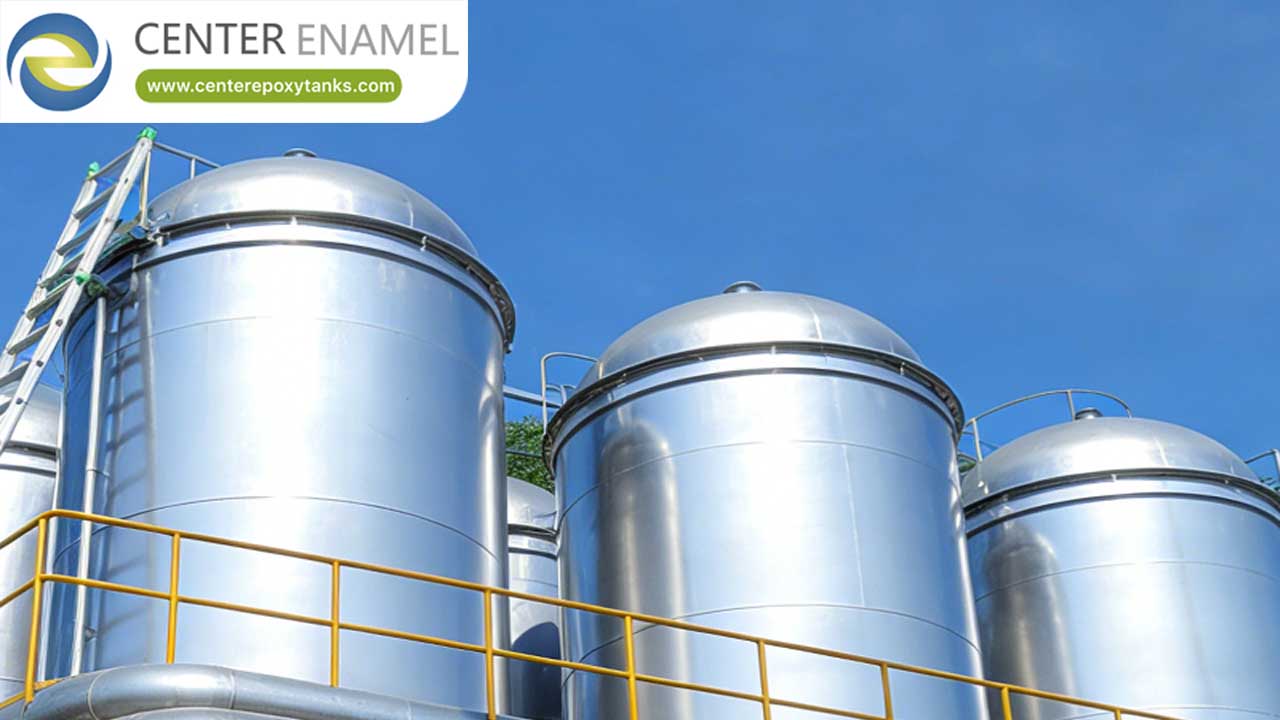
What Is an Olive Oil Tank Used For? What Are the Capacity Options?
What Is an Olive Oil Tank Used For?
An olive oil tank is a specialized industrial vessel designed to store, settle, and preserve olive oil after extraction. Unlike standard liquid storage, olive oil is highly sensitive to environmental degradation. The primary functions of these tanks are:
Oxidation Prevention: Exposure to oxygen degrades the polyphenols in olive oil, leading to rancidity. Tanks use airtight seals, variable capacity floating lids, or inert gas fittings (nitrogen blanketing) to eliminate headspace and block oxygen contact.
Light and UV Protection: Light accelerates the photo-oxidation of chlorophyll in the oil. Solid stainless steel construction creates an opaque barrier, preserving the oil's flavor and nutritional profile better than plastic or glass.
Sediment Separation (Racking): Freshly milled olive oil contains microscopic water and fruit particles. Tanks are used for "settling," where gravity pulls these impurities to the bottom. Specialized bottoms allow operators to purge this sediment without disturbing the clean oil above.
Temperature Stabilization: Olive oil is best preserved between 13°C and 25°C. High-quality tanks maintain thermal stability and can be fitted with cooling jackets to regulate temperature during long-term commercial storage.
Critical Design Features
Not all tanks are suitable for high-grade olive oil. Commercial and industrial tanks rely on specific engineering features to meet food safety and quality standards:
Conical Bottoms: Usually angled at 30°, centering sediment at the lowest point for easy purging via a bottom valve.
Inclined/Sloped Bottoms: Flat bottoms that tilt slightly toward a drawing valve, ideal for smaller footprints.
Inert Gas Fittings: Built-in valves allow operators to inject nitrogen or argon into the tank, displacing oxygen and creating a protective blanket over the oil.
Variable Capacity Lids: For fluctuating storage volumes, floating lids equipped with pneumatic pneumatic hand pumps create an airtight seal exactly at the oil's surface line, adapting as oil is drawn out.
What Are the Capacity Options?
Olive oil storage tanks are highly scalable, catering to everyone from boutique estate producers to massive export facilities.
Capacity Category | Volume Range | Best Suited For |
Micro / Boutique | 10 L – 100 L | Home producers, test batches, and retail decanting. Often feature flat bottoms and variable capacity lids. |
Commercial | 300 L – 5,000 L | Medium-scale mills and estate producers. Standardized with conical bottoms, sample taps, and welded structural legs. |
Industrial | 10,000 L – 30,000+ L | Large-scale bottling plants and bulk exporters. Equipped with advanced nitrogen injection rings, thermal jackets, and automated pumping systems. |
Frequently Asked Questions (FAQ)
Why is stainless steel better than plastic for storing olive oil?
Stainless steel (specifically AISI 304 or 316) is completely non-porous and opaque. Plastic can leach polymers into the oil over time, allow microscopic oxygen ingress, and expose the oil to damaging UV light. Stainless steel prevents flavor contamination and extends shelf life indefinitely.
What is nitrogen blanketing in olive oil storage?
Nitrogen blanketing is the process of injecting food-grade nitrogen gas into the top of the storage tank. Because nitrogen is heavier than oxygen and completely inert, it forms a protective "blanket" over the oil, pushing out ambient air and halting the oxidation process.
Do I need a conical bottom or a flat bottom tank?
If you are storing freshly pressed oil that still needs to settle, a conical bottom is essential. It funnels sediment and water to a concentrated point for easy removal. Flat bottom tanks are better suited for oil that has already been filtered and racked, or for locations with severe height restrictions.
How do variable capacity tanks work?
Variable capacity tanks feature a floating lid equipped with an inflatable pneumatic seal. As the volume of oil changes, the lid moves up or down with the liquid level. Using a hand pump, the operator inflates the seal against the tank wall, ensuring zero headspace and zero oxygen exposure regardless of how much oil is inside.


