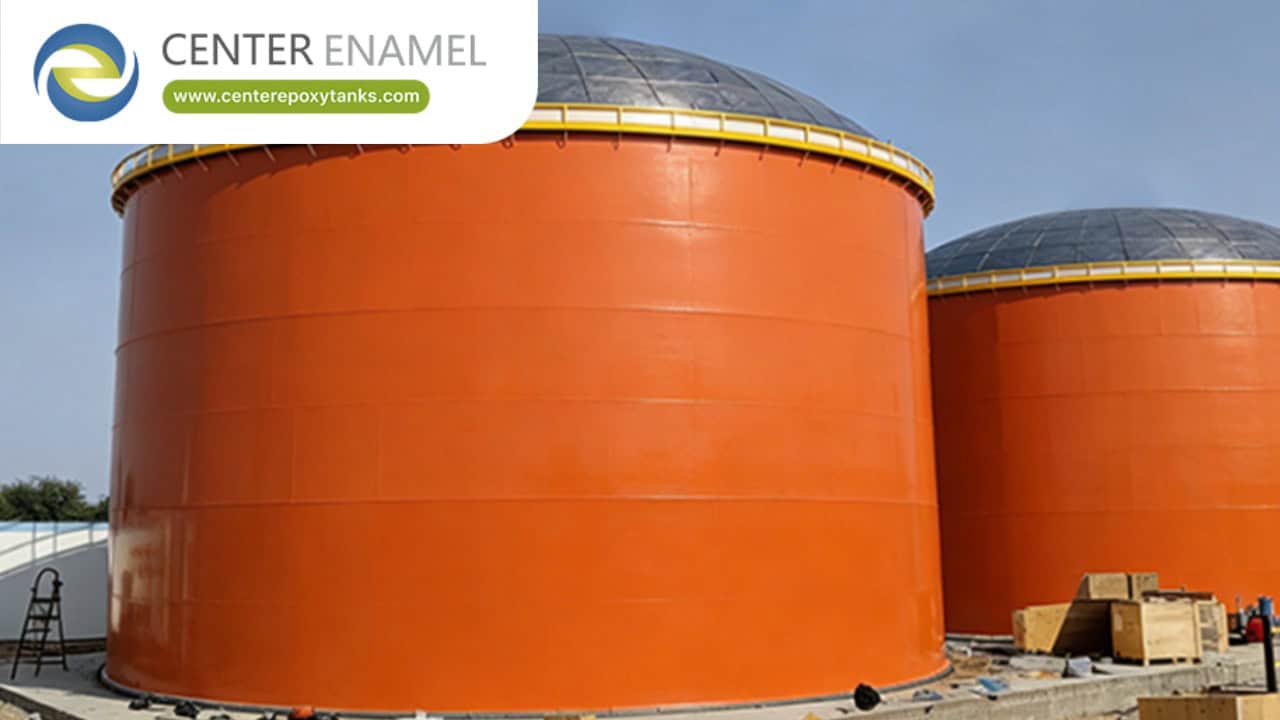
What Is an Oil Storage Tank?
An oil storage tank is a heavy-duty containment vessel engineered to safely store crude oil, liquid petroleum, refined fuels (such as diesel, gasoline, and jet fuel), and petrochemical intermediates. Operating across upstream extraction fields, midstream pipeline transit hubs, and downstream refining terminals, these structures serve as critical safety assets designed to handle massive hydrostatic loads while preventing environmental contamination and hazardous vapor releases.
Unlike standard domestic containers, industrial oil storage tanks are engineered structures built in strict accordance with international standards—most notably API 650 (Welded Tanks for Oil Storage)—ensuring structural resistance against internal pressures, seismic activity, and high-velocity wind loads.
Core Components and Engineering Fundamentals
An oil storage tank is much more than a large metal cylinder; it is a carefully calculated system comprising several integral components:
Shell Courses: Stacked horizontal rings of high-tensile steel plates (such as ASTM A36 or ASTM A516) whose thickness is mathematically optimized to resist increasing liquid head pressure from bottom to top.
Foundation & Bottom Plates: Welded steel floor plates resting on a prepared compacted sand pad or concrete ringwall, designed with slope drainage to prevent sub-base corrosion.
Roof Configurations: Ranging from fixed cone roofs for low-volatility fuel oils to dynamic internal and external floating roofs that move with the liquid level to eliminate volatile organic compound (VOC) emissions.
Appurtenances & Safety Systems: Integrated shell manways, fill/drain nozzles, pressure-vacuum relief valves (PVRVs), and cathodic protection systems to mitigate corrosion risks.
Data Table: Overview of Oil Storage Tank Types and Specifications
Tank Classification | Primary Design & Roof Type | Operating Pressure Limit | Primary Stored Media | Governing Standards |
Fixed Cone Roof Tank | Vertical cylinder with a welded conical roof | Atmospheric (up to 2.5 psig) | Heavy crude oil, diesel, fuel oil, lubricants | API 650 |
External Floating Roof Tank (EFRT) | Open-top vertical shell with a floating deck | Atmospheric | Volatile crude oil, gasoline, condensates | API 650 (Annex C) |
Internal Floating Roof Tank (IFR) | Fixed outer dome with internal floating pan | Atmospheric | Volatile crude, jet fuel, naphtha | API 650 (Annex H) |
Pressurized Sphere (Hortonsphere) | Monolithic spherical geometry | High Pressure (15+ psig) | Propane, butane, liquefied petroleum gas (LPG) | API 620 / ASME |
Frequently Asked Questions (FAQ)
Q: What is an oil storage tank?
A: An oil storage tank is an engineered aboveground or underground container used in the energy sector to securely hold crude oil, refined fuels, or petrochemicals during extraction, transportation, and refining processes.
Q: What engineering standard governs oil storage tanks?
A: The global benchmark for welded steel oil storage tanks is API 650, which establishes mandatory minimum criteria for material selection, shell design, welding procedures, and quality inspection.
Q: Why do some oil storage tanks feature floating roofs?
A: Floating roofs rest directly on the liquid surface, eliminating the vapor space (ullage) inside the tank. This dramatically reduces evaporation losses of volatile organic compounds (VOCs) and prevents hazardous vapor accumulation.
Q: What materials are used to build industrial oil storage tanks?
A: The majority of industrial oil tanks are constructed using certified carbon steel plates (such as ASTM A36 or ASTM A516 Grade 70) selected for their high tensile strength, weldability, and structural durability.


