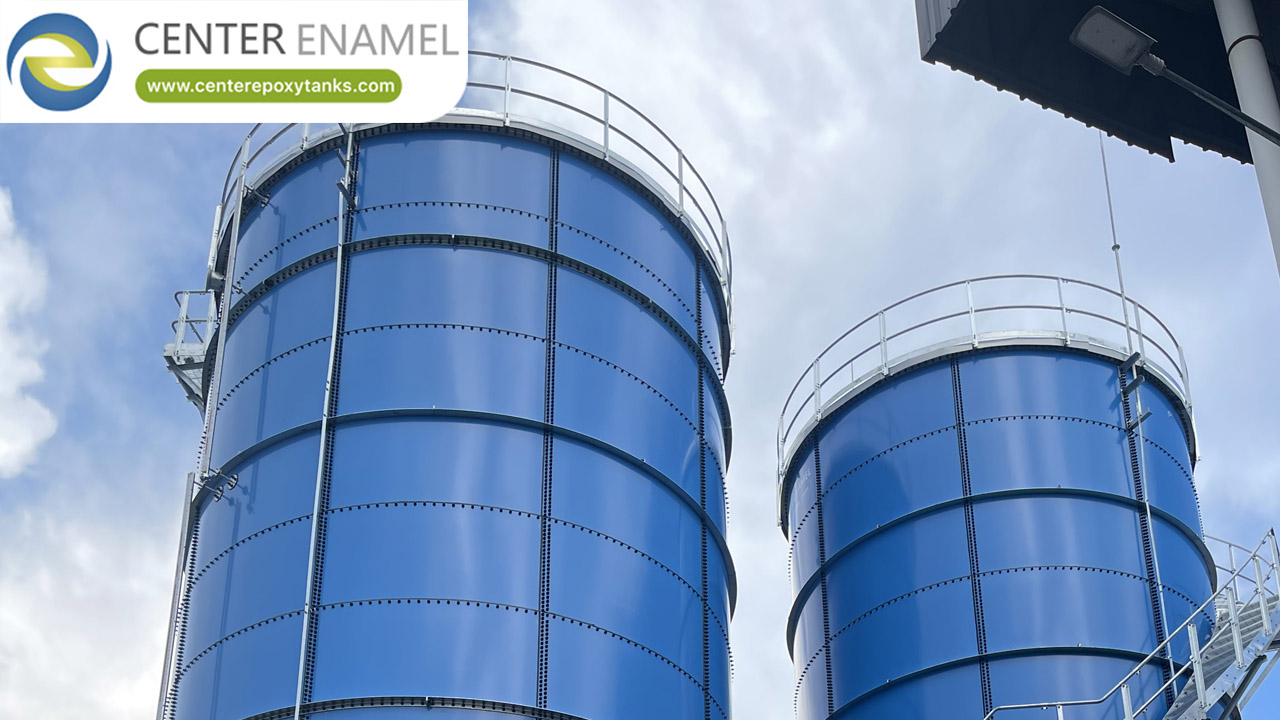
What is an FBE Pulp & Paper Wastewater Storage Tank?
An FBE (Fusion Bonded Epoxy) pulp and paper wastewater storage tank is an advanced modular, bolted steel industrial container engineered specifically to securely hold, buffer, and treat corrosive paper mill effluents, process wastewater, white water loops, and chemical-laden municipal or industrial plant discharges under strictly controlled, high-durability conditions.
Pulp and paper manufacturing is heavily water-intensive and generates complex, highly aggressive liquid waste streams containing suspended organic fibers, lignin compounds, bleaching chemicals, sulfuric acid, and varied pH levels. Traditional concrete or standard welded steel tanks often suffer from rapid chemical erosion, cracking, or internal scaling when exposed to these harsh effluents. FBE storage tanks solve this challenge by merging the high tensile strength of structural carbon steel panels with a factory-applied thermoset epoxy powder coating thermally fused to the metal substrate. This creates an impenetrable, chemically inert, and continuous barrier designed to prevent environmental seepage and structural degradation over a multi-decade service lifecycle.
The Engineering and Fusion-Bonding Process
The reliability, surface smoothness, and chemical endurance of an FBE wastewater storage tank depend on a strict, factory-controlled manufacturing workflow:
1.
Substrate Surface Preparation (Shot Blasting): Premium structural steel plates undergo automated grit or shot blasting to achieve an optimal anchor profile (conforming to rigorous standards like SSPC-SP 10), completely removing mill scale, oxidation, and surface oils.
2.
3.
Electrostatic Powder Application: High-performance thermoset epoxy powder is applied uniformly across both sides of the steel panels using advanced electrostatic spray equipment.
4.
5.
Thermal Cross-Link Firing: Coated sheets enter high-performance thermal ovens (ranging from 150°C to 250°C), where the epoxy powder melts, flows, and chemically cross-links into a dense, continuous polymer film.
6.
7.
Rigorous Quality Control & Holiday Testing: Every individual panel undergoes strict dry film thickness verification and high-voltage holiday spark testing (typically at 1,100V to 1,500V) to guarantee absolute zero pinholes or micro-discontinuities.
8.
Technical Performance Matrix: Wastewater Storage Technologies
Technical Parameter | FBE Bolted Steel Wastewater Tanks | Cast-in-Place Concrete Basins | Traditional Field-Welded Steel Tanks |
Effluent & Chemical Resistance | Superior; cross-linked FBE barrier resists aggressive organic acids, bleach residues, and varied pH streams | Vulnerable to chemical leaching, biological sulfate attack, and micro-cracking over time | Subject to internal oxidation, scaling, and weld-seam corrosion under humid conditions |
Installation Velocity | Rapid modular bolted assembly; drastically reduces mill downtime and project lead times | Extremely slow; requires extensive formwork, pouring, and multi-week concrete curing | Slow; requires intensive field welding, plate rolling, and non-destructive testing |
Facility Scalability & Modularity | Easily expanded, modified, or relocated as mill environmental compliance or capacity changes | Permanent civil structure; impossible to expand or modify without major demolition | Rigid structural footprint; difficult to modify or expand without heavy cutting |
Lifecycle Maintenance | Minimal maintenance required; smooth interior surface prevents sludge accumulation and biofilm buildup | Requires periodic crack injection, joint sealing, and waterproof membrane renewal | Requires frequent abrasive sandblasting and full interior/exterior repainting |
Key Applications in Paper Mill Wastewater Management
1. Effluent Equalization and pH Adjustment Basins
Paper mill wastewater fluctuates widely in flow rate and chemical composition. FBE tanks serve as robust equalization basins that blend acidic and alkaline streams, protecting downstream biological treatment stages from shock loads.
2. Biological Treatment and Aeration Tanks
Providing secure containment for activated sludge processes, secondary clarifiers, and aerobic or anaerobic digestion units, FBE tanks resist biological degradation and chemical attack from nutrient-rich waste streams.
3. Sludge Storage and Thickening Reservoirs
Managing primary and secondary dewatered paper sludge prior to disposal or incineration requires high-strength containment that prevents seepage and handles heavy solid-liquid slurries without internal abrasion failure.
Frequently Asked Questions (FAQ)
Q: What is an FBE pulp and paper wastewater storage tank used for?
A: An FBE pulp and paper wastewater storage tank is used to safely contain, equalize, and treat corrosive paper mill effluents, process wastewater, and biological sludge before environmental discharge or plant reuse.
Q: Are FBE coatings resistant to harsh paper mill chemicals and varying pH?
A: Yes. The high-temperature thermoset cross-linking process creates a dense, chemically inert barrier capable of withstanding prolonged exposure to bleaching agents, organic acids, and extreme pH fluctuations found in paper manufacturing waste.
Q: How are FBE wastewater tanks assembled on-site?
A: The modular steel panels are prefabricated in a controlled factory setting and bolted together on-site using high-tensile structural hardware and specialized elastomeric or polyurethane sealants, eliminating the need for hazardous hot work or field welding.
Q: What is the expected service life of an FBE wastewater storage tank?
A: When manufactured in accordance with international industrial design codes (such as AWWA D103 or ISO standards) and properly maintained, an FBE storage tank is engineered for a dependable operational lifespan exceeding 30 years.


