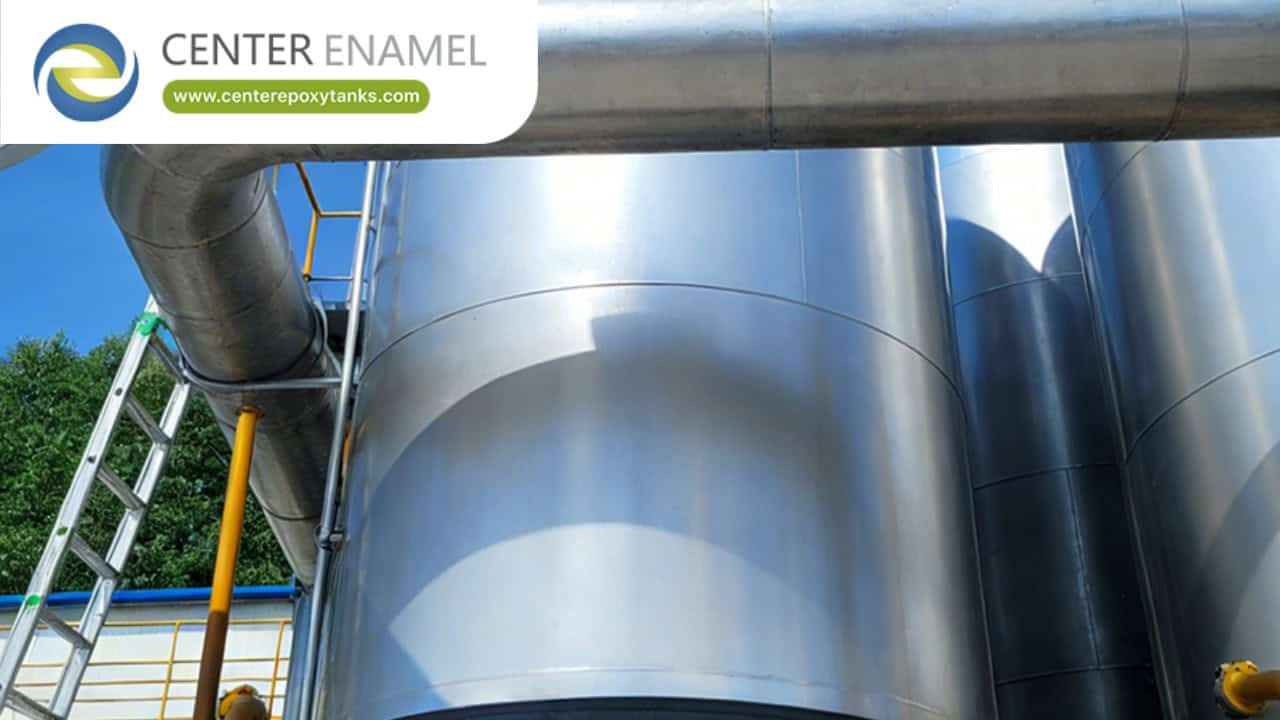
What Is an Avocado Oil Storage Tank? Industrial Design, Features, and Preservation Standards
An avocado oil storage tank is a specialized, food-grade industrial vessel engineered to securely hold, settle, and preserve bulk quantities of avocado oil after the extraction process. Because premium avocado oil is predominantly cold-pressed and unrefined, it retains high concentrations of chlorophyll, natural antioxidants, and delicate monounsaturated fats (such as oleic acid). This rich biochemical profile makes it exceptionally vulnerable to environmental degradation.
Unlike standard liquid storage containers, an avocado oil storage tank functions as a strict preservation environment designed to halt rancidity, block UV light, and maintain absolute product purity before packaging or global distribution.
Core Functions of an Industrial Avocado Oil Tank
To protect high-value cold-pressed oils from spoiling, industrial storage tanks must fulfill four critical environmental controls:
Oxidation Prevention: Exposure to ambient oxygen breaks down monounsaturated fats, causing rapid rancidity and a spike in peroxide values. Industrial tanks use hermetic sealing and inert gas systems to completely isolate the oil from air.
Photo-Oxidation Defense: The natural chlorophyll content in unrefined avocado oil makes it sensitive to light. Solid stainless steel fabrication creates a 100% opaque barrier, protecting the oil far better than plastic or translucent containers.
Sediment Separation (Racking): Freshly extracted oil contains microscopic fruit pulp and moisture. Tanks act as settling vessels where gravity pulls impurities downward, allowing operators to purge waste via specialized bottom valves.
Thermal Stability: Avocado oil must be shielded from extreme heat fluctuations. Advanced industrial tanks are thermally insulated and equipped with cooling jackets to maintain optimal interior temperatures.
Critical Engineering Features
Commercial-grade facilities require robust engineering features to ensure food safety and structural longevity:
Sanitary Stainless Steel Construction: Tanks are fabricated exclusively from AISI 304 (standard food-grade) or AISI 316L (high-corrosion resistance) stainless steel. Interiors feature a mirror-polished, seamless finish to prevent bacterial growth and simplify Clean-In-Place (CIP) procedures.
Conical Bottom Geometry: The tank base is angled (typically between 30° and 45°), channeling residual water and fruit sediment to a single low point for efficient bottom-purging.
Nitrogen Blanketing Systems: Automated valves inject food-grade nitrogen gas into the tank's headspace as oil is drawn out. This heavy, inert gas displaces ambient oxygen, halting the oxidation process entirely.
Thermal Control Jackets: External dimple jackets circulate chilled glycol or warm water to regulate internal temperatures, protecting the integrity of heat-sensitive compounds.
Tank Configuration Comparison
Feature | Conical Bottom Tanks | Flat / Sloped Bottom Tanks |
Primary Application | Processing, settling out fine residues, and complete batch clearing. | Large-scale bulk storage and long-term holding for fully filtered oil. |
Drainage Efficiency | 100% gravity-assisted complete drainage via a bottom-center valve. | Requires mechanical pumping or a sloped floor to empty fully. |
Sediment Racking | Excellent; funnels heavy fruit or nut pulp to a single purge point. | Limited; not suitable for unfiltered, settling oils. |
Structural Profile | Requires elevated support legs or a skirt; higher vertical footprint. | Space-efficient; rests directly on reinforced concrete pads. |
Frequently Asked Questions (FAQ)
Q: Why is stainless steel mandatory for storing avocado oil?
A: Stainless steel (AISI 304 or 316L) is completely non-porous and non-reactive. Plastic containers can leach chemical polymers into the oil over time, allow microscopic oxygen ingress, and expose the oil to degrading UV light. Stainless steel ensures total chemical purity and extends product shelf life.
Q: What is nitrogen blanketing, and why do avocado oil tanks use it?
A: Avocado oil contains delicate fatty acids that react with oxygen, causing it to go rancid. Nitrogen blanketing is the process of filling the empty space above the oil with inert nitrogen gas. Because nitrogen is heavier than oxygen, it forms a protective blanket over the oil, locking out ambient air and preventing oxidation.
Q: Do I need a conical bottom or a flat bottom tank?
A: If you are storing freshly extracted avocado oil that still contains microscopic fruit pulp and moisture, a conical bottom is mandatory to allow sediment to gather at a single low point for easy purging. Flat bottom tanks are only suitable for oil that has already been heavily filtered and refined.
Q: Can an avocado oil storage tank be repurposed for other edible oils?
A: Yes. The engineering requirements for avocado oil—specifically oxidation prevention, UV blocking, and sediment settling—are nearly identical to those required for high-grade extra virgin olive oil (EVOO) and cold-pressed nut oils. A well-sanitized stainless steel tank can easily alternate between similar products.


