What is an Aluminum Dome Roof? Engineering & Benefits Guide
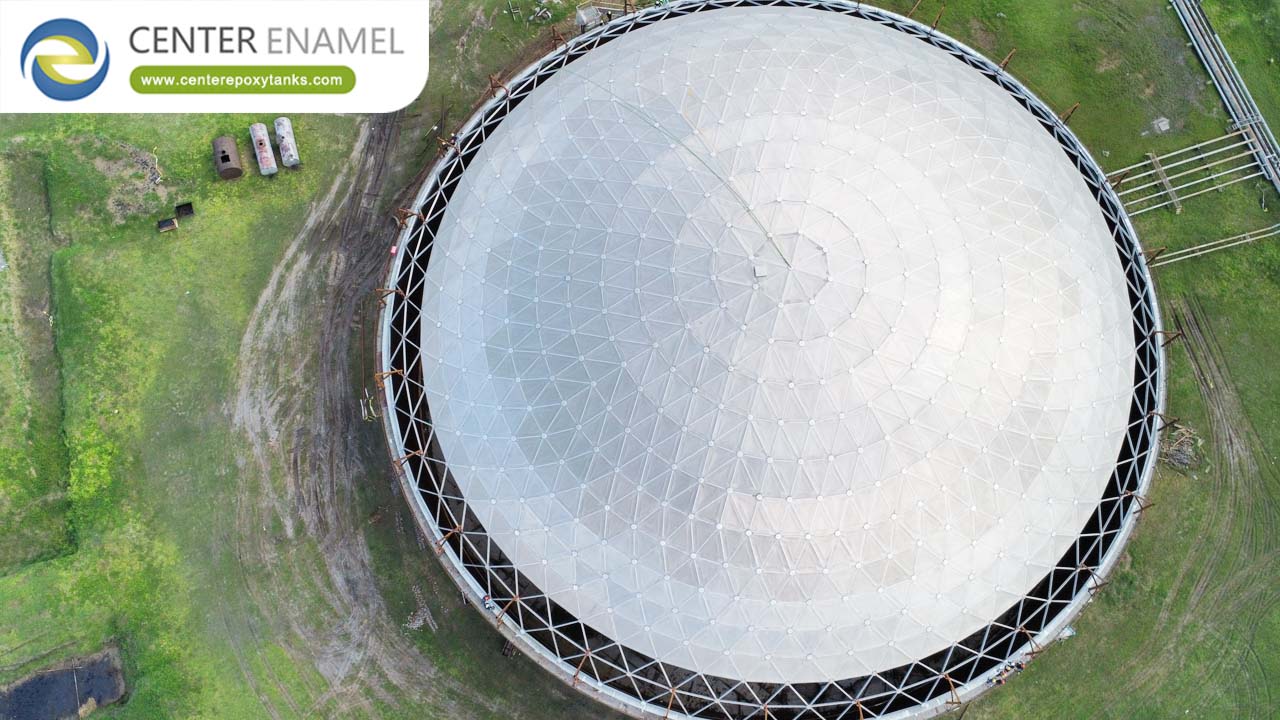
An aluminum dome roof (commonly referred to as an aluminum geodesic dome) is a self-supporting, triangular-lattice structural cover engineered for industrial storage tanks, water reservoirs, and wastewater treatment infrastructure. Constructed from high-strength, corrosion-resistant aluminum alloy, these domes are designed to span large diameters without the need for internal support columns. Their primary industrial applications include odor control, emission containment, and environmental protection, offering a lightweight, maintenance-free alternative to traditional heavy steel or concrete covers.
The Engineering Mechanics: Why "Geodesic"?
The efficiency of an aluminum dome lies in its geodesic geometry. By utilizing a network of triangles—the strongest geometric shape—the structure distributes stress evenly across the entire surface.
● Self-Supporting Design: Because the structure is inherently rigid and creates its own structural integrity, it does not require internal columns. This is a critical advantage for storage tanks, as it ensures the entire internal volume remains unobstructed for operational equipment, mixers, or floating covers.
● Lightweight & High Strength: Aluminum offers an exceptional strength-to-weight ratio. This reduces the load on the tank walls, often allowing for lighter foundation designs compared to heavy steel roofs.
● Corrosion Resistance: Unlike carbon steel, which requires ongoing painting or coating to prevent rust, high-grade architectural aluminum develops a natural oxide layer that makes it virtually immune to atmospheric and chemical corrosion, particularly in wastewater or humid environments.
Comparative Overview: Aluminum vs. Traditional Covers
Feature | Aluminum Geodesic Dome | Fixed Steel Roof | Concrete Cover |
Corrosion Resistance | Superior (Natural) | Low (Requires Coating) | Moderate (Spalling Risk) |
Weight | Very Low | High | Very High |
Internal Columns | None (Clear Span) | Usually Required | Required |
Maintenance | Minimal | High (Painting/Cleaning) | Moderate |
Installation Speed | Fast (Modular/Bolted) | Slow (Welding/Cranes) | Very Slow |
Primary Industrial Benefits
1. Emission & Odor Control: For municipal sewage or industrial effluent storage, an aluminum dome roof creates a tight seal that contains odors and volatile emissions, ensuring compliance with strict environmental regulations.
2. Weather Protection: It shields the stored product from rain, snow, UV radiation, and debris, preserving the purity of the contents and preventing the growth of algae in water storage.
3. Low Lifecycle Cost: While the initial investment is comparable to other systems, the "Total Cost of Ownership" (TCO) is significantly lower due to the absence of painting, rust-proofing, or structural repairs.
4. Large Span Capability: Aluminum domes can span very large diameters (often exceeding 100 meters), making them the only viable cover solution for massive tanks where internal columns are not an option.
Frequently Asked Questions (FAQ)
Q: Can aluminum dome roofs be used in high-wind or heavy-snow environments?
A: Yes. The geodesic structure is designed to handle extreme environmental loads. The thickness of the aluminum panels and the density of the triangulation are customized based on the specific wind and snow loads of your site’s geography.
Q: Is it suitable for chemical storage tanks?
A: Aluminum is chemically inert to a wide range of substances. However, compatibility should always be verified against the specific vapors generated by the stored product. In highly aggressive chemical environments, specialized interior coatings can be applied.
Q: How are these domes installed?
A: The modular design allows for rapid assembly. Panels are typically bolted together from the top down or assembled on the ground and lifted into place using a crane, which drastically reduces field construction time and safety risks.
Partnering for Secure & Durable Containment
The aluminum dome roof is more than just a cover; it is a long-term asset that protects your infrastructure, minimizes environmental impact, and eliminates the recurring maintenance costs associated with traditional materials.
Are you evaluating containment solutions for an upcoming large-diameter tank project?
[Contact our engineering team] to discuss your span requirements, environmental loading conditions, and emission control goals. We can provide a structural feasibility assessment and a comparative proposal tailored to your specific application.


