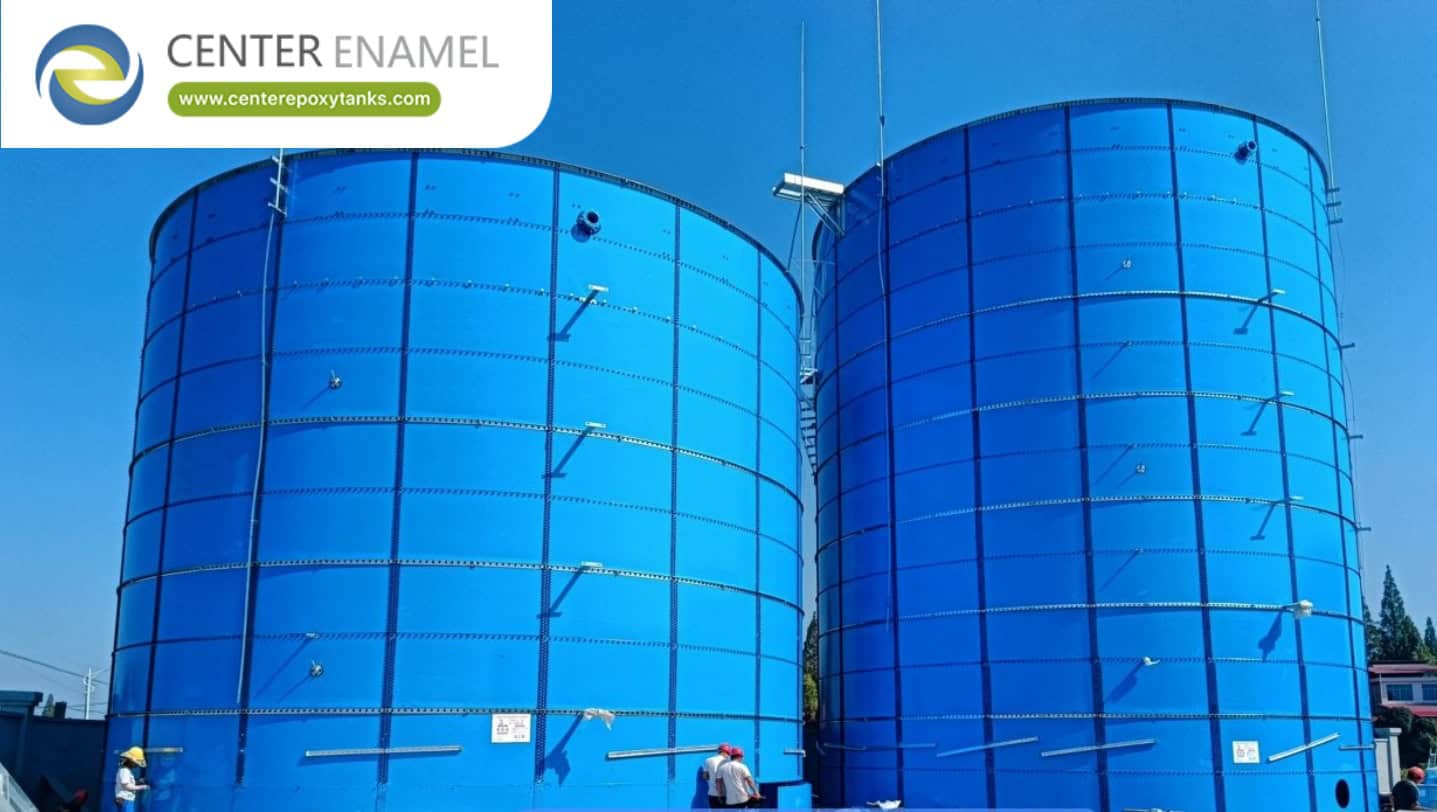
What Is an Agricultural Wastewater Storage Tank? Essential Infrastructure for Modern Farm Management
Modern farming, livestock production, and agro-industrial processing generate substantial volumes of liquid waste, commonly referred to as agricultural wastewater or farm effluent. This effluent encompasses livestock manure slurry, milking parlor wash water, silage leachate, runoff from feedlots, and processing wash water laden with organic compounds, nitrogen, phosphorus, and suspended solids.
Unmanaged or improperly stored agricultural wastewater poses severe environmental threats, including groundwater contamination, surface water eutrophication, and regulatory non-compliance. To mitigate these risks, modern agricultural operations rely on specialized containment infrastructure known as an agricultural wastewater storage tank.
What Is an Agricultural Wastewater Storage Tank?
An agricultural wastewater storage tank is an engineered, heavy-duty containment vessel designed to safely collect, hold, and manage liquid waste generated across agricultural facilities. Unlike standard domestic water tanks, these systems are specifically formulated to withstand highly corrosive, chemically active, and biologically aggressive liquid matrices containing high concentrations of organic acids, ammonia, and salts.
These tanks serve multiple critical functions within a sustainable farm layout:
Environmental Protection and Containment: Prevents hazardous runoff and leachate from entering local aquifers, streams, and soil ecosystems, ensuring strict compliance with local and international environmental protection laws.
Nutrient Preservation and Management: Stores animal manure and nutrient-rich runoff during off-season periods when field application is prohibited, preserving valuable organic fertilizers for optimal seasonal crop utilization.
Biogas and Anaerobic Integration: Frequently acts as the primary holding, equalization, or digestion vessel within modern farm-scale anaerobic digestion (AD) systems, transforming waste into renewable energy.
Core Types of Agricultural Wastewater Storage Systems
Agricultural waste chemistry and volume requirements vary drastically, leading to several established tank configurations:
Glass-Fused-to-Steel (GFS) Bolted Tanks: Combining the high structural strength of steel with the chemical inertness of glass, GFS tanks feature an inorganic vitreous coating fused to steel plates at high temperatures. They offer superior resistance to chemical attack, rapid modular construction, and multi-decade service life.
Bolted Powder-Coated Epoxy Tanks: Factory-coated epoxy steel tanks offer a cost-effective, modular containment solution for intermediate wastewater volumes, utilizing automated robotic application to ensure uniform coating thickness.
Cast-in-Place Concrete Basins: Monolithic concrete structures traditionally used for large-volume slurry storage, though vulnerable to micro-cracking and chemical leaching over prolonged acid exposure unless lined with specialized membranes.
Earthen Storage Lagoons: Large, excavated basins lined with high-density polyethylene (HDPE) membranes; while low in initial capital cost, they require vast land footprints and involve higher risks of liner puncture and seepage.
Technical Performance Matrix: Agricultural Wastewater Storage Options
Technical Parameter | Glass-Fused-to-Steel (GFS) Bolted Tanks | Cast-in-Place Concrete Basins | Earthen Wastewater Lagoons |
Corrosion & Chemical Resistance | Superior; inert glass coating resists organic acids, ammonia, and harsh manure chemistry | Moderate; vulnerable to concrete spalling and acid degradation without specialized interior liners | High risk of liner degradation, tearing, or root intrusion over time |
Installation Velocity & Footprint | Rapid modular assembly using top-down jacking; compact footprint saves valuable farm land | Slow, labor-intensive civil construction requiring extensive formwork and curing time | Requires massive land acreage and significant excavation earthworks |
Environmental Safety & Seepage Risk | Zero-seepage risk; engineered with rigorous double-seal gaskets and high structural integrity | Moderate; prone to micro-cracking under shifting soil loads or thermal expansion | High potential environmental hazard if the synthetic geomembrane liner fails |
Asset Lifespan & Maintenance | Multi-decade service life (30+ years) with minimal routine maintenance requirements | 15 to 25 years, dependent on crack sealing and concrete resurfacing cycles | 10 to 15 years before liner replacement or major dredging is required |
Frequently Asked Questions (FAQ)
Q: What is the primary purpose of an agricultural wastewater storage tank?
A: The primary purpose is to safely contain and manage farm effluent, livestock manure, and organic wash water. This prevents environmental contamination of local water tables while allowing farmers to store nutrient-rich organic fertilizers until optimal times for crop land application.
Q: Why is standard steel insufficient for agricultural wastewater storage?
A: Agricultural wastewater is highly corrosive due to high concentrations of organic acids, ammonia, hydrogen sulfide, and fluctuating pH levels. Unprotected steel or poor coatings will rapidly pit, corrode, and fail, leading to catastrophic structural breaches.
Q: Can agricultural wastewater tanks be integrated into farm biogas production?
A: Yes. Many modern agricultural containment tanks function as equalization basins, primary digestate storage tanks, or anaerobic bioreactors that support farm-scale biogas (methane) recovery plants.
Q: How do modular bolted tanks compare to concrete lagoons for farm waste management?
A: Modular bolted tanks (such as glass-fused-to-steel systems) offer a much smaller land footprint, eliminate seepage risks, resist chemical corrosion more effectively, and can be easily expanded compared to large, open earthen lagoons.


