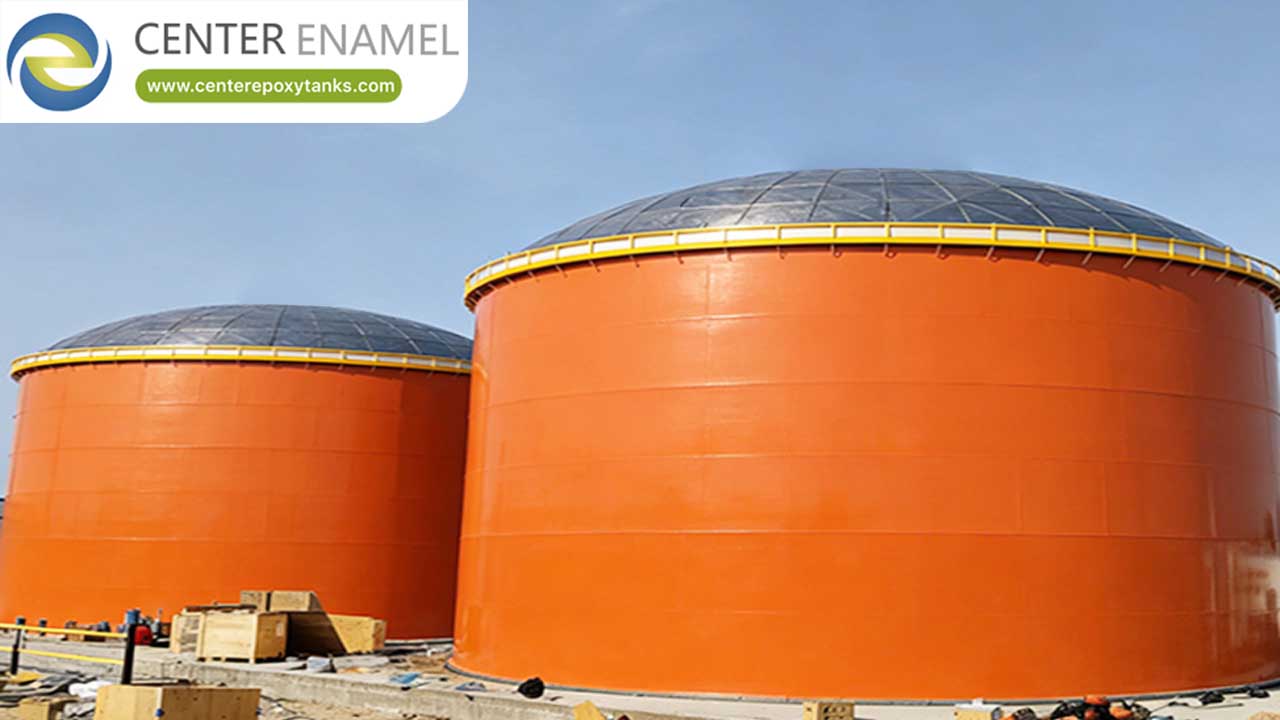
What is a Welded Steel Tank?
A welded steel tank is a heavy-duty, permanent bulk liquid or gas storage structure fabricated by permanently fusing carbon steel or stainless steel plates together using high-heat welding techniques. Unlike modular bolted tanks, welded tanks are constructed entirely on-site, providing complete structural continuity and zero-leak potential at the joints. Governed by strict industry standards such as API 650 and AWWA D100, these custom-built vessels are heavily utilized in the oil, gas, municipal water, and chemical processing industries for their ability to handle extreme internal pressures and massive volumetric capacities.
Core Construction and Manufacturing Process
Unlike modular, factory-assembled infrastructure, welded tanks are built piece-by-piece in the field. The process involves several rigorous engineering stages:
Plate Roll and Preparation: Steel plates are precision-cut and mechanically rolled to the exact radius of the tank at a fabrication facility before being shipped to the project site.
Field Welding: Skilled welders assemble the tank from the bottom up, utilizing processes like Shielded Metal Arc Welding (SMAW) or Flux-Cored Arc Welding (FCAW) to fuse the horizontal and vertical seams.
Non-Destructive Testing (NDT): To ensure structural integrity and prevent catastrophic leaks, weld seams undergo rigorous testing. Methods include radiography (X-ray), ultrasonic testing, or vacuum box testing to verify complete fusion without microscopic defects.
Surface Coating: After fabrication, the interior and exterior must be grit-blasted and coated on-site to protect the bare steel from corrosion. Common coatings include epoxy resins or heavy-duty industrial paints.
Welded vs. Bolted Steel Tanks
Deciding between a field-welded tank and a factory-coated bolted tank is a primary engineering decision for facility planners. While welded tanks offer unmatched structural continuity, bolted tanks offer modularity and controlled factory-applied corrosion protection.
Use the interactive tool below to explore how site-specific constraints dictate the ideal tank choice:
Key Insight: A field-welded tank is typically mandated when capacity exceeds 5 million gallons or internal pressure requirements are exceptionally high. Conversely, modular bolted tanks are highly preferred when rapid installation, future relocatability, or factory-grade coating perfection (like Glass-Fused-to-Steel or Fusion Bonded Epoxy) is critical to the project.
Governing Industry Standards
Because a structural failure in a bulk storage tank can result in catastrophic environmental hazards, welded tanks are heavily regulated by international engineering codes:
Standard | Governing Body | Primary Application |
API 650 | American Petroleum Institute | Above-ground welded tanks for storing oil, gas, and chemicals at atmospheric pressure. |
AWWA D100 | American Water Works Association | Welded carbon steel tanks for municipal drinking water storage and treatment. |
API 620 | American Petroleum Institute | Design and construction of large, welded, low-pressure storage tanks (often used for liquefied gases). |
NFPA 22 | National Fire Protection Association | Standards for water tanks specifically designated for private fire protection systems. |
Frequently Asked Questions (FAQ)
Q: Are welded steel tanks completely immune to leaking?
A: When properly tested via NDT during construction, welded seams are completely fluid-tight. However, the carbon steel itself is highly susceptible to corrosion over time if the protective interior or exterior coatings fail, which can eventually lead to pitting and leaks.
Q: How long does a welded steel tank last?
A: A properly maintained welded carbon steel tank can exceed 40 to 50 years of service. However, this lifespan is contingent upon strict maintenance schedules, which often involve taking the tank offline, sandblasting the interior, and reapplying internal epoxy coatings every 10 to 15 years.
Q: Why do welded tanks take longer to construct than bolted tanks?
A: Welded tanks require highly skilled, certified labor, extensive weather-dependent field work, on-site weld testing, and specific environmental conditions for the applied coatings to cure properly. Rain, extreme cold, or high humidity can bring a welded tank construction site to a complete halt, whereas bolted tanks are entirely pre-fabricated and rapidly assembled regardless of weather.


