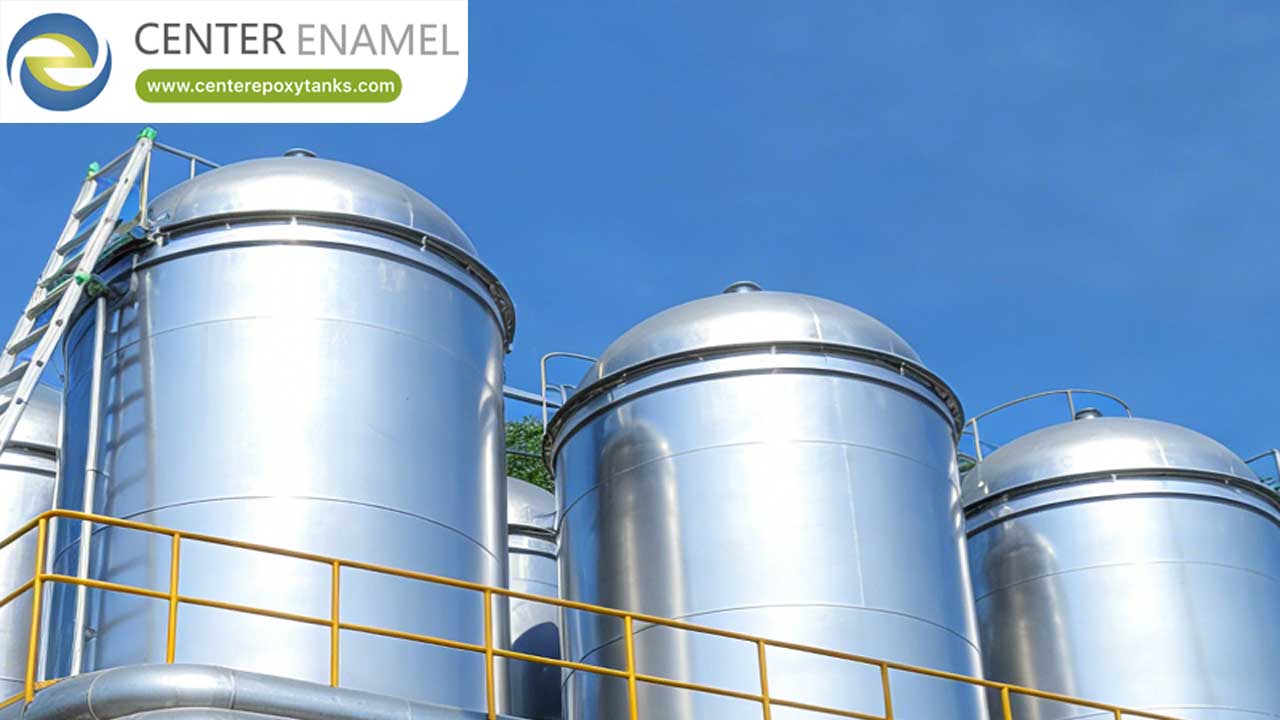
What is a Welded Stainless Steel Tank?
A welded stainless steel tank is a high-performance industrial storage vessel fabricated by permanently fusing plates of stainless steel alloy using advanced arc-welding techniques (typically TIG or MIG). Unlike bolted alternatives that rely on gaskets, seals, and mechanical fasteners, a welded tank forms a monolithic, continuous structure. This design eliminates potential leak points and bacterial harbor sites, making it the industry-standard choice for demanding environments that require extreme corrosion resistance, high pressure tolerance, and stringent sanitary compliance.
The Fabrication Process: From Sheet to Vessel
A welded stainless steel tank’s quality is defined by the precision of its assembly. Manufacturers follow a strict process to preserve the alloy’s inherent corrosion-resistant "passive layer":
1. Precision Welding (TIG/MIG): Most stainless tanks utilize TIG (Tungsten Inert Gas) welding to create smooth, non-porous joints, which are critical for hygiene. For thicker plates, MIG (Metal Inert Gas) welding is employed to ensure deep structural penetration.
2. Passivation: After welding, the "heat tint" (oxidation caused by the high heat of the weld) is chemically removed. The tank is then "passivated" (usually using nitric or citric acid) to artificially accelerate the reformation of the protective chromium-oxide layer, which prevents future rust.
3. Sanitary Polishing: For food, beverage, and pharmaceutical applications, interior welds are ground completely flush and polished to a specific roughness (Ra value) to ensure that bacterial buildup is physically impossible.
Comparative Analysis: Welded vs. Bolted Tanks
For engineers selecting a storage solution, the decision between welded and bolted often comes down to long-term lifecycle costs versus initial capital expenditure.
Feature | Welded Stainless Steel Tank | Bolted Steel Tank |
Integrity | Monolithic (No gaskets) | Modular (Gaskets/Seals) |
Leak Risk | Near Zero | Risk at seal degradation points |
Installation | Permanent; high skilled labor | Modular; rapid assembly |
Maintenance | Minimal (No seals/bolts) | Requires periodic gasket replacement |
Applications | High-pressure, toxic, or sanitary | Bulk water, wastewater, remote sites |
Industry Standards and Compliance
When specifying a welded stainless steel tank, procurement must ensure the manufacturer adheres to internationally recognized codes to ensure structural safety:
● API 650: The global standard for atmospheric-pressure welded steel tanks, ensuring integrity for crude and refined products.
● ASME Section VIII: The code for pressure vessel design, critical for tanks that handle chemical reactions or compressed liquids.
● ASTM Material Specs: Ensures the stainless steel (304, 316L, or Duplex) meets yield strength and chemical composition requirements for the intended service environment.
Frequently Asked Questions (FAQ)
1. What is the expected lifespan of a welded stainless steel tank?
When properly passivated and inspected, a welded stainless steel tank typically lasts 50 to 100+ years. Because the corrosion resistance is inherent to the metallurgy—not an external coating—the tank does not "wear out" in the same way carbon steel tanks do.
2. Why use 316L stainless steel instead of 304?
304 is the standard for general use (e.g., potable water, food storage). However, 316L contains molybdenum, which provides significantly better resistance to chlorides and pitting. If the tank is near the ocean or stores chemicals, 316L is the required grade.
3. Can welded stainless tanks be repaired on-site?
Yes. One of their major advantages is that local qualified welders can perform repairs in the field. Bolted tanks often require specialized factory panels if a module is severely damaged.
4. Does "welded" mean it’s impossible to move the tank?
Yes, generally. Welded tanks are permanent structures. If your business needs are likely to change (e.g., relocating the storage facility in 5 years), bolted modular tanks are the more practical choice.
5. Why is "Passivation" necessary after welding?
During welding, the high heat depletes the chromium at the weld seam, making it susceptible to rust. Passivation is the chemical process of removing these surface impurities and rebuilding the chromium-oxide protective layer, effectively "resetting" the steel's corrosion resistance.


