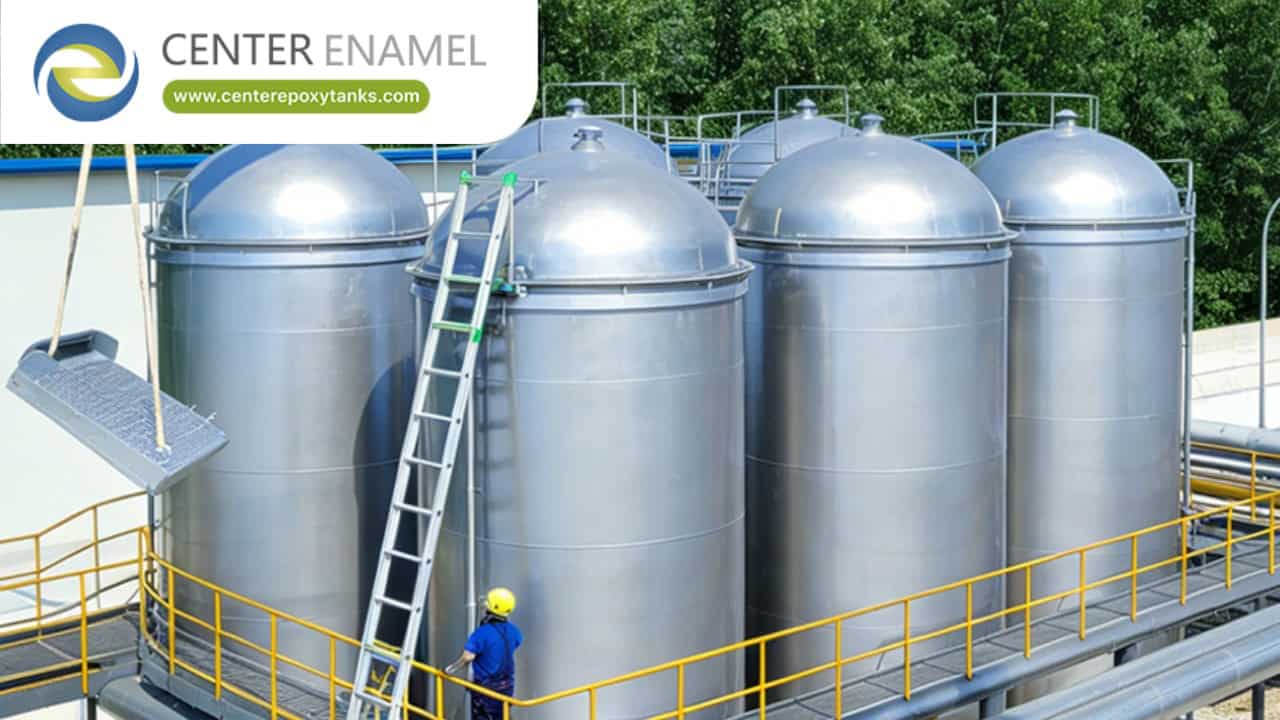
What Is a Welded Stainless Steel Water Tank?
A welded stainless steel water tank is a high-integrity industrial vessel constructed by fusing sheets of chromium-nickel alloy steel into a single, monolithic structure. Unlike bolted tanks that rely on gaskets or sealants, welded stainless tanks are joined through advanced fusion welding processes (such as TIG or MIG), creating a seamless, non-porous container that provides the ultimate barrier against contamination and corrosion.
In industrial and municipal water applications, stainless steel is the premier material choice because of its "passive layer"—an invisible, self-healing oxide film that prevents rust without the need for additional internal linings or coatings. These tanks are the standard for high-purity applications, including pharmaceutical-grade water, food and beverage processing, and critical municipal reservoirs where water quality and structural longevity are paramount.
Why Choose Welded Stainless Steel?
The structural and chemical benefits of stainless steel make it a superior choice for long-term water storage infrastructure.
Inherent Corrosion Resistance: Because the material itself is corrosion-resistant, the tank does not suffer from the degradation associated with coatings or liners that can peel, chip, or require expensive re-application.
High-Purity Standards: Stainless steel is chemically inert, non-leaching, and easy to sanitize. It meets strict regulatory requirements (such as NSF/ANSI 61) for potable water containment.
Monolithic Structural Integrity: The welding process fuses the plates into a single vessel, eliminating the potential failure points found in bolted designs (such as gasket degradation or seam fatigue).
Thermal and Structural Strength: Stainless steel retains excellent mechanical properties under significant thermal stress and is easily engineered to handle high hydrostatic loads.
Comparison: Welded Stainless vs. Other Storage Solutions
Feature | Welded Stainless Steel | Welded Carbon Steel | Bolted Epoxy/GFS |
Corrosion Resistance | Excellent (Inherent) | Poor (Requires Lining) | Moderate (Relies on Coating) |
Maintenance | Minimal (No recoating) | High (Periodic lining repair) | Moderate (Sealant inspection) |
Installation | Field-Welded (Monolithic) | Field-Welded (Monolithic) | Modular (Bolted/Gasketed) |
Typical Application | High-Purity/Potable Water | Bulk Crude/Industrial | Fire Protection/Wastewater |
Engineering Standards: The Importance of Fabrication
For a welded stainless steel tank to perform as expected, the fabrication process must follow strict engineering protocols to ensure the steel’s chemical properties are not compromised during welding.
Grade Selection: 304 stainless steel is common for general storage, but 316L (the "L" stands for Low Carbon) is the gold standard for high-purity water, as it prevents carbide precipitation—a phenomenon that can cause localized corrosion in the "Heat Affected Zone" (HAZ) of a weld.
Welding Techniques: TIG (Tungsten Inert Gas) welding is frequently used to ensure deep penetration and high-quality, clean seams.
Passivation: After the tank is constructed, the welds must be cleaned, pickled, and passivated. This process removes heat tint and surface impurities, restoring the passive chromium oxide layer to its full strength.
Frequently Asked Questions (FAQ)
Q: Why is 316L stainless steel preferred for water tanks?
A: 316L stainless steel contains molybdenum, which significantly enhances resistance to pitting and crevice corrosion. The "L" (low carbon) designation is critical; it reduces the risk of chromium carbide precipitation during the welding process, ensuring the steel remains corrosion-resistant even at the weld joints.
Q: Does a welded stainless steel tank need a liner?
A: Generally, no. One of the primary advantages of stainless steel is that it does not require an internal lining to prevent corrosion, unlike carbon steel tanks. However, in specific pharmaceutical or hyper-pure water applications, specialized polishing or treatments may be applied to the interior surface.
Q: Can a welded stainless steel tank be repaired if it leaks?
A: Because the structure is monolithic, repairs can be performed by experienced technicians through localized welding, grinding, and re-passivation. While rare, this is much more manageable than replacing or patching failed gaskets and sealants in a modular tank.
Q: Is stainless steel more expensive than carbon steel?
A: Yes, the initial capital expenditure for stainless steel is higher due to the cost of raw materials (nickel and chromium). However, when calculating the "Total Cost of Ownership" (TCO) over 30+ years, the lack of maintenance, recoating, and lining repairs often makes stainless steel the more economical and sustainable choice.
Q: What is the benefit of a welded design over a bolted design?
A: A welded design creates a seamless vessel with no mechanical joints, gaskets, or bolts. This eliminates the risk of leaks occurring at seam intersections and provides superior structural rigidity, which is vital for large-scale municipal water storage or seismic-prone areas.
Are you currently evaluating stainless steel vs. other material options for a water storage project, or are you looking for technical specifications regarding 316L grade compliance?


