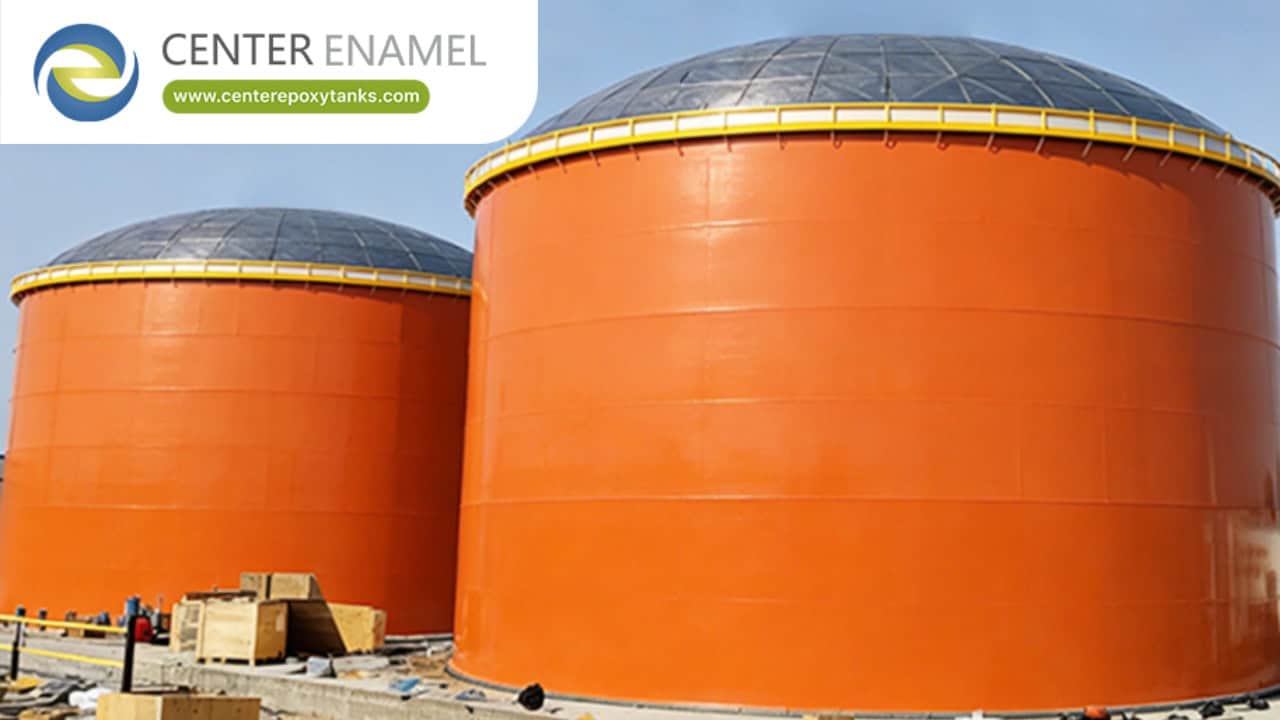
What is a Welded Carbon Steel Tank?
A welded carbon steel tank is a heavy-duty industrial storage vessel constructed by fusing large, rolled plates of carbon steel together using advanced welding techniques (such as Submerged Arc Welding or Tungsten Inert Gas welding). Unlike modular bolted tanks that rely on mechanical fasteners and gaskets, a welded tank forms a single, monolithic structure that offers absolute leak-proof containment under extreme pressure and thermal stress.
Carbon steel—an alloy primarily consisting of iron and carbon—is the most widely used material in industrial tank fabrication. It delivers exceptional tensile strength, high-temperature tolerance, and cost-effectiveness, making these tanks the global standard for storing massive volumes of crude oil, petrochemicals, process water, and industrial wastewater.
Core Engineering Standards
To guarantee safety, longevity, and structural integrity, industrial welded carbon steel tanks must be designed, erected, and tested according to rigorous international codes:
API 650 / API 620: The American Petroleum Institute's definitive standards for field-erected welded steel tanks operating at internal pressures near atmospheric (API 650) or slightly higher (API 620).
AWWA D100: The American Water Works Association standard governing the design and construction of welded carbon steel water storage tanks.
ASME Section VIII: Utilized when the carbon steel tank must be engineered to operate as a highly pressurized vessel.
Why Use Welded Carbon Steel?
When selecting containment infrastructure for heavy industry, welded carbon steel provides several distinct advantages over other fabrication methods:
Feature | Industrial Advantage |
Monolithic Integrity | Zero reliance on mechanical joints or gaskets; completely eliminates the risk of seam fatigue under cyclic thermal expansion. |
High Temperature Tolerance | Capable of safely storing heavy liquids and petrochemicals at temperatures up to 260°C (500°F) without structural degradation. |
Unlimited Scalability | Field-erected tanks have practically no upper capacity limit; they can be engineered to hold tens of millions of gallons in a single vessel. |
Chemical Adaptability | The steel substrate can be aggressively blasted and lined with epoxy, PTFE, or rubber to handle highly corrosive acids (such as aqueous HF or H2SO4). |
The Center Enamel Engineering Advantage
While globally recognized as the pioneer of Glass-Fused-to-Steel (GFS) technology, Center Enamel (Shijiazhuang Zhengzhong Technology Co., Ltd.) provides comprehensive, end-to-end EPC (Engineering, Procurement, and Construction) containment solutions, including the design and fabrication of massive welded carbon steel tanks.
For petrochemical refineries, bulk liquid terminals, and complex wastewater facilities, our engineering teams ensure absolute safety by applying rigorous non-destructive testing (NDT)—including radiographic (X-ray) and ultrasonic inspections—to every welded seam. Operating under ISO 9001, EN1090, and ISO 45001 certifications, Center Enamel guarantees that every field-erected or shop-fabricated carbon steel tank meets the exact wind, seismic, and hydrostatic load requirements of its destination, anywhere in the world.
Interactive Engineering: Tank Thickness Explorer
Understanding how scale affects tank design is critical. Use this interactive explorer to see how internal pressure and tank diameter influence the required carbon steel wall thickness:
Frequently Asked Questions (FAQ)
Q: Does a welded carbon steel tank rust?
A: Yes. Because it contains iron, bare carbon steel is highly susceptible to oxidation (rust) when exposed to moisture and oxygen. To prevent this, industrial tanks are protected using advanced external industrial coatings (like polyurethane or zinc-rich epoxies), specialized internal linings, and active or passive cathodic protection systems.
Q: What is the difference between carbon steel and stainless steel tanks?
A: Carbon steel is structurally stronger and significantly more cost-effective for massive bulk storage, but it requires protective coatings to prevent corrosion. Stainless steel contains high levels of chromium, which forms a natural, invisible oxide layer that resists corrosion without needing a secondary coating. However, stainless steel is substantially more expensive. Carbon steel is preferred for oil, gas, and general wastewater, while stainless is reserved for food-grade processing or specific reactive chemicals.
Q: Can a welded tank be moved after it is built?
A: Generally, no. While small, shop-fabricated welded tanks can be transported via flatbed truck, large field-erected welded carbon steel tanks are permanent structures. If a facility requires a tank that can be disassembled, expanded, or relocated in the future, a modular bolted steel tank is the required alternative.


