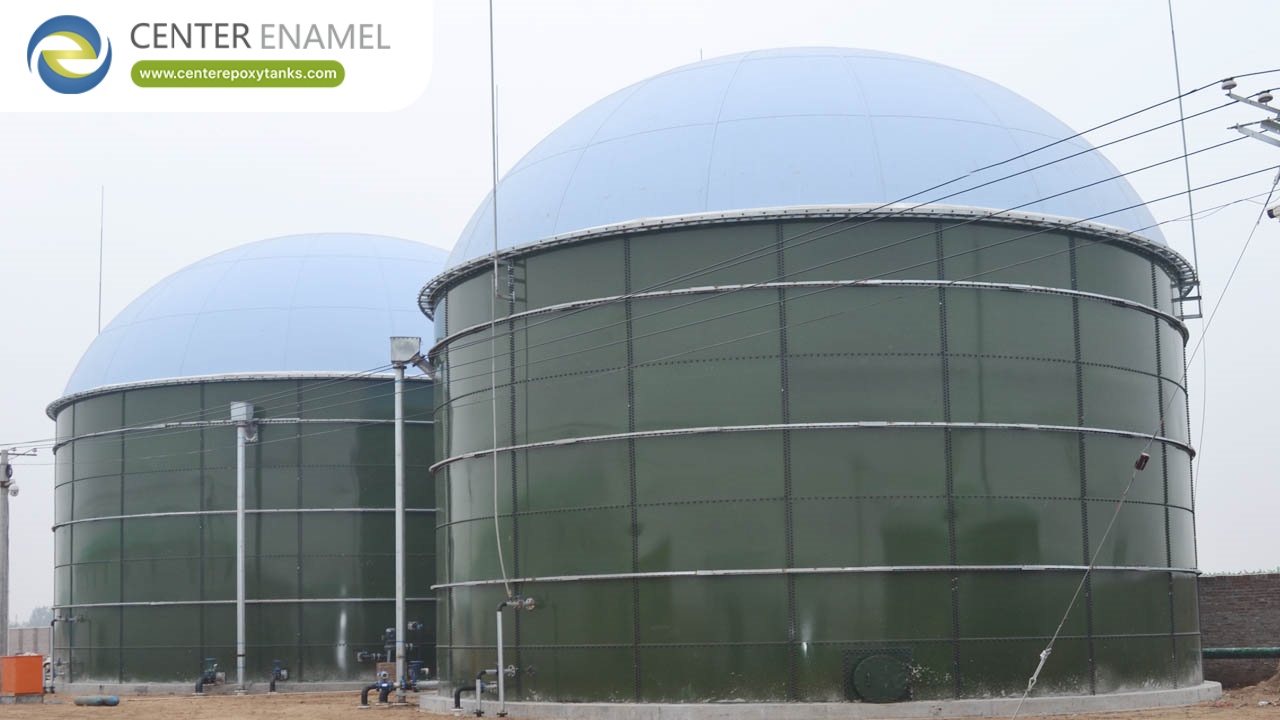
What is a Single Membrane Roof? Design, Functionality, and Industrial Applications
In industrial wastewater treatment, agricultural waste management, and municipal processing plants, containment tanks often require specialized overhead covers to prevent odor emissions, manage rainwater, and block environmental contamination. While complex anaerobic digestion systems require dual-layer gas holders, many less demanding applications prioritize cost-effective emission control over active gas storage.
A single membrane roof (frequently referred to as a single-skin tank cover or single-layer membrane system) is an engineered synthetic fabric structure stretched across the top of an industrial storage tank, wastewater basin, or manure silo. Supported typically by a central column or structural support network, it provides a lightweight, weather-tight, and gas-tight seal designed primarily for odor mitigation and environmental protection.
Core Engineering Principles and Structural Design
The mechanical simplicity and operational efficiency of a single membrane roof rely on several key engineering components:
Single-Skin Synthetic Fabric Construction: Unlike multi-layer gas holders, a single membrane roof consists of one primary layer of heavy-duty, high-tenacity polyester or PVC/PVDF-coated fabric. This material is UV-resistant, fire-retardant, and engineered to withstand long-term outdoor exposure.
Central Support and Tensioned Geometry: The membrane is shaped by a central support pole (often constructed from concrete or high-grade stainless steel) and sloped toward the tank perimeter. Tensioning ratchets, stainless steel clamping rails, and perimeter cables secure the fabric tightly to the tank wall, ensuring stability against wind uplift and snow loads.
Odor and Emission Control: The primary function of a single-skin cover is to trap foul odors and volatile emissions inside the tank, preventing them from escaping into the surrounding community while stopping rainwater and debris from diluting the liquid contents.
Data Table: Comparative Analysis of Tank Roof Technologies
Technical Parameter | Single Membrane Roofs | Double Membrane Roofs | Rigid Steel Dome Roofs |
Primary Function | Odor control, emission containment, and weather protection | Dual-function: weather protection and active low-pressure biogas storage | Structural cover only; heavy load-bearing industrial roof |
Gas Storage Capability | None; designed for static containment and odor suppression rather than pressurized gas buffering | Integrated volumetric storage buffering daily production surges or fluid displacement | None; fixed structural roof with no gas holding capacity |
Corrosion Defense | High-grade PVC/PVDF fabrics completely immune to moisture and chemical vapor attack | High-grade PVC/PVDF membranes completely immune to sulfide and moisture attack | Carbon steel vulnerable to rapid corrosion from wet vapors without costly internal coatings |
Capital & Maintenance Cost | Highly cost-effective with minimal long-term maintenance requirements | Moderate initial investment with active blower and monitoring requirements | High installation cost and high ongoing structural maintenance overhead |
Frequently Asked Questions (FAQ)
Q: What is a single membrane roof?
A: It is an engineered single-layer synthetic fabric cover mounted over an industrial tank, wastewater basin, or silo to provide a sealed, weather-tight barrier primarily used for odor control and emission reduction.
Q: How does a single membrane roof differ from a double membrane roof?
A: A single membrane roof uses one layer of fabric supported by a central column mainly for odor and emission control, whereas a double membrane roof features two layers with an air cushion designed to actively store and regulate pressurized biogas.
Q: What materials are used to construct industrial single membrane roofs?
A: They are typically manufactured from high-tenacity polyester reinforced fabrics coated with specialized PVC or PVDF polymers that offer excellent resistance to ultraviolet radiation, tearing, and chemical degradation.
Q: Where are single membrane roofs commonly applied?
A: They are widely utilized across municipal wastewater treatment basins, industrial effluent tanks, agricultural manure storage silos, and rainwater containment vessels where odor mitigation and environmental compliance are required without active gas storage.


