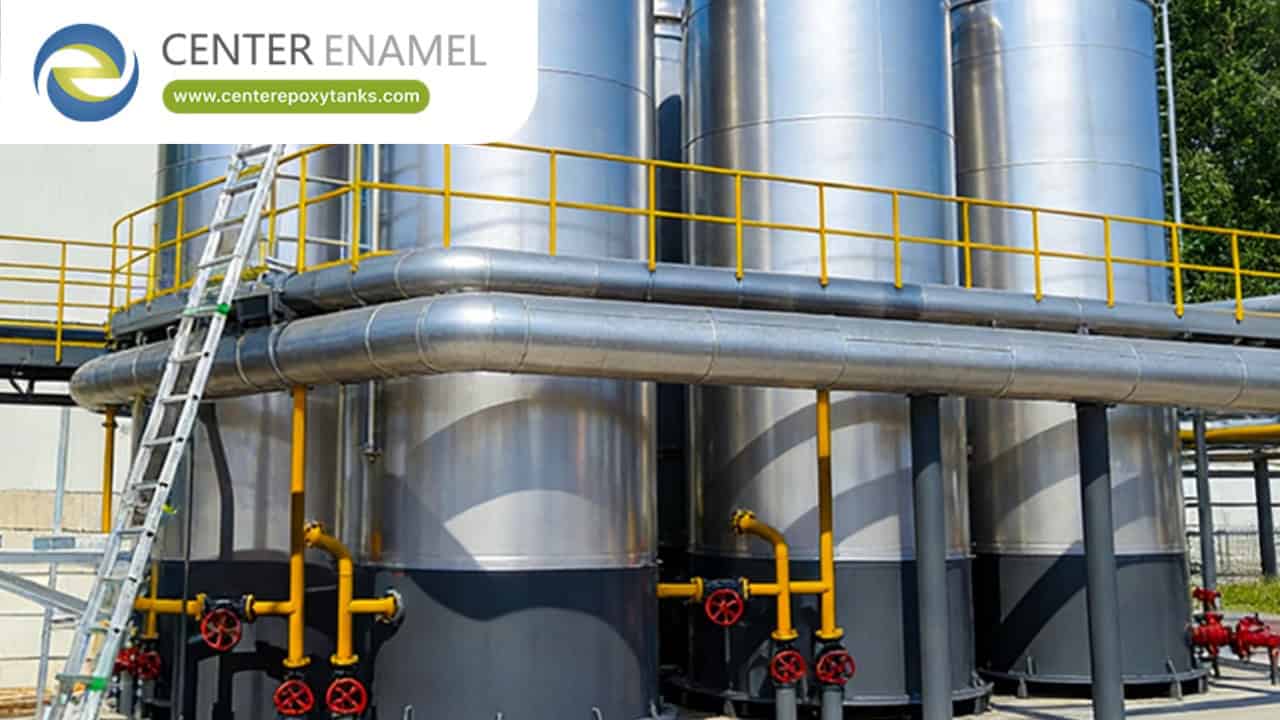
What Is a Palm Oil Storage Tank? Industrial Design, Heated Features, and Bulk Storage Standards
A palm oil storage tank is a heavy-duty, high-capacity industrial vessel engineered to securely hold, melt, maintain, and preserve bulk quantities of crude or refined palm oil prior to food processing, commercial distribution, or biofuel refining.
Because palm oil contains a high proportion of saturated fatty acids, it behaves uniquely compared to standard liquid vegetable oils. Palm oil is semi-solid at ambient room temperatures, typically melting into a clear liquid between 35°C and 42°C (95°F to 108°F). Consequently, unlike standard liquid oil containers, an industrial palm oil storage tank functions as an actively heated, temperature-controlled bulk containment system designed to keep the fat in a uniform, pumpable liquid state without thermal scorching or oxidation.
Core Functions of an Industrial Palm Oil Tank
To safeguard massive tonnages of palm oil from crystallization, separation, and rancidity, industrial storage terminals must fulfill four critical operational controls:
Controlled Thermal Management: Palm oil solidifies when cooled, making it impossible to transfer or pump without active heating systems. Tanks must supply gentle, uniform heat to keep the entire volume molten (typically 45°C to 50°C) without generating hot spots that degrade the fat.
Oxidation Prevention: Exposure to ambient oxygen breaks down unsaturated components, causing rancidity and elevated free fatty acid (FFA) levels. Industrial tanks utilize hermetic sealing and nitrogen blanketing to isolate the oil from air.
Contamination Defense: Edible oils readily absorb moisture and external chemical residues. Dedicated food-grade tanks provide sterile, non-reactive interior environments that comply with strict international food safety regulations.
Bulk Scale Segregation: Major port terminals require massive holding capacity to separate crude palm oil (CPO) arriving from mills prior to processing from fully refined, bleached, and deodorized (RBD) palm oil ready for packaging.
Critical Engineering Features
Commercial-grade oil terminals and processing plants require advanced engineering features to ensure structural integrity and product safety:
Glass-Fused-to-Steel (GFS) or Stainless Construction: For massive bulk terminal storage, Glass-Fused-to-Steel (GFS) tanks combine the structural strength of carbon steel with the chemical inertness and corrosion resistance of fused glass coatings. Refined processing lines utilize AISI 304 or 316L stainless steel with mirror-polished interiors.
Internal Heating Coils and Thermal Jackets: Because direct high-pressure steam can scorch vegetable fats, palm oil tanks utilize internal heating coil networks (hot water or low-pressure steam) or external dimple jackets to distribute gentle, even heat across the vessel walls.
High-Density Thermal Insulation: To minimize energy costs and prevent heat loss during cold weather, massive outdoor tanks are wrapped in high-density polyurethane foam or mineral wool, shielded by an outer weather-proof aluminum or steel cladding.
Nitrogen Blanketing Systems: Automated pressure-regulating valves inject food-grade nitrogen gas into the tank's headspace as oil is drawn out, displacing ambient oxygen and moisture to preserve product quality.
Clean-In-Place (CIP) Integration: Permanently installed rotary spray balls in the dome allow automated hot water and detergent washes, melting and clearing residual fats without requiring manual entry into confined spaces.
Tank Configuration Comparison
Feature | Glass-Fused-to-Steel (GFS) Bolted Tanks | Welded Stainless Steel Tanks |
Primary Application | Large-scale bulk terminal storage and massive crude/refined palm oil reserves. | Processing lines, blending operations, and medium-capacity storage. |
Material Benefits | Exceptional durability; fuses glass to steel at high heat for superior corrosion resistance and zero maintenance. | Completely non-porous, corrosion-resistant, requires no internal coatings. |
Capacity Scale & Setup | Massive bulk capacity (hundreds of thousands of liters); rapid modular bolt-on construction. | Small to medium-large commercial volumes fabricated directly on-site. |
Frequently Asked Questions (FAQ)
Q: Why does palm oil require heated storage tanks?
A: Palm oil has a high concentration of saturated fats and a melting point around 35°C to 42°C. At normal ambient room temperatures, it solidifies into a semi-solid paste. Industrial storage tanks must use internal heating coils or thermal jackets to maintain a liquid temperature of 45°C to 50°C for smooth pumping and transfer.
Q: What is a Glass-Fused-to-Steel (GFS) tank, and why is it used for palm oil terminals?
A: A GFS tank is engineered by fusing specialized glass enamel to high-strength steel plates at extreme temperatures (around 850°C). This creates a surface that combines the strength of steel with the chemical inertness and corrosion resistance of glass, making it the industry standard for massive bulk oil terminal storage because it requires zero painting and resists fat degradation.
Q: Can direct steam be used to heat palm oil storage tanks?
A: No. Direct high-pressure steam creates localized extreme heat zones that will scorch and burn the oil, resulting in off-flavors, dark discoloration, and elevated free fatty acid levels. Palm oil tanks must use indirect heating via closed-loop hot water coils or low-temperature thermal fluid jackets.
Q: How do you prevent oxidation in large commercial palm oil tanks?
A: Large commercial tanks prevent oxidation by using hermetically sealed roofs combined with nitrogen blanketing systems. Food-grade nitrogen gas is fed into the tank headspace to displace ambient oxygen, creating an inert blanket that protects the oil from rancidity during storage and level fluctuations.


