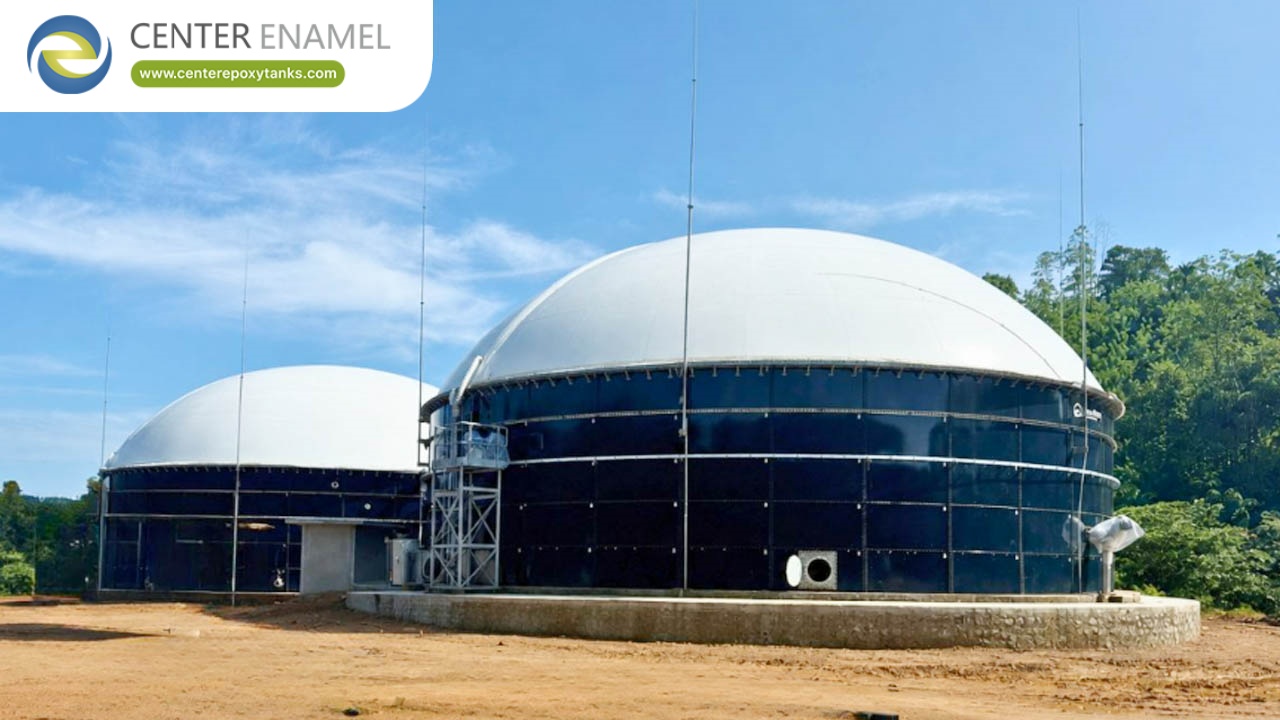
What is a Glass-Fused-to-Steel Anaerobic Digester?
A glass-fused-to-steel (GFS) anaerobic digester is a bolted steel tank whose panels carry a layer of glass fired at approximately 850°C, fusing it to the steel. The glass-steel composite surface is inert, abrasion-resistant, and ideally suited to aggressive digestion environments over a 30+ year life.
What is a Glass-Fused-to-Steel Anaerobic Digester?
A glass-fused-to-steel anaerobic digester is built from bolted steel panels that have been coated with porcelain enamel and fired in a furnace at approximately 850°C. At that temperature the glass melts and chemically fuses with the steel, creating a single composite material that combines steel's structural strength with glass's total chemical inertness.
For digestion duty the glass surface is decisive: it neither corrodes in the warm, sulfurous digester atmosphere nor degrades over time as organic coatings slowly do, and it shrugs off the grit abrasion of mixed feedstocks. The result is a digester interior that stays inert and easy to clean for more than thirty years — the reason GFS has become the premium choice for demanding anaerobic digestion projects worldwide.
How GFS Panels Are Made
The glass-fused-to-steel process is a high-precision enameling sequence carried out only in specialized facilities:
l Steel plates are blanked, formed, and punched to project geometry, then thoroughly cleaned.
l Liquid enamel slip is applied to both surfaces of each panel in controlled coats.
l Panels fire in furnaces at approximately 850°C, fusing the glass to the steel at the interface.
l Every panel is inspected and spark-tested to confirm a continuous, defect-free glass layer before shipment.
GFS Versus Other Digester Construction
Choosing a digester coating technology comes down to surface performance in digestion service:
1. Surface Preparation (Shot Blasting): Premium structural steel plates undergo automated grit or shot blasting to achieve a pristine anchor profile, removing all rust, mill scale, oils, and surface impurities.
2. Electrostatic Powder Application: Specialized thermoset epoxy powder is applied uniformly across both sides of the steel panels using automated electrostatic spray equipment.
3. Thermal Cross-Link Curing: The coated sheets pass through precision tunnel ovens (150°C to 250°C), where the epoxy powder melts, flows, and chemically cross-links into a dense, continuous protective polymer film.
4. Rigorous Quality Control & Holiday Testing: Every individual panel undergoes strict dry film thickness verification and high-voltage holiday spark testing (typically at 1,100V to 1,500V) to guarantee absolute zero pinholes or micro-discontinuities.
Technical Performance Matrix: Digester Surface Technologies
Technical Parameter | Glass-Fused-to-Steel (GFS) | Fusion Bonded Epoxy (FBE) | Site-Applied Coatings |
Surface Chemistry | Inert glass-ceramic, fired composite | Dense cross-linked thermoset polymer | Multi-layer liquid systems, site-cured |
Abrasion Resistance | Excellent — glass surface resists grit and mixing wear | Very good | Limited; wear through in high-solids duty |
Aging Behavior | No UV or chemical aging of the glass layer | Stable long term with gradual service aging | Progressive degradation from year one |
Quality Verification | Spark-tested glass layer per panel at factory | Holiday-tested per panel at factory | Site-dependent thickness and cure quality |
Glass-Fused-to-Steel Digester Applications
l Manure and slurry digestion with high grit and sand content
l Municipal sludge digesters with decades-long design lives
l Food waste co-digestion with abrasive contamination
l Industrial effluent digesters in chemical service
l Biomethane plant primary and secondary digesters
l Export projects requiring certified, inspected surfaces
Key Advantages of GFS Anaerobic Digesters
1. An Inert Surface That Never Ages
The fired glass layer is chemically inert for the life of the tank — it does not blister, chalk, or absorb, keeping the digestion environment clean and stable indefinitely.
2. Abrasion Resistance for Real Feedstocks
Sand, grit, and fibrous material that wear organic coatings slide across the glass surface, protecting vessel integrity in the toughest agricultural and food waste duty.
3. Proven at Global Scale
GFS digesters operate across more than 100 countries; Center Enamel — the first GFS tank manufacturer in China, holding nearly 200 enameling patents — has delivered digesters up to 16,760 cubic meters on a single project.
Quality Standards and Proven References
Center Enamel's epoxy coated and glass-fused-to-steel tanks are engineered in strict accordance with AWWA D103-09, OSHA, ISO 28765, and EN 1090, and manufactured under ISO 9001 and ISO 45001 certified quality systems. As the first manufacturer of glass-fused-to-steel tanks in China — holding nearly 200 enameling patents — Center Enamel has delivered bolted tank projects to more than 100 countries, including a 16,760 m³ biogas project in Inner Mongolia and wastewater and biogas references for global environmental leaders such as Paques and Veolia.
Frequently Asked Questions (FAQ)
Q: What is the difference between GFS and FBE digesters?
A: Both are factory-coated bolted steel; GFS fires glass onto steel at about 850°C for a harder, inert, abrasion-resistant surface, while FBE applies a cross-linked epoxy polymer film — both far outperform site-applied coatings.
Q: Is GFS suitable for high-grit feedstock?
A: Yes — the glass-ceramic surface is precisely what makes GFS the preferred choice where sand and grit in manure or food waste would abrade organic coatings.
Q: How long do glass-fused-to-steel digesters last?
A: With proper maintenance, GFS digesters are engineered for service lives exceeding 30 years, with the glass layer remaining inert throughout.
Q: What is the expected lifespan of an glass-fused-to-steel anaerobic digester?
A: When manufactured in strict compliance with international design codes (such as AWWA D103) and properly maintained, an glass-fused-to-steel anaerobic digester is engineered for a dependable operational lifespan exceeding 30 years.


