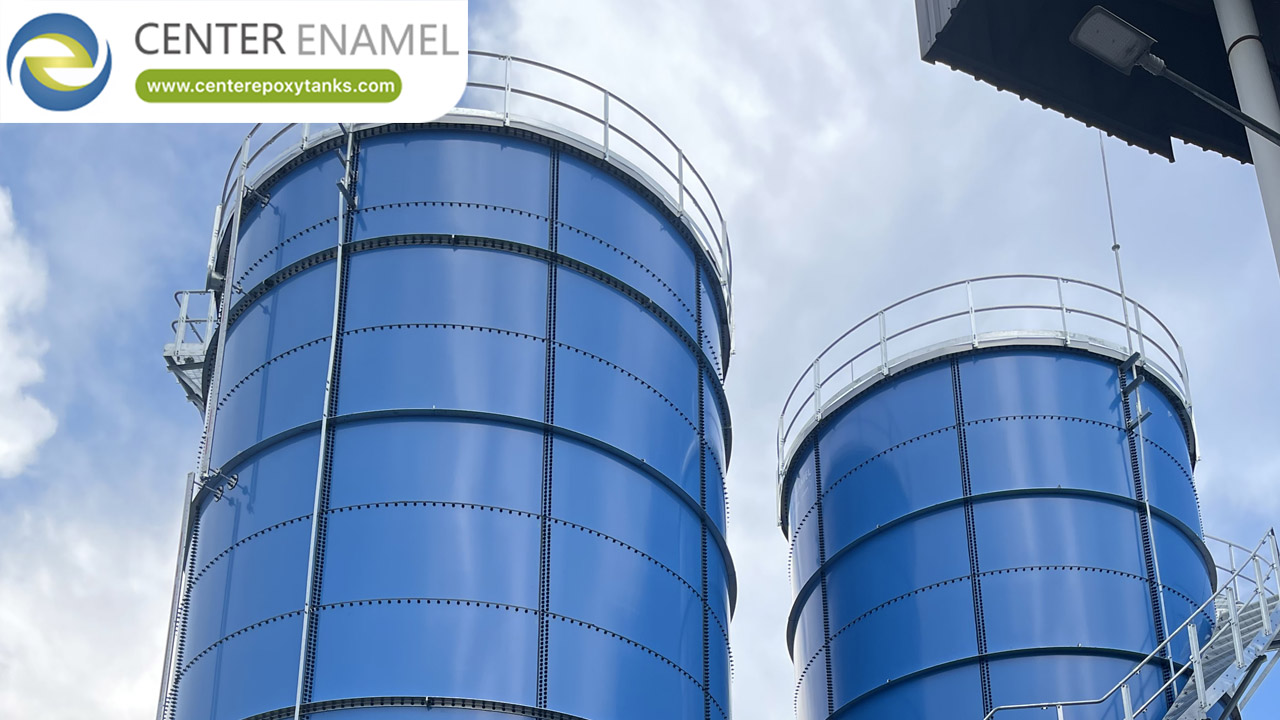
What Is a Fusion Bonded Epoxy Tank? Technology, Benefits, and Comparative Analysis
A Fusion Bonded Epoxy (FBE) tank is a high-performance, bolted steel storage vessel where individual steel panels are permanently coated with an advanced thermosetting epoxy powder through electrostatic application and thermal curing. This precise manufacturing process creates a uniform, highly durable barrier that fuses the protective coating directly to the metal substrate at a molecular level.
Engineered to meet stringent international standards—such as AWWA D103, ISO 9227, and ASTM B117—FBE storage tanks provide exceptional structural longevity and corrosion resistance, making them a leading choice across municipal water management, wastewater treatment, and industrial fluid containment.
How Fusion Bonded Epoxy Coating Technology Works
The exceptional performance of an FBE tank stems from its advanced factory coating process, which separates it from conventional liquid-painted or field-welded alternatives:
Surface Preparation: Steel panels are meticulously cleaned and pre-treated to remove all impurities, ensuring optimal mechanical bonding.
Electrostatic Spraying: Specially formulated epoxy resin powders (such as high-grade AkzoNobel Resicoat) are applied electrostatically, ensuring uniform distribution across every contour, panel edge, and bolt hole.
Thermal Curing: The sprayed panels enter a curing oven where precise heat application melts and chemically cross-links the epoxy powder. This permanent thermal reaction fuses the coating to the steel, preventing flaking, peeling, or micro-cracking.
Comparative Analysis: FBE Tanks vs. Other Storage Systems
When evaluating industrial containment options, comparing construction methods, coating durability, and maintenance overhead is essential for project optimization.
Feature | Fusion Bonded Epoxy (FBE) Tanks | Glass-Fused-to-Steel (GFS) Tanks | Field-Welded Steel Tanks |
Construction Method | Modular Bolted Steel Panels | Modular Bolted Steel Panels | On-Site Welded Steel Plates |
Coating Technology | Electrostatic powder & thermal curing | High-temperature glass enamel fusion | Liquid spray paint or multi-coat epoxy |
Field Repairability | High (Easily patched on-site if minor scratches occur) | Moderate (Requires specialized porcelain/glass repair kits) | Complex (Requires certified welding, sandblasting, and recoating) |
Installation Speed | Fast (Modular panels assemble rapidly with minimal heavy equipment) | Fast (Modular panels assemble rapidly with minimal heavy equipment) | Slow (Dependent on weather, welding tests, and staging) |
Cathodic Protection | Generally not required due to superior edge coverage | Not required | Often required depending on soil/liquid corrosivity |
Relocation Potential | High (Can be unbolted, moved, and reassembled) | High (Can be unbolted, moved, and reassembled) | Low (Permanent; requires cutting metal to dismantle) |
Core Advantages of Fusion Bonded Epoxy Tanks
FBE tanks offer distinct structural and economic benefits for modern industrial facilities:
Superior Corrosion Resistance: Withstands aggressive chemical environments, wastewater effluents, and high-humidity exterior conditions without structural breakdown.
Elimination of Cathodic Protection: Flawless edge and corner coverage eliminate the need for costly secondary cathodic protection systems.
Modular Bolted Construction: Prefabricated panels allow for rapid, safe on-site installation with minimal heavy equipment and labor overhead.
Field Repairability: Unlike glass-coated surfaces, minor mechanical blemishes or installation scratches on FBE panels can be quickly and easily repaired directly in the field.
UV Resistance & Color Stability: High-performance exterior topcoats protect against solar radiation, maintaining structural integrity and gloss under harsh outdoor exposure.
Primary Industrial Applications
Due to their robust chemical resistance and food-grade compliance, Fusion Bonded Epoxy tanks are utilized across multiple critical sectors:
Drinking Water Storage: Provides certified, safe, and hygienic storage for municipal and rural potable water reservoirs.
Wastewater Treatment: Ideal for municipal sewage plants, industrial effluent containment, and sludge storage.
Fire Protection Systems: Reliable, high-capacity water reserves for industrial and commercial fire sprinkler networks.
Agricultural & Irrigation: Secure holding tanks for liquid fertilizers, irrigation water, and rainwater harvesting systems.
Frequently Asked Questions (FAQ)
Q: What is the main difference between an FBE tank and a Glass-Fused-to-Steel tank?
A: While both are high-performance bolted steel tanks, a Glass-Fused-to-Steel tank fuses glass enamel to steel at extreme temperatures (around 850°C), whereas an FBE tank utilizes an advanced thermosetting epoxy powder that is electrostatically sprayed and thermally cured. FBE panels offer greater ease of field repair if minor mechanical scratches occur.
Q: Do Fusion Bonded Epoxy tanks comply with AWWA standards?
A: Yes. High-quality FBE tanks are engineered and manufactured in strict compliance with American Water Works Association standards such as AWWA D103, ensuring they meet rigorous structural and safety requirements for municipal water storage.
Q: How long does an FBE tank coating last?
A: When properly maintained and engineered, factory-applied Fusion Bonded Epoxy coatings provide decades of reliable service life, resisting chemical degradation and environmental weathering for 30 years or more.
Q: Can FBE tanks be modified or expanded later?
A: Because they feature a modular bolted design, FBE tanks can be disassembled, relocated, or expanded with additional steel panels as a facility's capacity requirements grow over time.


