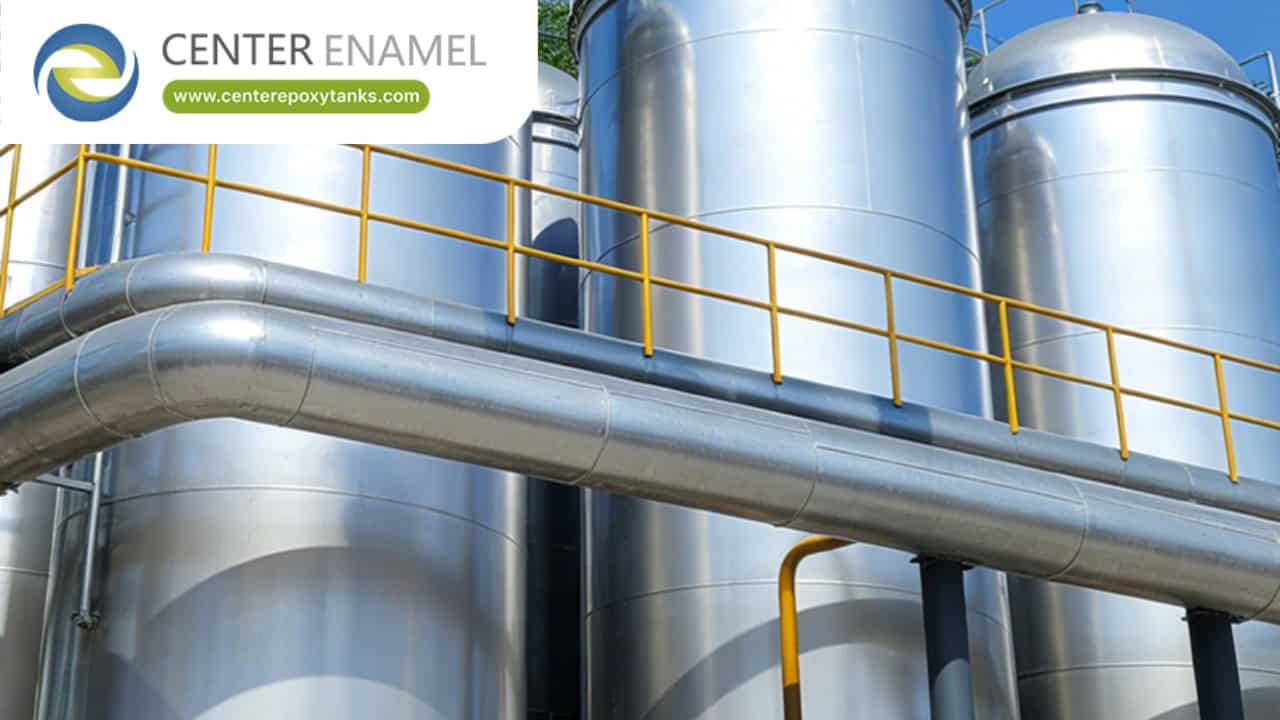
What Is a Finished Chemical Product Storage Tank? Purity Preservation, Material Selection, and Distribution Standards
In chemical manufacturing, polymer synthesis, specialty chemical formulation, and petroleum refining, the final stage of production is just as critical as the reaction phase. Once raw feedstocks have been converted, purified, and tested, the resulting high-value end products—ranging from liquid polymers and formulated detergents to specialty solvents and agricultural chemicals—must be safely contained prior to bulk transport or packaging.
A finished chemical product storage tank is a highly engineered industrial containment vessel designed to store processed, market-ready chemical goods under strict conditions of purity, temperature control, and safety compliance before distribution.
1. Core Functions of Finished Product Storage
Unlike raw material or intermediate buffer tanks, finished product storage vessels have unique operational mandates focused on commercial quality assurance and supply chain readiness:
Product Purity and Contamination Defense: Finished chemicals are sensitive to trace metal ions, moisture, airborne dust, and oxidation. Storage tanks must feature inert interior linings or high-grade alloys to prevent product degradation or discoloration.
Inventory and Distribution Buffering: They balance continuous or batch chemical production schedules with external transport demands, holding finished goods securely until tanker trucks, railcars, or packaging lines are ready for loading.
Volatile Organic Compound (VOC) Control: For formulated solvents and volatile finished products, storage tanks incorporate vapor recovery systems or internal floating roofs to prevent evaporative loss and fugitive emissions.
2. Approved Materials and Design Considerations
Selecting the proper construction material is vital to preserve chemical integrity and prevent container-product reactions:
A. Austenitic Stainless Steel (Grades 304 / 316L)
The global gold standard for storing high-purity finished chemicals, pharmaceuticals, and fine chemicals. Stainless steel provides superior corrosion resistance, high tensile strength, and the ability to achieve ultra-smooth mechanical or electropolished interior finishes (Ra le 0.4 , mum) that inhibit bacterial growth and product adhesion.
B. Fusion Bonded Epoxy (FBE) and Glass-Fused-to-Steel (GFS)
For large-scale industrial bulk storage of less reactive finished products, modular bolted steel tanks featuring factory-applied thermoset epoxy or inert glass coatings offer excellent durability, rapid erection, and long-term asset protection.
C. Lined Carbon Steel (API 650 / UL 142)
Utilized for bulk storage of non-reactive or mildly corrosive finished chemical goods, provided the interior is protected with specialized baked phenolic, epoxy, or rubber linings tested for zero holidays.
Data Table: Finished Chemical Storage Tank Specification Matrix
Tank Configuration | Primary Shell Material | Typical Interior Finish / Lining | Primary Industrial Application | Governing Standards |
High-Purity Process Vessel | 316L Stainless Steel | Electropolished (Ra 0.4um) | Specialty chemicals, cosmetics base, polymers | ASME Sec. VIII / cGMP |
Bulk Distribution Reservoir | Carbon Steel (API-compliant) | Baked Phenolic Epoxy Lining | Industrial solvents, formulated liquids, lubricants | API 650 / UL 142 / NFPA 30 |
Modular Bolted Storage Tank | FBE or Glass-Fused-to-Steel | Factory-Fused Inert Coating | Liquid fertilizers, non-hazardous finished goods | AWWA D103 / ISO 28765 |
3. Quality Control, Safety, and Environmental Compliance
Operating finished product storage facilities requires adherence to strict industrial and safety regulations:
Dedicated Piping and Manifolding: To eliminate cross-contamination between different finished product batches, storage farms utilize dedicated loading lines, dedicated pumps, and automated block-and-bleed valve manifolds.
Secondary Containment Dikes: In compliance with NFPA 30 and OSHA regulations, aboveground finished product tanks must be housed within secondary containment dikes engineered to capture at least 110% of the volume of the largest primary vessel.
Frequently Asked Questions (FAQ)
Q: What is a finished chemical product storage tank?
A: A finished chemical product storage tank is an engineered industrial vessel used to securely hold processed, market-ready chemical goods under controlled conditions prior to distribution or packaging.
Q: Why is stainless steel commonly used for finished chemical storage?
A: Stainless steel (such as Grade 316L) offers exceptional corrosion resistance and can be electropolished to an ultra-smooth finish, preventing product contamination, discoloration, or chemical breakdown.
Q: How do finished product tanks prevent cross-contamination between batches?
A: Facilities utilize dedicated piping networks, dedicated transfer pumps, automated valve manifolds, and thorough clean-in-place (CIP) protocols between product changeovers.
Q: What safety codes govern the storage of flammable finished chemical products?
A: Flammable and combustible finished chemicals are regulated by NFPA 30 (Flammable and Combustible Liquids Code), OSHA 29 CFR 1910.106, and structural tank standards such as API 650 or UL 142.


