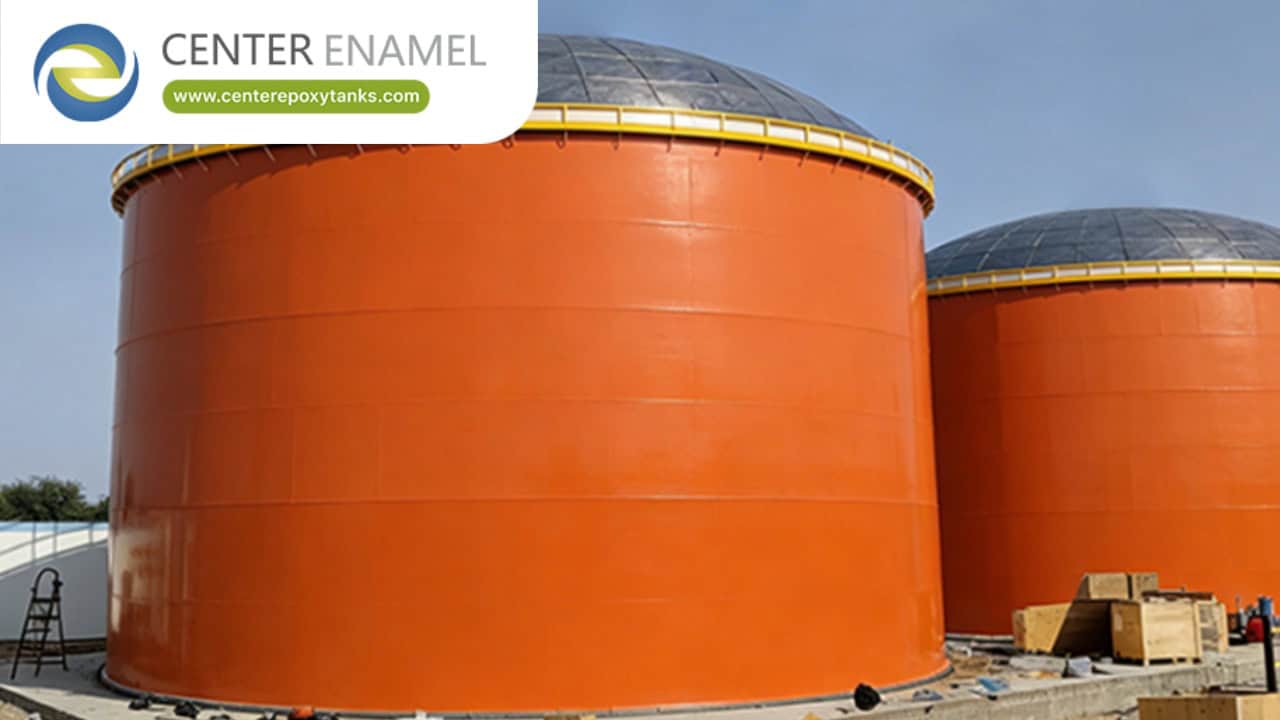
What Is a Field-Erected Storage Tank? Design, Construction, and Industrial Applications
A field-erected storage tank is a large-scale industrial containment vessel that is constructed piece-by-piece directly at the final project site, rather than being manufactured and assembled entirely within a factory.
When bulk storage requirements exceed the dimensional limits of standard over-the-road transport (typically any tank with a diameter greater than 12 to 14 feet), the tank must be field-erected. In this process, raw materials—such as prefabricated steel panels, rolled plates, and specialized coatings—are shipped to the site in compact loads and assembled by specialized construction crews. Field-erected tanks are the backbone of global industrial infrastructure, used extensively for municipal water storage, wastewater treatment, petrochemical reserves, and dry bulk silos.
Core Construction Methods: Welded vs. Bolted
Field-erected tanks generally fall into two primary construction categories, each governed by strict international engineering standards:
1. Field-Welded Steel Tanks (API 650 / AWWA D100)
For decades, field welding was the standard for massive petroleum and water tanks. Large steel plates are rolled to the correct radius at a fabrication facility, shipped to the site, and welded together by certified welders.
Pros: Can achieve virtually unlimited capacities (millions of gallons); highly customizable geometric profiles.
Cons: Highly dependent on weather conditions (rain and wind delay welding); requires extensive on-site quality control (X-ray testing of welds); interior and exterior protective coatings must be applied in the field, which can compromise curing quality.
2. Field-Bolted Steel Tanks (AWWA D103)
Modern industrial facilities are increasingly shifting toward bolted tank construction. In this method, steel panels are precision-cut, rolled, punched, and fully factory-coated before being shipped. On-site, crews assemble the panels using high-strength structural bolts and specialized synthetic sealants.
Glass-Fused-to-Steel (GFS): The premier bolted tank technology. Steel panels are coated with glass frit and fired at high temperatures (over 1,500°F) in a factory furnace, fusing the materials together. This creates an impermeable, highly corrosion-resistant finish that never needs repainting.
Fusion-Bonded Epoxy: Another advanced factory coating applied to bolted panels, offering excellent resistance to aggressive wastewater and chemicals.
Pros: Rapid on-site installation (often 1/3 the time of welded tanks); unaffected by minor weather delays; superior, factory-controlled coating quality; easily expanded or dismantled in the future.
Comparison: Shop-Built vs. Field-Erected
When engineers size a storage project, the decision between shop-built and field-erected hinges entirely on capacity and logistics:
Metric | Shop-Built Tanks | Field-Erected Tanks |
Maximum Capacity | Generally limited to ~30,000 to 40,000 gallons. | Virtually unlimited (ranging from 50,000 to 10+ million gallons). |
Transport Limits | Constrained by highway bridge heights and lane widths (max ~14 ft diameter). | Panels/plates ship flat in standard shipping containers or flatbed trucks. |
Quality Control | 100% factory controlled environment. | Relies on field crews (Welded) or factory-coated panels (Bolted/GFS). |
Installation Speed | Drops into place in a single day. | Takes weeks to months depending on size and construction method. |
Frequently Asked Questions (FAQ)
Q: At what size does a tank need to be field-erected?
A: Generally, if a tank's diameter exceeds 12 to 14 feet (3.6 to 4.2 meters), it becomes too wide for standard highway transportation and must be field-erected.
Q: Why are Glass-Fused-to-Steel (GFS) tanks considered field-erected?
A: While the individual GFS panels are manufactured and coated in a controlled factory environment, the actual assembly of the tank—bolting the panels together, installing the roof, and sealing the joints—happens directly at the project site.
Q: Are field-erected bolted tanks safe for potable drinking water?
A: Yes. Field-erected bolted tanks, particularly GFS and epoxy-coated models, are rigorously tested and certified to NSF/ANSI 61 standards, ensuring zero harmful chemical leaching and safe, long-term potable water storage.
Q: Can a field-erected tank be moved after it is built?
A: A field-welded tank cannot be easily moved once constructed. However, a field-erected bolted tank can be unbolted, dismantled, transported, and reassembled at a new location, offering significant modular flexibility.


