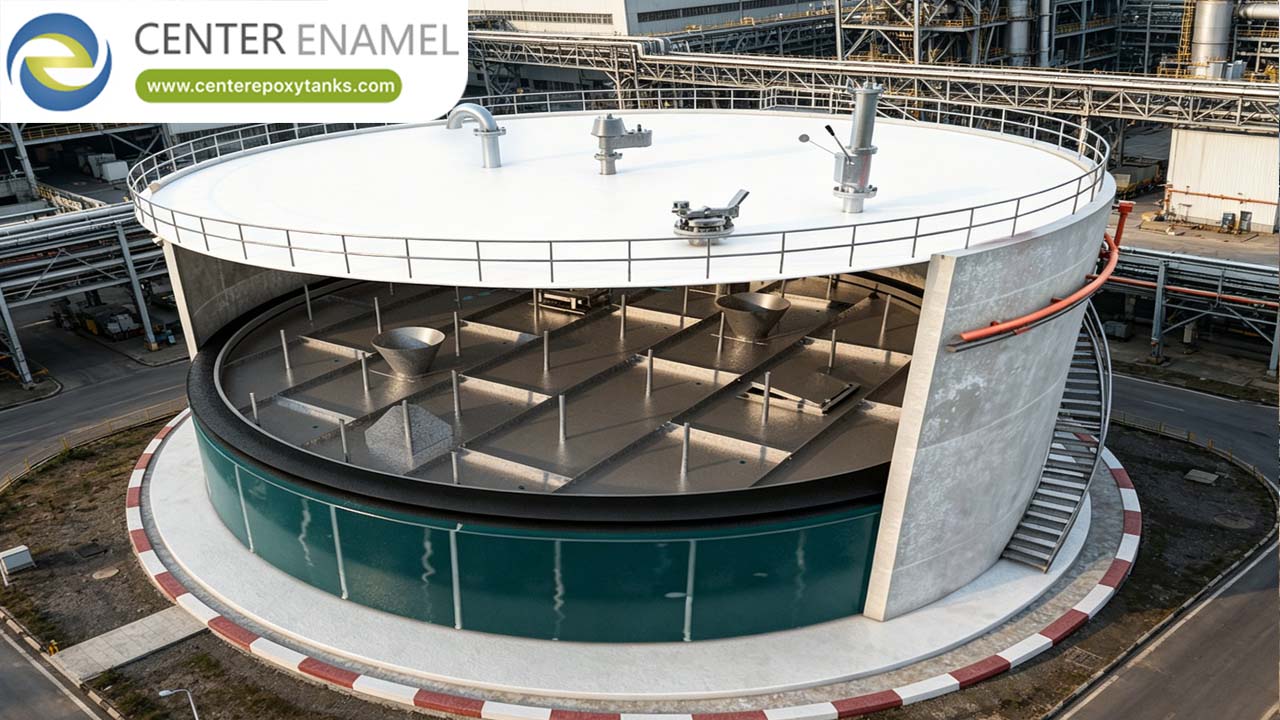
What Are the Different Types of Floating Roofs? A Comprehensive Guide
In industrial bulk liquid storage—spanning crude oil terminals, petrochemical refineries, and chemical processing plants—managing volatile organic compounds (VOCs) and preventing evaporative losses is vital. Floating roofs are dynamic, buoyant structures engineered to rest directly on the surface of stored liquids, rising and falling with inventory levels to eliminate vapor headspace.
However, not all floating roofs are built the same. Depending on environmental exposure, fluid volatility, and structural requirements, engineers deploy several distinct types of floating roof designs governed by international standards like API 650.
1. External Floating Roof (EFR) Types
External floating roofs operate in open-top cylindrical steel tanks where the deck is directly exposed to the atmosphere. They are categorized based on their buoyancy and deck construction:
·
Single-Deck Pontoon Roofs: The most common type of external floating roof. It features a central flat deck plate surrounded by a ring of closed compartments (pontoons) around the perimeter. The pontoons provide buoyancy and keep the central deck elevated above the liquid, preventing sinking even if minor leaks occur.
·
·
Double-Deck Floating Roofs: Constructed with a top and bottom steel plate across the entire diameter of the tank, creating a continuous, compartmentalized air-and-vapor space between them. Double-deck roofs offer superior buoyancy, maximum structural stability, and exceptional thermal insulation, making them the ideal choice for large-diameter crude oil tanks in extreme weather environments.
·
·
Pan Roofs (Obsolete/Legacy): Consisting of a simple flat steel sheet with a vertical rim, pan roofs lacked internal pontoons or buoyancy chambers. Due to poor stability, vulnerability to sinking under heavy rain loads, and high evaporation rates, pan roofs have been largely phased out and are prohibited by modern API standards.
·
2. Internal Floating Roof (IFR) Types
Internal floating roofs operate inside tanks that feature a permanent outer fixed roof or geodesic dome, shielding the floater from rain, snow, and wind:
·
Pontoon-Type Internal Roofs: Similar to external pontoon roofs, these feature metal pontoons attached beneath a central deck, combining high buoyancy with light structural weight.
·
·
Full-Contact Panel / Sandwich Panel Roofs: Constructed from lightweight composite or metallic panels that maintain continuous, uniform contact across the entire liquid surface. By eliminating any localized vapor pockets underneath the deck, full-contact roofs maximize emission control for high-purity chemicals and volatile solvents.
·
·
Skin-and-Skeleton Roofs: Comprising a structural aluminum framework (skeleton) suspended above the liquid with lightweight foam-filled blocks or metallic pans (skin) resting on or just above the fluid surface.
·
Data Table: Comprehensive Floating Roof Types Matrix
Floating Roof Type | Structural Design Feature | Environmental Exposure | Primary Application | Governing Standard |
Single-Deck Pontoon (EFR) | Central deck with perimeter buoyant pontoons | Open-top (Exposed to rain, wind, and sun) | Crude oil terminals, bulk refined fuel storage | API 650, Annex C |
Double-Deck Roof (EFR) | Continuous top and bottom plates across full diameter | Open-top (Maximum structural insulation) | Large-diameter crude tanks, severe weather zones | API 650, Annex C |
Pontoon Internal Roof (IFR) | Pontoons attached to central deck beneath fixed roof | Shielded inside a fixed-roof or domed tank | Aviation fuel, gasoline, refined petrochemicals | API 650, Annex H |
Full-Contact Panel (IFR) | Continuous honeycomb or flat sandwich panels touching liquid | Shielded inside a fixed-roof or domed tank | High-purity solvents, specialized chemical processing | API 650, Annex H |
Frequently Asked Questions (FAQ)
Q: What are the main types of floating roofs used in storage tanks?
A: Floating roofs are primarily divided into External Floating Roofs (EFRs)—which include single-deck pontoon and double-deck designs exposed to the open air—and Internal Floating Roofs (IFRs)—which include pontoon, full-contact panel, and skin-and-skeleton designs operating inside fixed-roof tanks.
Q: What is the difference between a single-deck pontoon roof and a double-deck roof?
A: A single-deck pontoon roof has a central flat deck surrounded by buoyant air chambers (pontoons) around the rim. A double-deck roof features continuous top and bottom plates across the entire surface, providing superior buoyancy, structural strength, and thermal insulation.
Q: Why are pan-type floating roofs no longer used?
A: Pan roofs lacked structural pontoons, making them unstable and highly susceptible to accumulating rainwater, which frequently caused them to tilt, submerge, or sink. Modern industrial codes restrict or prohibit their use.
Q: What engineering standards govern the design of floating roofs?
A: Floating roof tanks are strictly engineered, fabricated, and inspected according to API 650 specifications, specifically Annex C for external floating roofs and Annex H for internal floating roofs.


