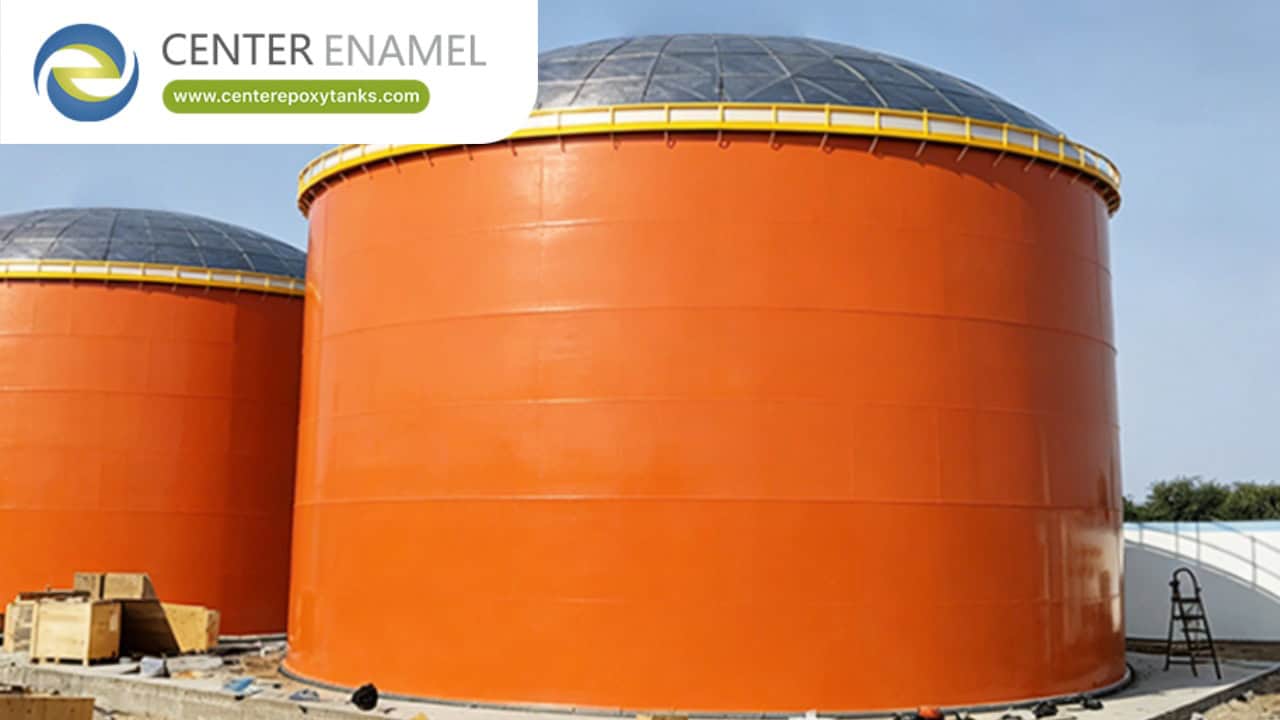
What Are Petroleum Storage Tanks?
Petroleum storage tanks are large-scale, industrial containment vessels designed to safely store crude oil, refined hydrocarbons, petrochemicals, and related industrial liquids. Because these liquids are often highly flammable and environmentally hazardous, their storage is heavily regulated by global engineering codes—most notably the standards established by the American Petroleum Institute (API).
The cornerstone standard for the global hydrocarbon industry is API 650, which governs the design, material selection, and construction of welded atmospheric tanks. Depending on the True Vapor Pressure (TVP) of the stored product and required emission controls, these tanks are categorized primarily by their roof architecture.
Core Types of Petroleum Storage Tanks
1. Fixed-Roof Tanks (The Static Standard)
A fixed-roof tank consists of a cylindrical steel shell topped by a permanently attached roof, typically cone- or dome-shaped.
Because the roof is static, a pocket of air—the vapor space—exists between the liquid surface and the roof. When ambient temperatures rise or the tank is filled, the internal vapors expand or are displaced, leading to "breathing" and "working" evaporative losses.
Best For: Low-volatility liquids (TVP < 1.5 psia) such as heavy fuel oils, diesel, potable water, and lubricants.
Advantages: Cost-effective initial construction (CAPEX) and total protection from external weather elements.
2. Floating-Roof Tanks (Dynamic Vapor Control)
Floating-roof tanks are engineered specifically to eliminate the headspace above the stored liquid. The roof deck floats directly on the liquid surface, rising and falling with the inventory level. By minimizing the exposed surface area, these tanks suppress vapor formation, reducing evaporative losses and Volatile Organic Compound (VOC) emissions by over 90% compared to fixed-roof designs.
External Floating Roof (EFR) Tanks
In an EFR tank, the floating deck is open to the elements. The perimeter of the deck is fitted with a specialized mechanical rim seal system that slides against the tank wall to maintain vapor containment as the roof fluctuates.
Internal Floating Roof (IFR) Tanks
An IFR tank combines a fixed outer roof with a floating inner deck. The fixed roof blocks the wind and protects the floating deck from rain and snow, while the floating deck suppresses vapors at the liquid level.
Best For: Highly volatile, high-value hydrocarbons like ethanol, naphtha, and refined gasoline where both weather protection and strict emission controls are required.
3. Pressure and Variable Vapor Space Tanks
While standard API 650 tanks operate at near-atmospheric pressure, highly volatile or cryogenic liquids require specialized containment.
Pressure Tanks: Often horizontally oriented or spherically shaped to maintain structural integrity under high internal pressure (governed by ASME codes or API 620).
Variable Vapor Space Tanks: Equipped with expandable roofs (such as flexible diaphragms) that connect to the vapor spaces of other tanks, capturing expanding vapors to prevent atmospheric venting.
To help visualize the operational trade-offs between the two primary roof designs, this interactive matrix breaks down the key technical differences:
Frequently Asked Questions (FAQ)
Q: What is the primary difference between API 650 and API 620 storage tanks?
A: API 650 governs welded tanks used for storing oil at near-atmospheric pressures (typically internal pressures not exceeding 2.5 PSI). API 620 covers the design and construction of large, welded, low-pressure storage tanks that operate at slightly higher pressures (up to 15 PSI) and are capable of handling cryogenic materials like liquefied natural gas (LNG).
Q: Can an existing fixed-roof tank be converted into a floating-roof tank?
A: Yes. This is a common modernization strategy to meet stricter environmental regulations. Operators routinely retrofit an aluminum Internal Floating Roof (IFR) inside an existing fixed-roof tank, significantly reducing VOC emissions while fully utilizing the original shell infrastructure.
Q: How do external floating roof tanks handle heavy rainfall?
A: Because the deck is exposed, EFR tanks are equipped with specialized roof drainage systems—typically articulated or flexible swing pipes. These drains safely channel accumulated rainwater from the deck, down through the liquid product area (without mixing), and out the bottom of the tank.


