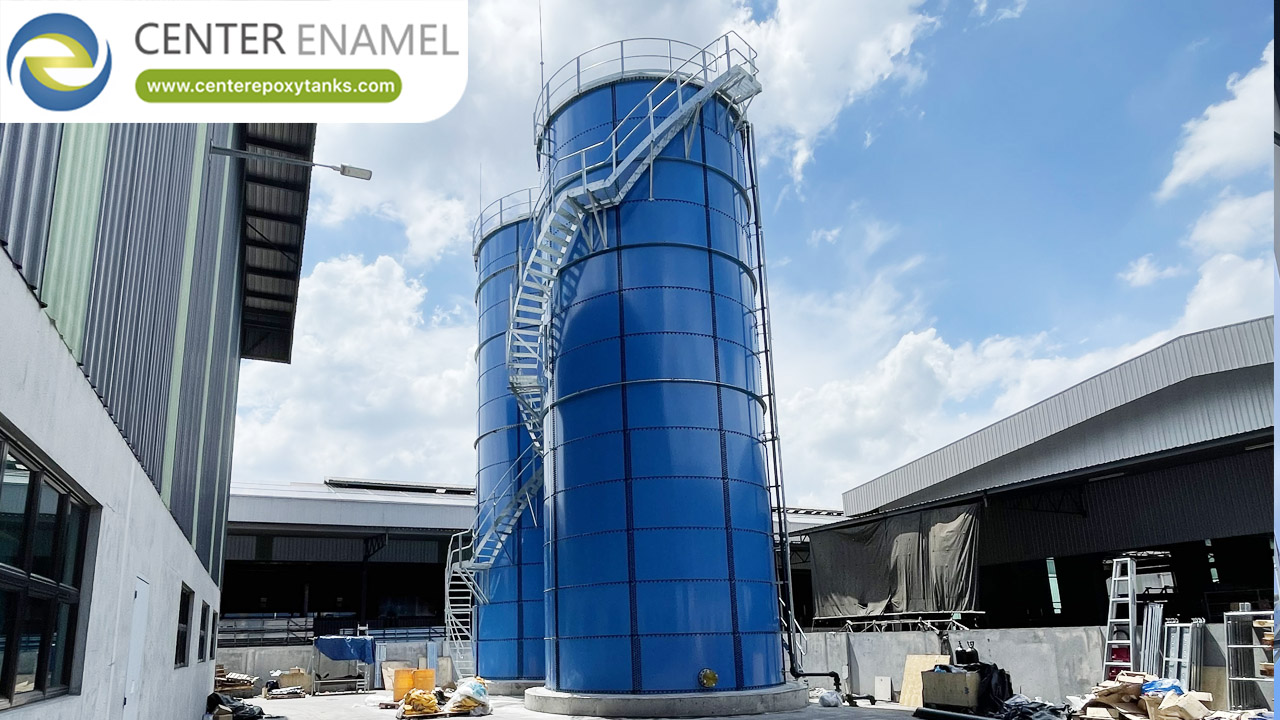
Welded Tanks & Silos for Bulk Material Storage: A Technical Overview
A welded tank or silo is a monolithic industrial storage vessel fabricated by permanently fusing steel panels through advanced welding techniques (such as SAW or GMAW). Unlike bolted or modular systems, welded silos provide a continuous, seamless structure that offers superior structural rigidity, absolute leak-tightness, and zero crevices for bacterial or chemical harbor points. They are the preferred choice for high-throughput industrial plants, food processing, and chemical handling where long-term structural reliability, moisture protection, and cross-contamination prevention are mission-critical.
The Engineering Advantage of Welded Silos
When selecting a vessel for bulk material storage—whether for plastic resins, grain, cement, or hazardous chemicals—the method of fabrication dictates the vessel's operational lifespan. Welded silos are engineered for longevity and heavy-duty performance.
1. Monolithic Structural Integrity
Welded construction eliminates the need for mechanical fasteners (bolts), washers, and rubber seals. This results in a "monolithic" body that can withstand significant wind loads, seismic activity, and the cyclic stress of high-frequency filling/discharging cycles without the risk of joint loosening or seal fatigue.
2. Leak-Proof and Contamination-Free
For industries like pharmaceutical or food-grade storage, hygiene is non-negotiable. Welded silos provide:
● Crevice-Free Interior: No bolt holes or panel overlaps where material can hang up or bacteria can colonize.
● Atmospheric Sealing: Perfect for materials that are hygroscopic (moisture-sensitive) or require a gas-tight environment for fumigation or nitrogen blanketing.
3. Reduced Maintenance
Bolted silos require periodic inspection and replacement of sealing strips and torque checks on fasteners. Welded silos, by contrast, are effectively "set and forget" structures, requiring only routine external coating and visual inspections, significantly lowering the Total Cost of Ownership (TCO) over a 30-to-50-year service life.
Comparative Matrix: Welded vs. Bolted Silos
Procurement teams must weigh the upfront modularity of bolted systems against the long-term robustness of welded systems.
Feature | Welded Steel Silos | Bolted/Modular Silos |
Integrity | Monolithic (100% continuous) | Panelized (Relies on seals) |
Leakage Risk | Near Zero | Risk at panel/bolt joints |
Maintenance | Minimal (Coatings only) | Requires bolt/gasket checks |
Installation | High-skill field welding/Factory-built | Rapid, modular assembly |
Adaptability | Permanent structure | Relocatable/Expandable |
Best Used For | Critical, high-volume/pressure | Remote sites, phased expansion |
Applications in Industry
Welded steel silos are deployed across diverse sectors where containment quality is the primary KPI:
● Chemical Processing: Storing dry resins and powders where moisture ingress would cause clumping or chemical degradation.
● Cement & Mining: Heavy-duty applications where abrasion resistance and external weather protection are paramount.
● Food & Agriculture: Grain and flour storage requiring airtight, pest-proof, and contamination-free environments.
Frequently Asked Questions (FAQ)
1. Why choose a welded silo over a bolted one?
Welded silos are ideal when absolute structural rigidity and leak-tightness are required. They eliminate the "maintenance burden" of checking gaskets and bolts, making them the superior choice for permanent, high-uptime industrial installations.
2. Can welded silos be repaired?
Yes. Unlike bolted panels which may require specific factory replacements, welded silos can be repaired by qualified onsite welding teams. This allows for localized fixes to minor surface corrosion or nozzle modifications without requiring a complete shutdown or disassembly.
3. What is the lifespan of a welded steel silo?
When fabricated with appropriate steel gauges and protected by high-quality, ISO-compliant industrial coatings, a welded steel silo can easily achieve a service life of 40 to 50+ years, provided the exterior is maintained to prevent oxidation.
4. Are welded silos suitable for outdoor installation?
Absolutely. Welded silos are essentially sealed pressure/storage vessels. Because they lack seams that can "weep," they are excellent for harsh outdoor environments, provided they are treated with the correct corrosion-prevention coating (e.g., C3-C5 rated paint systems).
5. Are welded silos more expensive?
The initial capital expenditure (CAPEX) for a welded silo is typically higher than a light-gauge bolted panel silo due to the specialized labor and structural steel required. However, the operational expenditure (OPEX) is generally lower over the life of the silo due to reduced maintenance and increased reliability.


