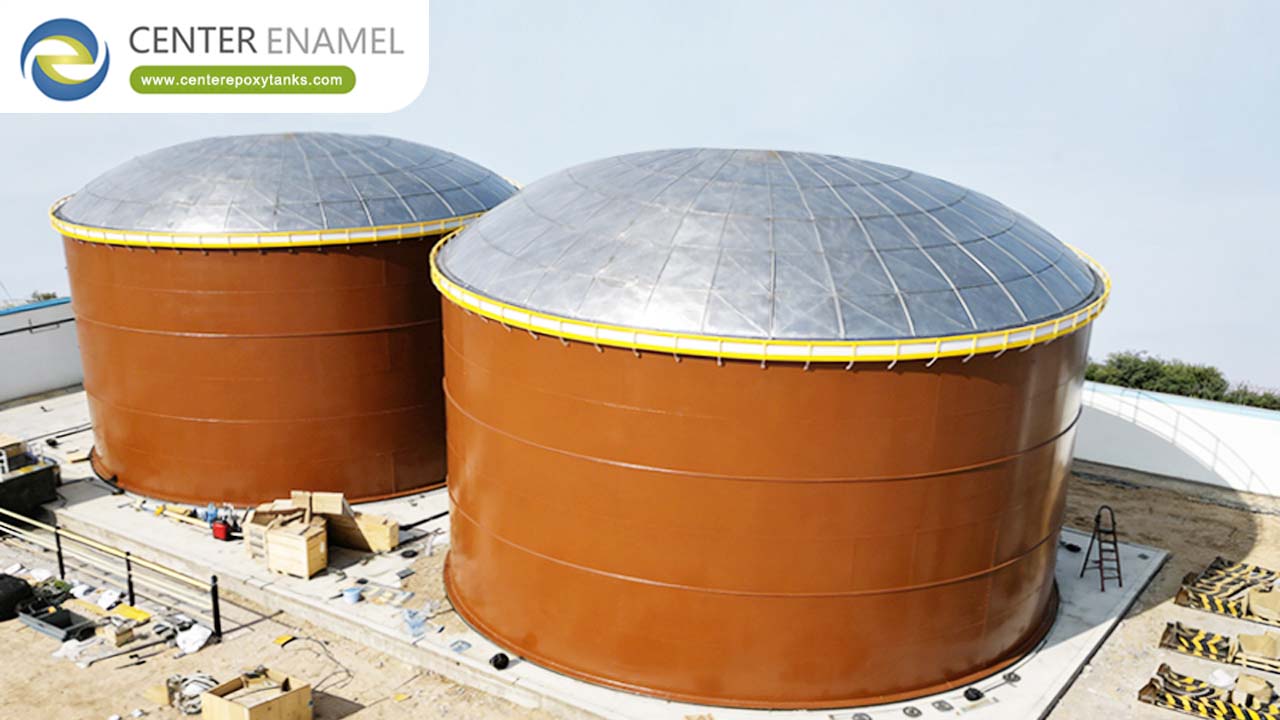
Welded Steel Tanks for Fuel Storage: Engineering Safety, Compliance, and Longevity
In modern petroleum refining, bulk distribution terminals, power generation plants, and industrial logistics parks, the secure containment of liquid fuels is vital to continuous operations. Whether storing diesel, heavy fuel oil, kerosene, or crude petroleum, storage infrastructure must withstand severe hydrostatic loads, environmental weathering, and strict regulatory safety mandates.
Among all containment options, welded steel tanks for fuel storage—engineered in accordance with strict global benchmarks such as API 650—represent the gold standard of industrial reliability. Providing monolithic structural continuity, high mechanical strength, and decades of reliable service, these vessels safeguard valuable fuel inventories while preventing environmental contamination.
1. The Core Engineering Framework: API 650 Compliance
Designing and fabricating fuel storage tanks requires precise mathematical calculation and rigorous adherence to international engineering codes:
Monolithic Structural Continuity (E = 1.0): Utilizing advanced automated welding protocols such as Submerged Arc Welding (SAW) and Gas Metal Arc Welding (GMAW), high-yield carbon steel plates are permanently fused into a seamless, high-integrity cylinder delivering optimal joint efficiency and absolute vapor tightness.
Hydrostatic Shell Calculations: Shell courses are engineered with a tapered design—thicker at the bottom to withstand maximum hydrostatic head pressure and thinner toward the top—optimizing steel utilization while maintaining safety margins.
Rigorous Non-Destructive Testing (NDT): Every critical weld seam undergoes exhaustive inspection by certified technicians using Radiographic Testing (RT), Ultrasonic Testing (UT), and vacuum box testing to guarantee a zero-defect structure.
Data Table: Industrial Fuel Storage Technology Comparison Matrix
Technical Parameter | Welded Carbon Steel Tanks (API 650) | Modular Bolted Steel Tanks | Concrete Fuel Storage Basins |
Construction Method | On-site or shop-fabricated welding (E = 1.0) | Factory-coated panels assembled with mechanical bolts | Poured-in-place reinforced concrete with interior liner |
Primary Standard | API 650 / ASME Section VIII | AWWA D103 / ISO 28765 | ACI Structural Code Standards |
Internal Pressure Limit | Atmospheric up to 2.5 psig (or higher per Annex F) | Atmospheric containment | Atmospheric containment |
Corrosion Defense | ISO 12944 exterior coatings and internal phenolic/epoxy linings | Factory-applied Fusion Bonded Epoxy (FBE) powder | Waterproofing membranes and concrete sealants |
Primary Application | Bulk fuel terminals, refinery tank farms, power plant backup | Industrial water, fire protection, and selected diesel storage | Specialized below-grade or vaulted containment structures |
2. Roof Configurations for Volatility and Emission Control
Depending on the specific volatility of the stored fuel product, API 650 welded steel tanks are configured with specialized roof systems to suppress vapor losses and minimize environmental emissions:
Fixed Cone or Dome Roofs: Ideal for low-volatility distillates such as diesel and heating fuel, providing a rigid, weather-tight barrier against rainwater and dust ingress.
Internal Floating Roofs (IFR): Combines a fixed outer shell with an internal buoyant deck that rests directly on the liquid surface, significantly reducing volatile organic compound (VOC) emissions for products like kerosene and jet fuel.
External Floating Roofs (EFR): An open-top cylindrical tank equipped with a movable deck that floats directly on the liquid, virtually eliminating vapor space and curbing evaporation losses for high-volatility fuels.
Frequently Asked Questions (FAQ)
Q: Why are welded steel tanks preferred for bulk fuel storage?
A: Welded steel tanks offer a monolithic, seamless structure with 100% joint efficiency, making them exceptionally strong, leak-resistant, and capable of withstanding high hydrostatic pressures and severe environmental loads.
Q: What international standard governs the design of welded fuel storage tanks?
A: The American Petroleum Institute's API 650 standard is the global benchmark for the design, fabrication, and testing of aboveground vertical welded steel tanks used for oil and fuel storage.
Q: How are welded seams inspected in API 650 fuel tanks?
A: Critical weld seams are evaluated using rigorous Non-Destructive Testing (NDT) methods, including Radiographic Testing (RT) for internal weld quality, Ultrasonic Testing (UT), and vacuum box testing on bottom plate joints.
Q: Can welded fuel storage tanks be customized for different environmental conditions?
A: Yes. Tanks are engineered to withstand site-specific variables, including high-velocity wind loads, Seismic Zone 4 activity, and specific operating temperatures through tailored plate thicknesses and anchoring systems.


