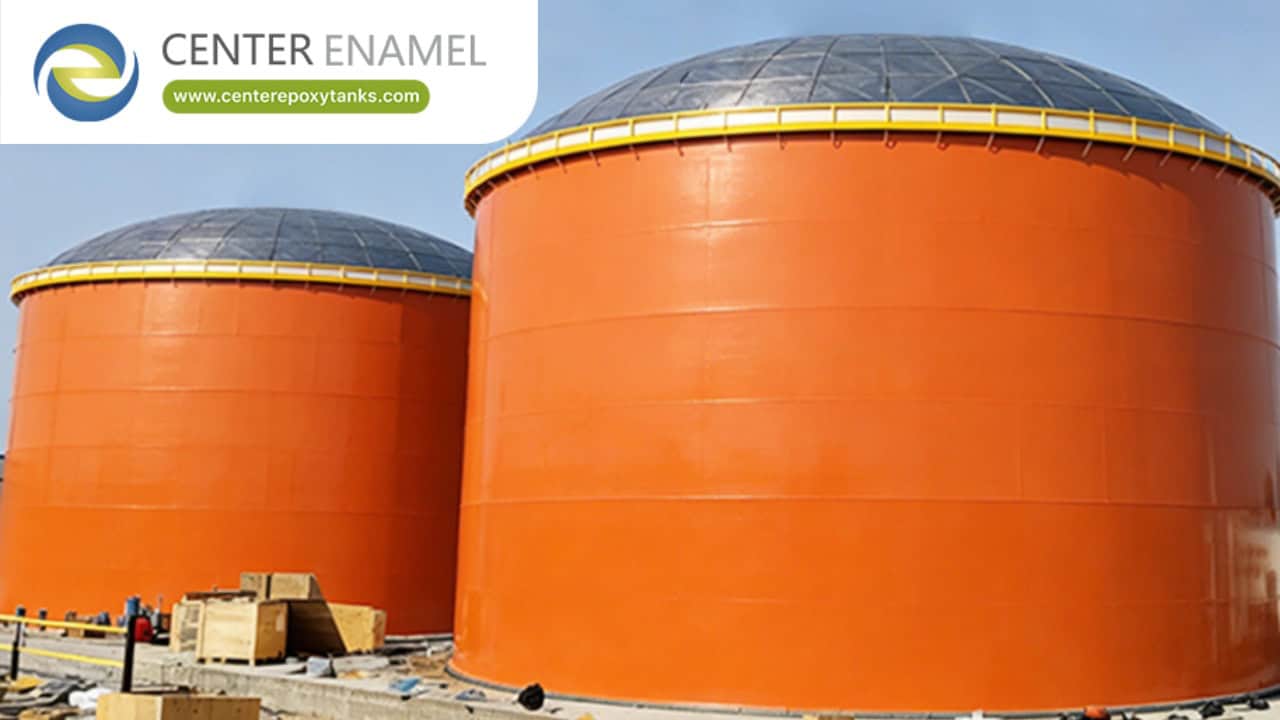
Welded Steel Tanks for Demanding Industrial LPG Storage
Liquefied Petroleum Gas (LPG) storage is a mission-critical infrastructure requirement. Unlike atmospheric water or oil storage, LPG—a mixture of propane and butane—exerts significant vapor pressure and requires containment solutions that prioritize structural integrity and safety above all else.
At Center Enamel, we specialize in the engineering and fabrication of welded steel tanks that meet the most stringent international pressure vessel standards. Whether for cylinder filling plants, petrochemical terminals, or large-scale industrial fuel needs, our tanks are built to handle the physical demands of LPG containment.
Technical Standards for LPG Containment
Selecting the correct design code is the most critical step in LPG storage procurement. At Center Enamel, we align our engineering with global benchmarks:
ASME Section VIII (Division 1): The gold standard for pressure vessels operating above 15 psig. For most industrial LPG applications, this code ensures the shell thickness and head geometry are calculated to withstand internal vapor pressure fluctuations safely.
API 620: Applicable for large, field-erected, low-pressure storage (typically up to 15 psig). This is used when the project scale exceeds shop-fabricated vessel limitations.
Quality & Safety Codes: We integrate safety-critical components such as pressure relief valves (PRVs), emergency shut-off valves, and specialized gauges in accordance with NFPA 58 and relevant regional safety directives.
Engineering Features for High-Performance Storage
LPG storage is not just about the steel shell; it is about the total pressure integrity of the system.
1. Material Selection
We utilize high-strength pressure vessel steel, such as ASME SA-516 Grade 70, which provides superior tensile strength and toughness, particularly in varying climates where temperature-induced pressure changes occur.
2. Welding & Inspection Protocols
Welds are the most common failure point in pressure vessels. Our fabrication process includes:
Radiographic Testing (RT): 100% inspection of longitudinal and circumferential weld seams to eliminate internal porosity.
Post-Weld Heat Treatment (PWHT): Controlled furnace heating to relieve residual stresses in the steel, preventing embrittlement.
Hydrostatic Pressure Testing: Every vessel is subjected to pressure levels 1.3 to 1.5 times the design pressure to guarantee integrity under extreme load.
3. Surface Protection
LPG tanks are susceptible to environmental corrosion. We apply specialized anti-corrosion, UV-resistant coatings—or fire-retardant systems for high-risk industrial zones—ensuring the tank’s exterior remains protected against the elements for decades.
Comparison: LPG Pressure Vessel Specifications
Feature | Shop-Fabricated (ASME VIII) | Field-Erected (API 620) |
Primary Standard | ASME Section VIII Div 1 | API 620 |
Typical Capacity | Smaller (Up to ~200 m³) | Larger (500 m³+) |
Pressure Range | High (>15 psig) | Low (≤15 psig) |
Construction | Controlled Factory Environment | Precision Field Assembly |
Application | Filling Plants, Autogas Stations | Petrochemical Terminals |
Frequently Asked Questions (FAQ)
1. Why must LPG be stored in "pressure vessels"?
LPG remains in a liquid state only under moderate pressure. Unlike atmospheric tanks, an LPG tank must contain the gas’s vapor pressure, which changes significantly with ambient temperature. If the tank is not rated for this pressure, it risks structural failure or dangerous venting.
2. How much liquid can I safely store in a tank?
Safety regulations mandate a maximum fill limit of 80–85% of the tank’s water capacity. This "ullage" or vapor space is essential to allow for the thermal expansion of the liquid LPG without causing over-pressurization.
3. Does Center Enamel provide ASME "U-Stamp" certification?
Yes. We maintain rigorous compliance with ASME boiler and pressure vessel codes. We can provide the necessary documentation, third-party inspection certifications, and code stamps required for your specific regional regulatory approval.
4. How often should industrial LPG tanks be inspected?
Routine inspections should follow local fire and safety codes (such as NFPA 58). Generally, this includes visual inspections for corrosion, functionality checks on pressure relief valves, and periodic non-destructive testing (NDT) of critical weld seams to ensure long-term stability.
5. Can your tanks be installed underground?
Yes, we offer both above-ground and underground storage solutions. Underground tanks are excellent for space-constrained sites or areas where minimal visual impact and reduced fire risk exposure are preferred.


