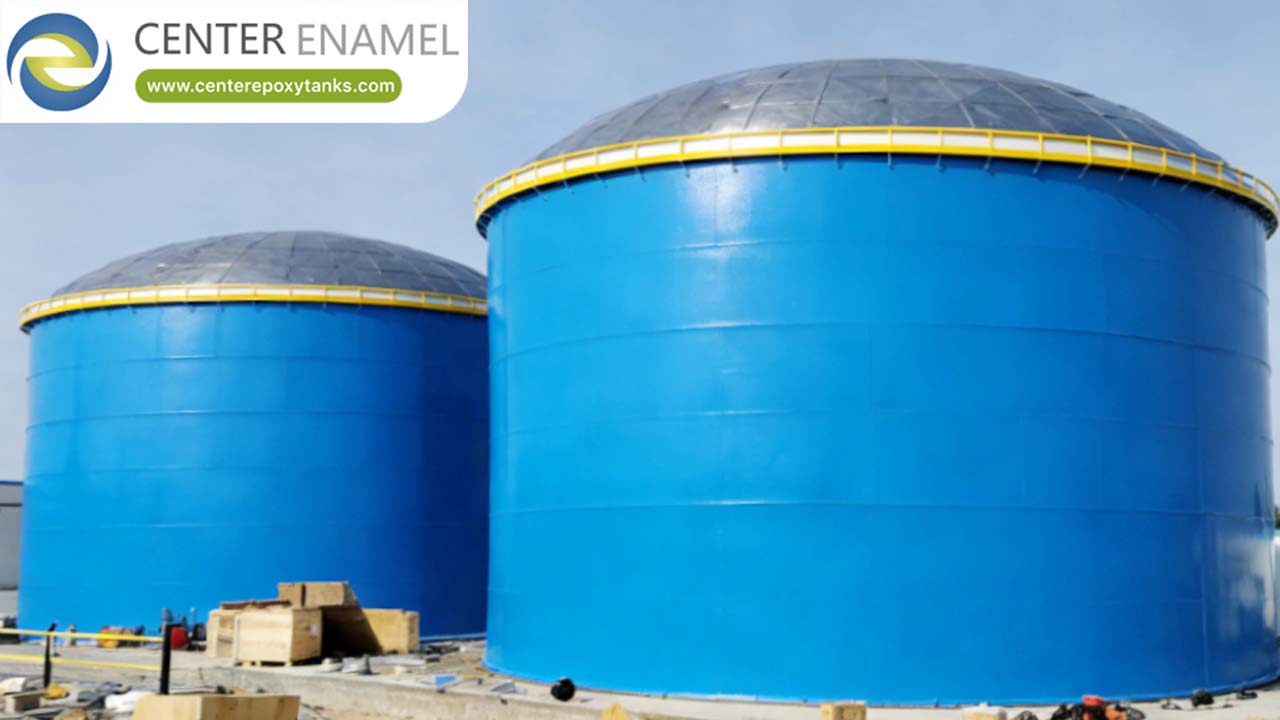
Welded Steel Tanks for Aggressive Oil: Material Selection and Lining Systems
'Aggressive oil' covers a wide frontier: sour crudes with H2S, high-acid crudes (TAN), fatty acid stocks, additive concentrates, and chemical-oil mixtures that quietly eat ordinary steel. The tank that stores them succeeds or fails on one decision made before fabrication starts — what stands between the product and the steel.
Welded steel tanks for aggressive oil are code-fabricated vessels matched to product chemistry through two strategies: a chemically resistant lining system isolating a carbon steel shell, or inherently corrosion-resistant metallurgy such as 316L stainless — each delivering long service life when selected against the specific corrosive agents in the stored fluid.
1. What Makes an Oil 'Aggressive' to a Tank?
Four chemistry families drive the threat model.
· Acidic stocks: High-TAN crude and fatty acid oils attack carbon steel uniformly; corrosion rate tracks acid number and temperature.
· Sulfur compounds: Sour oils with H2S and mercaptans drive sulfidation and sulfide-stress cracking mechanisms in susceptible steels.
· Water and chlorides: Trace water carrying chlorides concentrates at the tank bottom and vapor space, pitting above and below the liquid line.
· Additive and chemical loads: Some additive packages, detergents, and process chemicals are more corrosive than the base oil they ride in.
2. How Do Lining Systems Protect the Shell?
The lining is a chemistry-matched barrier system.
· Lining chemistry matching: Epoxy, epoxy-phenolic, novolac, and urethane systems each hold different pH and chemical windows — selection follows the product, not the brochure.
· Film build and holiday control: Specified dry film thickness applied and holiday-tested so no pinhole gives product a path to steel.
· Vapor-space coverage: Corrosion often runs hardest above the liquid — linings carried through the vapor space and roof underside.
· Inspection and renewal: Lined tanks enter a survey cycle; the lining's service interval is the tank's maintenance clock.
3. When Is Resistant Metallurgy the Better Answer?
Stainless removes the barrier — and its failure modes.
· Chemistry beyond linings: Products outside every lining's chemical window — or at temperatures above coating limits — move the decision to 316L or higher alloy.
· Zero-contamination duty: Where any lining failure product contaminates the stored oil (pharma, food, electronic-grade), bare alloy is the failsafe.
· Lifecycle arithmetic: Stainless' premium competes against repeated lining surveys and recoats over a long horizon; aggressive duty shortens lining life and shifts the balance.
· Hybrid practice: Alloy for the aggressive zones — bottom courses, nozzles, internals — with lined carbon steel above, optimizing both economics.
Data Table: Strategy Selection for Aggressive Oil
Product Condition | Lined Carbon Steel | Stainless / Alloy |
High-TAN acidic crude | Novolac-class lining | 316L effective |
Sour, H2S-bearing oil | Verify steel + lining | Alloy with SSC review |
Chloride + water bottoms | Lining + water draw-off | 316L for pitting duty |
Additive concentrates | Case-by-case chemistry | Commonly specified |
High temperature | Coating limit applies | Check alloy limits |
Frequently Asked Questions (FAQ)
Q1: What counts as aggressive oil for tank storage?
Oils whose chemistry attacks carbon steel: high-acid-number crudes, sour H2S-bearing stocks, fatty acid and chemical-laden oils, and additive concentrates. Any product where water, chlorides, or acidity accelerates corrosion beyond ordinary fuel-oil behavior qualifies.
Q2: Should an aggressive oil tank be lined or stainless?
Line carbon steel when the product sits comfortably inside a proven lining's chemical window and contamination risk is manageable; choose 316L or higher alloy when chemistry exceeds lining capability, temperatures run high, or any lining failure would ruin the product. Long-horizon lifecycle math often favors alloy in severe duty.
Q3: Which lining chemistries handle corrosive oil service?
Epoxy-phenolic and novolac systems cover most acidic and chemical duty; reinforced epoxy serves milder service. The deciding factors are pH range, temperature, and specific chemicals — lining selection is a chemistry match verified by immersion data, not a generic coating choice.
Q4: Does corrosion allowance help in aggressive oil tanks?
It adds shell margin against uniform thinning, but it is not protection — aggressive duty with pitting or cracking mechanisms defeats thickness alone. Corrosion allowance is a complement to linings or alloys, never a substitute for them.


