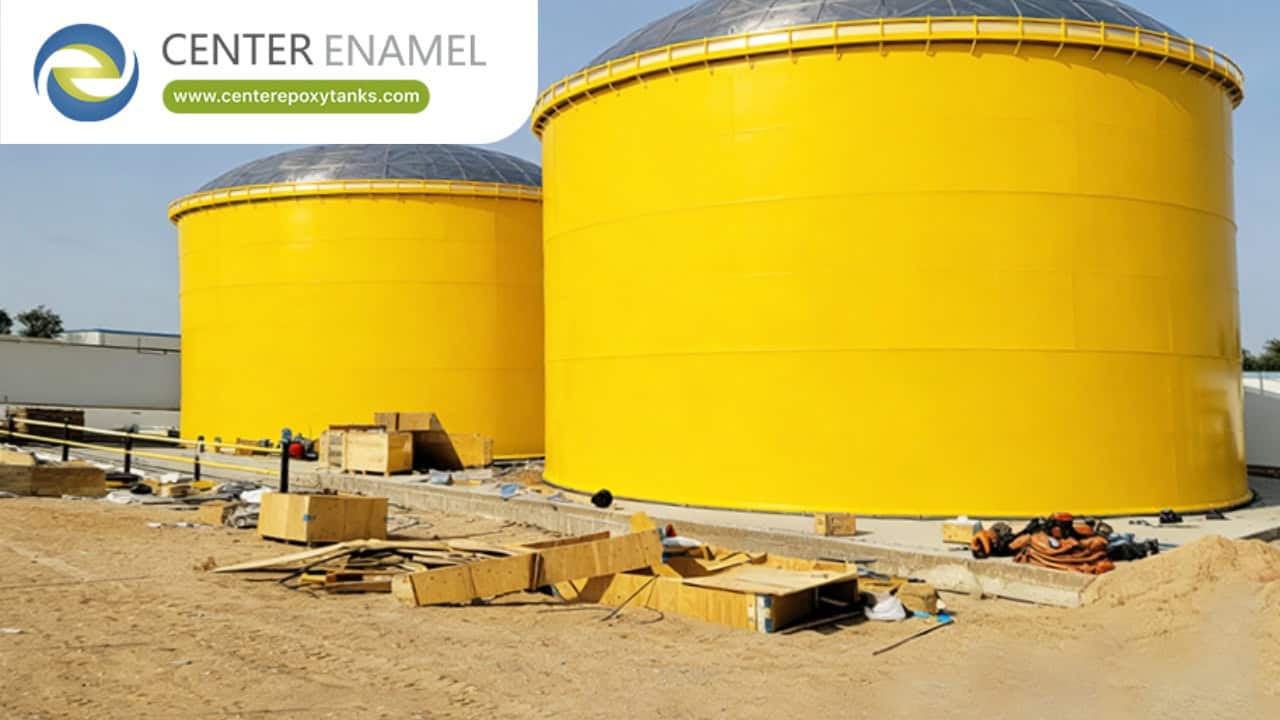
Welded Carbon Steel Tanks for Oil and Gas Storage: Design, Standards, and Safety
In the demanding landscape of the oil and gas industry, safe and reliable bulk liquid containment is critical for operational continuity, environmental compliance, and asset protection. Welded carbon steel tanks represent the foundational standard for aboveground storage vessels across upstream gathering facilities, midstream pipeline terminals, and downstream refineries.
Engineered in strict adherence to rigorous international standards such as API 650 and API 620, these heavy-duty welded vessels provide the structural rigidity, high-pressure tolerance, and leak-free integrity required to contain crude oil, refined petroleum products, and volatile chemical hydrocarbons safely.
1. Governing Engineering Standards: API 650 and API 620
Oil and gas containment requires strict compliance with recognized petroleum codes to withstand hydrostatic fluid pressures, internal vapor loads, and severe external environmental forces.
API 650 Compliance: The benchmark standard for welded steel tanks for oil storage, API 650 governs minimum requirements for material selection, design calculations, fabrication tolerances, and erection procedures for atmospheric storage vessels operating at internal pressures up to 2.5 lbf/in² (gauge).
API 620 Integration: For low-pressure storage applications where internal vapor pressures exceed atmospheric limits (up to 15 lbf/in²), tanks are engineered under API 620 guidelines, utilizing specialized shell and roof geometries.
Rigorous Non-Destructive Examination (NDE): To eliminate the risk of catastrophic failure, welded joints undergo exhaustive testing protocols, including radiographic examination of vertical and horizontal butt welds, vacuum box testing of floor plates, and magnetic particle inspection of fillet welds.
2. Structural Design and Configuration Mechanics
Welded carbon steel oil tanks are custom-designed as field-erected or shop-fabricated structures tailored to the volatility and volume of the stored hydrocarbon:
Plate-by-Plate Field Erection: High-tensile carbon steel plates (such as ASTM A36 or ASTM A516 Gr. 70) are rolled to match the vessel's precise radius and welded sequentially into horizontal courses. This continuous fused construction delivers absolute liquid-tight containment.
Roof Architecture and Floating Integration: Depending on product volatility, welded tanks utilize fixed cone roofs, internal floating roofs (IFRs) housed within a closed shell, or external floating roofs (EFRTs) designed to eliminate vapor headspace and suppress volatile organic compound (VOC) emissions.
Foundation and Anchorage: Large-diameter crude oil tanks are securely anchored to reinforced concrete ringwalls or slab foundations with oil-resilient compacted sub-bases, ensuring stability against seismic events and heavy wind loads.
Data Table: Welded Carbon Steel Oil & Gas Storage Specifications
Engineering Parameter | API 650 Welded Petroleum Tank Specification Profile |
Primary Governing Standards | API 650 (Atmospheric), API 620 (Low Pressure), ASME Section VIII |
Material Construction | High-tensile carbon steel plates (ASTM A36 / ASTM A516) |
Typical Stored Media | Crude oil, diesel, gasoline, kerosene, bunker fuel, produced water |
Roof Configuration Options | Fixed cone roof, internal floating roof (IFR), external floating roof (EFRT) |
Weld Quality & NDE Testing | 100% radiographic, ultrasonic, vacuum box, and magnetic particle testing |
Corrosion & Emission Control | Multi-coat epoxy internal linings, cathodic protection, rim seal systems |
3. Corrosion Control and Safety Appurtenances
Because crude oil, sour gas, and produced water introduce highly corrosive elements (such as hydrogen sulfide, chlorides, and moisture), oil and gas tanks integrate robust protective systems:
Internal Protective Linings: Specialized epoxy or phenolic novolac lining systems are applied to internal floors and lower shell courses to prevent under-deposit pitting and localized corrosion.
Cathodic Protection: Sacrificial anode or impressed current cathodic protection (ICCP) systems are installed to protect tank bottom plates resting against foundation pads.
Explosion Safety Appurtenances: Tanks incorporate frangible shell-to-roof joints, pressure-vacuum relief valves (PVRVs), and emergency venting hatches to safely dissipate internal overpressure during upset conditions.
Frequently Asked Questions (FAQ)
Q: What standard governs welded carbon steel tanks in the oil and gas industry?
A: Welded carbon steel storage tanks are primarily designed, fabricated, and tested in accordance with API 650 for atmospheric storage and API 620 for low-pressure petroleum containment.
Q: Why are welded tanks preferred over bolted tanks for massive crude oil storage?
A: Welded tanks provide continuous, fused structural seams that offer superior tensile strength, high-pressure tolerance, and absolute leak-free integrity, making them ideal for massive, high-volume crude oil terminals.
Q: How are volatile emissions controlled in welded petroleum storage tanks?
A: Volatile emissions (VOCs) are controlled by pairing welded tank shells with internal floating roofs (IFRs) or external floating roofs (EFRTs) equipped with high-performance multi-tier rim seal systems.
Q: What type of steel is typically used for oil and gas storage tanks?
A: Tanks are fabricated from high-strength carbon steel structural plates, such as ASTM A36 or ASTM A516 Grade 70, selected for their excellent weldability, impact resistance, and tensile strength.


