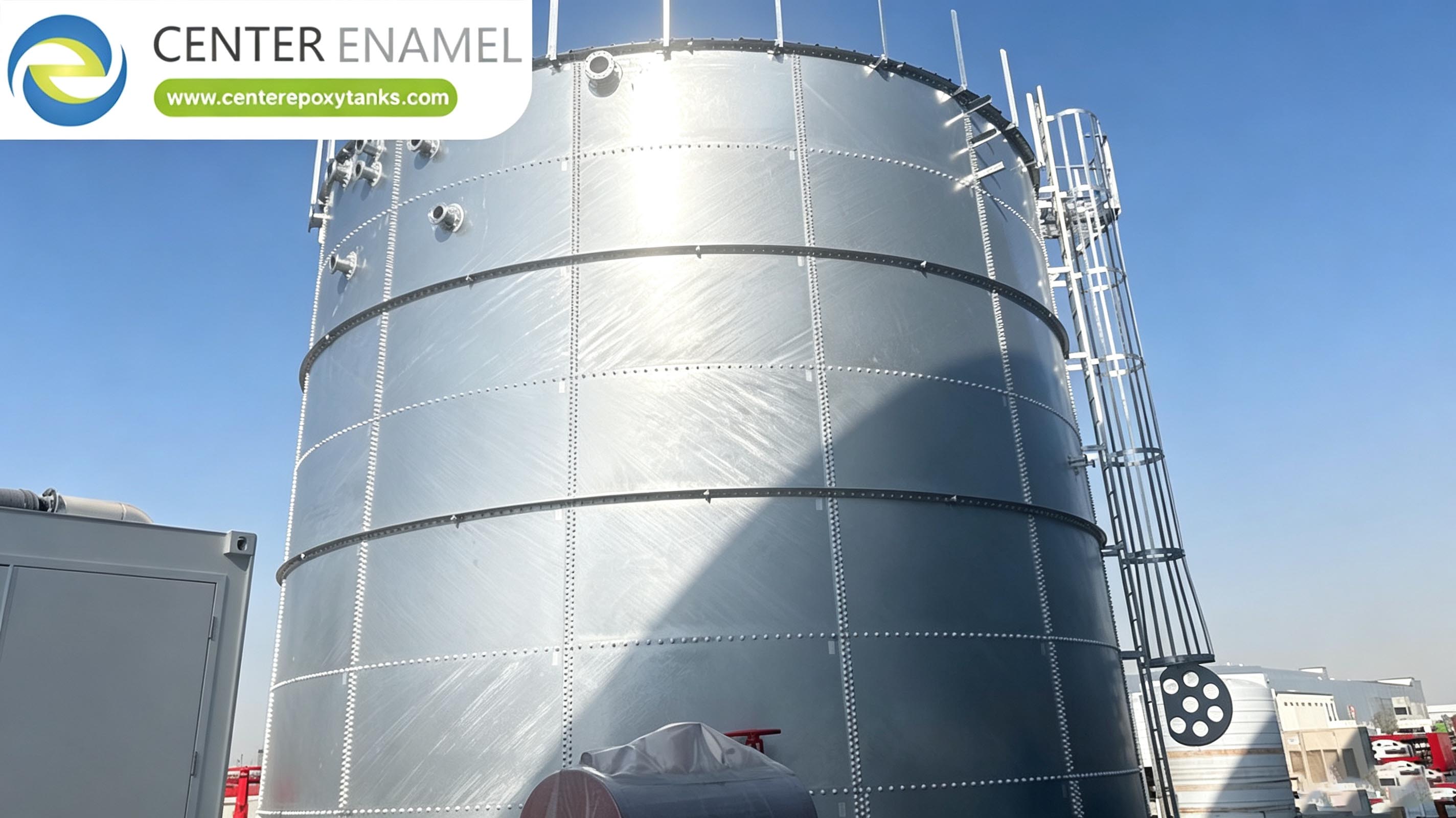
Municipal Water Tanks: Engineering Resilient Public Water Storage Infrastructure
In civil engineering and urban planning, maintaining a safe, continuous, and pressure-regulated supply of clean drinking water is a core pillar of public health and societal stability. As urban populations expand and climate volatility challenges traditional water sources, municipalities require high-capacity containment systems that offer uncompromising structural safety, purity compliance, and long-term durability.
The gold standard for modern civic infrastructure is the engineered municipal water tank. Designed to store millions of gallons of treated drinking water prior to community distribution or fire suppression deployment, these tanks rely on advanced structural design codes and superior corrosion-resistant metallurgy to safeguard public water reserves for decades.
Core Engineering Principles for Municipal Water Storage
Building reliable water infrastructure for a city or district demands adherence to rigorous engineering specifications:
Compliance with AWWA D103 Standards: The American Water Works Association standard governs factory-coated bolted steel tanks, ensuring precise calculations for hydrostatic pressure, wind loads, and seismic activity.
Factory-Controlled Coating Integrity: To eliminate the quality inconsistencies of field-applied painting, modern municipal tanks utilize factory-applied Glass-Fused-to-Steel (GFS) or Fusion-Bonded Epoxy (FBE) technologies. Fusing glass or epoxy resin to steel plates at high temperatures creates an inert, impenetrable barrier that prevents corrosion and inhibits bacterial adhesion.
Seismic Resilience and Flexibility: Unlike rigid concrete structures that can crack under seismic stress, bolted steel tanks utilize high-tensile fasteners and flexible elastomeric gaskets (such as EPDM) that allow the shell to flex safely during ground acceleration.
Data Table: Comprehensive Comparison of Municipal Water Storage Solutions
Technical Parameter | AWWA D103 Bolted Steel Tanks (GFS/Epoxy) | Cast-in-Place Concrete Reservoirs (AWWA D110) | Field-Welded Carbon Steel Tanks |
Installation Speed & Labor | Rapid modular assembly completed in weeks without curing delays | Extremely slow civil pouring, forming, and multi-week curing (months) | Complex field welding, crane staging, and on-site coating work |
Sanitary Compliance | Certified under NSF/ANSI Standard 61 for pure potable water | Porous surface matrix; requires specialized internal coatings | Requires continuous internal epoxy maintenance |
Modularity & Expansion | High; bolted panel design allows future capacity expansion | Permanent monolithic structure; impossible to expand | Rigid welded structure; difficult to alter or relocate |
Asset Service Life | 30 to 50+ years with minimal maintenance overhead | 30 to 50 years (prone to micro-cracking and rebar wear) | 25 to 35 years under strict recoating schedules |
Frequently Asked Questions (FAQ)
Q: What is a municipal water tank?
A: It is a high-capacity storage reservoir engineered to hold treated drinking water for a city, town, or district, ensuring a reliable public supply for daily consumption, peak demand hours, and emergency fire suppression.
S: Why are AWWA D103 bolted steel tanks preferred for municipal projects?
A: They offer faster installation times, lower capital and lifecycle costs, superior seismic flexibility, and factory-controlled corrosion protection compared to traditional poured concrete or field-welded tanks.
Q: Are municipal water tanks certified for drinking water safety?
A: Yes. All materials in contact with the water supply must comply with strict public health codes, such as NSF/ANSI Standard 61, ensuring zero toxic chemical leaching or contamination.
Q: Can a municipal water storage tank be expanded as the city grows?
A: Yes. Because bolted steel tanks feature a modular panel construction, municipal engineers can easily disassemble, relocate, or expand the tank capacity by adding new ring sheets as local water demand increases.


