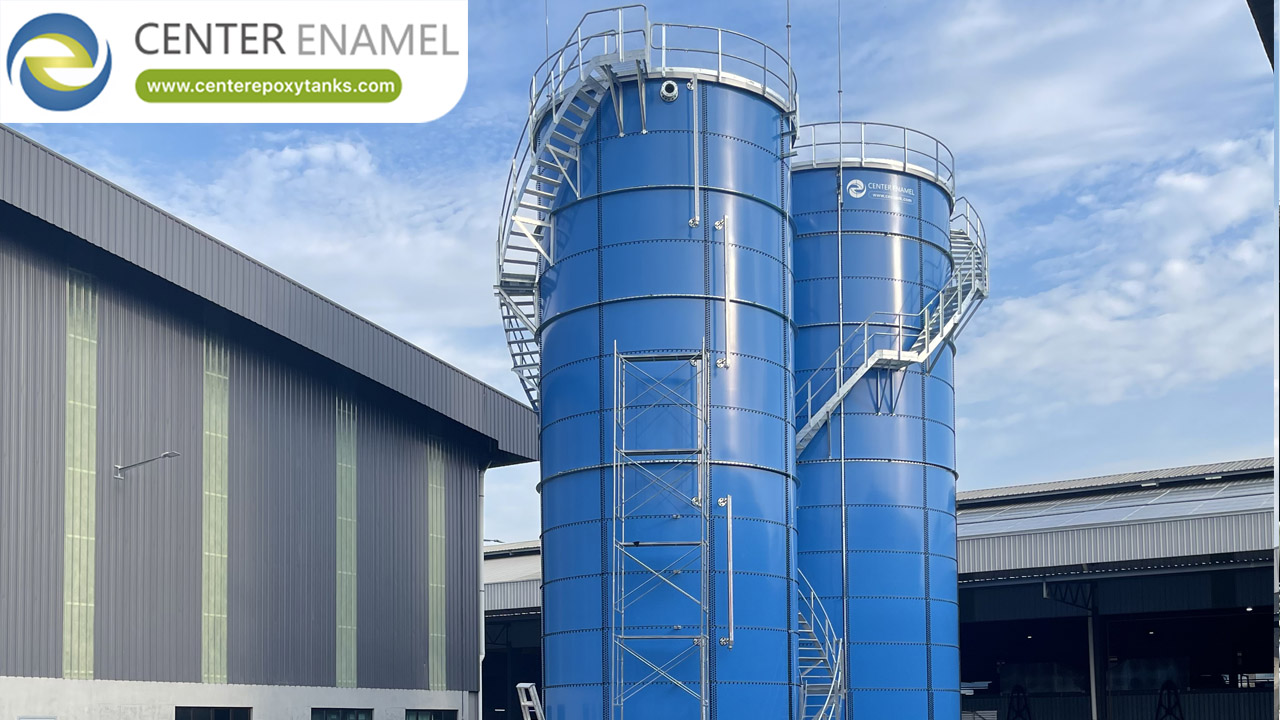
Bulk Water Storage Tanks: Engineering High-Capacity Reserves for Municipal and Industrial Infrastructure
In an era defined by rapid urbanization, industrial expansion, and unpredictable climate patterns, securing a reliable, high-capacity water supply is a fundamental pillar of modern infrastructure. Whether supporting municipal drinking water distribution networks, heavy industrial manufacturing processes, or emergency fire suppression systems, facility managers and civil engineers rely on bulk water storage tanks.
Designing and deploying massive liquid reserves requires balancing structural safety, seismic resilience, cost-effectiveness, and long-term corrosion resistance. Modern bulk water containment solutions leverage advanced modular engineering and specialized surface coatings to deliver multi-decade operational reliability.
Core Engineering Principles for High-Capacity Water Reserves
Building massive water storage infrastructure involves critical structural and material engineering considerations:
Modular Bolted Construction: Unlike traditional concrete basins that require weeks of civil pouring and curing, advanced bulk tanks utilize pre-engineered modular steel panels bolted together on-site. This significantly reduces construction timelines and minimizes labor overhead in remote or constrained locations.
Advanced Protective Coatings (Glass-Fused-to-Steel / Fusion-Bonded Epoxy): To prevent structural degradation from internal water pressure and mineral exposure, high-capacity tanks feature specialized interior finishes. Glass-fused-to-steel (GFS) technology, for instance, fuses inert glass at high temperatures (850 °C to 940 °C) onto high-strength steel, creating a flawless barrier that resists corrosion, inhibits bacterial growth, and eliminates chemical leaching.
Seismic and Wind Load Compliance: Large-diameter tanks act as massive sail and hydrodynamic structures. Engineering calculations must account for site-specific wind speeds, seismic acceleration parameters (using rigorous finite element analysis), and hydrostatic hoop stress to ensure structural integrity under extreme environmental loading.
Primary Applications of Bulk Water Storage Systems
Bulk water storage tanks provide essential operational security across diverse sectors:
Municipal Potable Water Reserves: Serving as central storage reservoirs for city water treatment plants, boosting station networks, and district distribution grids.
Industrial Fire Protection: Maintaining mandatory, high-volume water reserves connected to sprinkler and hydrant systems to protect manufacturing complexes and petrochemical facilities.
Emergency and Disaster Relief: Providing decentralized, rapid-deploy water buffers for communities vulnerable to drought, natural disasters, or grid outages.
Wastewater and Process Water Buffering: Storing raw or treated process water for heavy industrial recycling loops.
Data Table: Comprehensive Comparison of Bulk Water Storage Solutions
Technical Parameter | Bolted Steel Tanks (GFS / Epoxy) | Cast-in-Place Concrete Reservoirs | Welded Carbon Steel Tanks |
Installation Speed & Labor | Rapid modular bolting completed in days to weeks | Extremely slow civil pouring, forming, and curing (months) | Field-erected welding requiring extensive crane and rigging work |
Corrosion Resistance | Excellent; fused glass or epoxy shields prevent rust and oxidation | Moderate; vulnerable to carbonation, acid attack, and rebar corrosion | Poor to Moderate; requires continuous external and internal repainting |
Volumetric Scalability | Highly flexible; easily expanded by adding ring panels | Fixed permanent volume; impossible to expand without major reconstruction | Moderate scalability through field modification |
Expected Lifespan | 30 to 40+ years with minimal maintenance overhead | 30 to 50 years | 25 to 35 years under rigorous maintenance schedules |
Frequently Asked Questions (FAQ)
Q: What is a bulk water storage tank?
A: It is a high-capacity industrial or municipal liquid containment structure engineered to store large volumes of potable water, fire suppression reserves, or process water securely over extended periods.
Q: Why are bolted steel tanks preferred over concrete for bulk water storage?
A: Bolted steel tanks offer faster on-site assembly, lower foundation costs, superior seismic flexibility, and modular expandability compared to permanent, labor-intensive cast-in-place concrete reservoirs.
Q: Do bulk water storage tanks comply with drinking water safety standards?
A: Yes. High-quality bulk water tanks utilized for municipal potable water are certified under stringent health standards such as NSF/ANSI Standard 61, ensuring no toxic compounds or heavy metals leach into the water supply.
Q: How do you prevent corrosion in large steel water tanks?
A: Corrosion is prevented by applying advanced factory-applied protective finishes—such as Glass-Fused-to-Steel (GFS) or fusion-bonded epoxy—which provide an inert, impermeable barrier between the steel substrate and stored water.


