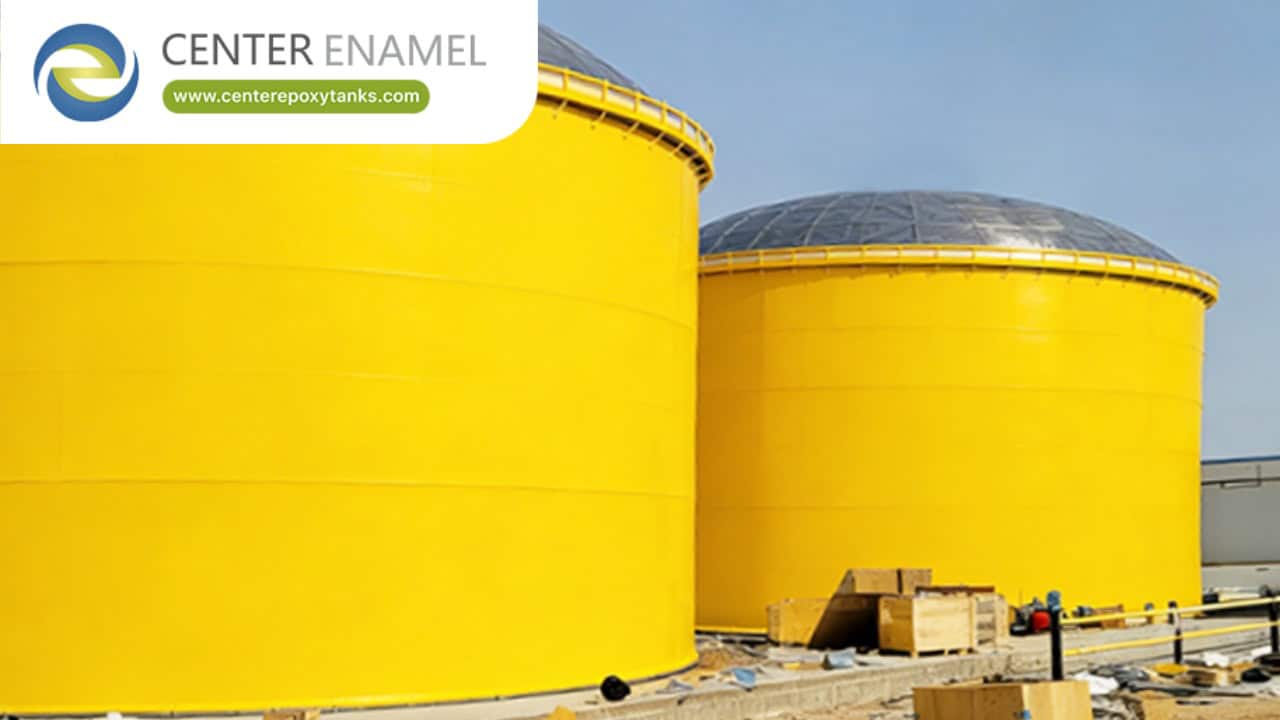
Vertical Heavy Fuel Oil (HFO) Storage Tanks: Engineered for Thermal Excellence
Heavy Fuel Oil (HFO) is a high-viscosity, residual fuel primarily used in large-scale thermal power plants and maritime engines. Unlike lighter distillates, HFO is dense and semi-solid at ambient temperatures, requiring continuous thermal management.
Shijiazhuang Zhengzhong Technology Co., Ltd. (Center Enamel) is a globally recognized manufacturer of Vertical Heavy Fuel Oil Storage Tanks. We deliver high-performance, thermally optimized, and structurally certified containment solutions that address the unique challenges of HFO storage, including flowability, thermal expansion, and internal corrosion.
The Distinctive Challenges of HFO Storage
Storing HFO requires more than simple containment; it demands a complex system designed to manage the fuel's physical properties. As a specialized manufacturer, Center Enamel focuses on integrated design solutions:
Challenge | Engineering Requirement | Center Enamel Solution |
High Viscosity | Must remain pumpable | Integrated heating coils (steam/thermal fluid). |
Thermal Stress | Expansion/contraction cycles | Advanced anchorage & structural flex design. |
Water/Sludge | Settling & corrosion risk | Sloped floors with dedicated sludge sumps. |
Sulfur/Vanadium | Internal corrosion | Increased corrosion allowance & heat-resistant linings. |
Precision Fabrication: Engineering the HFO Tank
Our manufacturing process is a high-specification operation focused on achieving the structural excellence and thermal efficiency required for heavy residual fuel storage.
1. API 650 Structural Mastery & Thermal Verification
Large-capacity tanks require absolute adherence to structural standards.
API 650 Compliance: Our tanks follow API Standard 650 (appendices for elevated temperatures), ensuring precise shell course thickness calculations to handle both hydrostatic and thermal loads.
Automated Welding: We utilize certified, high-grade carbon steel plates joined by automated submerged arc welding (SAW). Every critical weld undergoes Non-Destructive Testing (NDT)—including radiography and ultrasonic testing—to confirm monolithic structural integrity.
Thermal Expansion Design: Tanks are fabricated with specialized anchorage details that allow for controlled expansion and contraction during heating cycles, preventing localized stress concentrations.
2. Advanced Heating and Insulation Systems
The core functionality of an HFO tank is maintaining heat efficiency to prevent fuel solidification ("waxing").
Heating Coil Integration: We fabricate robust internal supports for steam or thermal fluid heating coils, strategically positioned at the tank bottom for uniform heat distribution.
Weather-Protected Insulation: The tank shell features a comprehensive system of clips and supports for thick mineral wool or polyurethane panels, finished with a precision-fitted aluminum or stainless steel weather jacket to ensure maximum heat retention.
3. Aluminum Dome Roofs for Thermal Protection
For large-scale HFO storage, we integrate corrosion-resistant, self-supporting Aluminum Dome Roofs. These lightweight structures provide:
Superior Sealing: They provide an external seal that prevents heat loss through the top of the tank.
Corrosion Resistance: Unlike traditional carbon steel roofs, aluminum is unaffected by sulfurous vapors, offering a low-maintenance, long-term solution.
Comprehensive Corrosion and Lifecycle Strategy
We employ a multi-faceted approach to ensure an extended service life for our Welded Carbon Steel Tanks:
Internal Protection: We incorporate a conservative corrosion allowance (extra steel thickness) and apply heat-resistant internal linings to floor plates where sludge and water accumulate.
External Defense: High-performance industrial coatings are applied before insulation to prevent Corrosion Under Insulation (CUI).
Foundation Integrity: Our designs accommodate the seamless integration of cathodic protection systems, providing continuous defense against external electrochemical soil-side corrosion.
Frequently Asked Questions (FAQ)
Why is HFO storage different from diesel or gasoline storage?
HFO has a high viscosity and is semi-solid at room temperature. It requires specialized heating (coils) and heavy thermal insulation, whereas lighter fuels like diesel do not. HFO tanks also require specific management for sludge accumulation, which is less prevalent in refined distillates.
What international codes does Center Enamel follow for HFO tanks?
We strictly adhere to the API 650 standard for welded, vertical, aboveground storage tanks. We also implement structural calculations specifically designed for tanks operating at elevated temperatures as per API 650 guidelines.
How does Center Enamel manage thermal expansion in a heated tank?
The tank shell and floor joint are the most critical points for thermal stress. We use specialized anchorage designs and shell-to-bottom joint configurations that accommodate the differential expansion of the steel during heating and cooling cycles, preventing structural fatigue.
Why are Aluminum Dome Roofs preferred over fixed steel roofs for HFO?
Aluminum Dome Roofs are lightweight, self-supporting, and inherently resistant to the sulfurous vapors common in HFO. They do not require internal columns (which can interfere with heating coils), and they provide a superior thermal seal, drastically reducing heat loss compared to steel roofs.
How does the tank floor handle sludge management?
We fabricate our tank floors with a precise slope leading to a dedicated sump. This ensures that water and heavy sediment can be channeled and removed efficiently, which prevents the sludge from corroding the floor plates over time.


