Types of Atmospheric Storage Tanks: Fixed Roof vs. Floating Roof Tanks
In the global industrial bulk liquid storage sector, selecting the correct vessel architecture is vital for structural safety, environmental compliance, and long-term economic efficiency. Atmospheric storage tanks—designed to operate at pressures from atmospheric up to 6.9 kPa (1 psig)—are engineered in accordance with international standards such as API 650 and EN 14015.
The defining structural element dividing these vessels is the roof configuration. Broadly categorized into fixed roof tanks and floating roof tanks, these systems dictate how a facility manages internal vapor spaces, volatile organic compound (VOC) emissions, and fluid volatility.
1. Fixed Roof Atmospheric Storage Tanks
A fixed roof tank features a permanently attached roof structure welded or bolted directly to the top of the cylindrical tank shell. Unlike floating systems, a fixed-roof tank maintains a permanent air space (ullage) between the liquid surface and the roof.
·
Supported Cone Roofs: Featuring a sloped, conical geometry, supported cone roofs rely on internal structural rafters, girders, and center support columns to bear snow, wind, and dead loads on larger diameters. They are widely used for large crude oil settling tanks and heavy fuel oil storage.
·
·
Self-Supporting Cone Roofs: Designed with a self-supporting edge shell connection, these cone roofs eliminate internal columns for smaller-to-medium tank diameters, making them ideal for municipal water and wastewater containment.
·
·
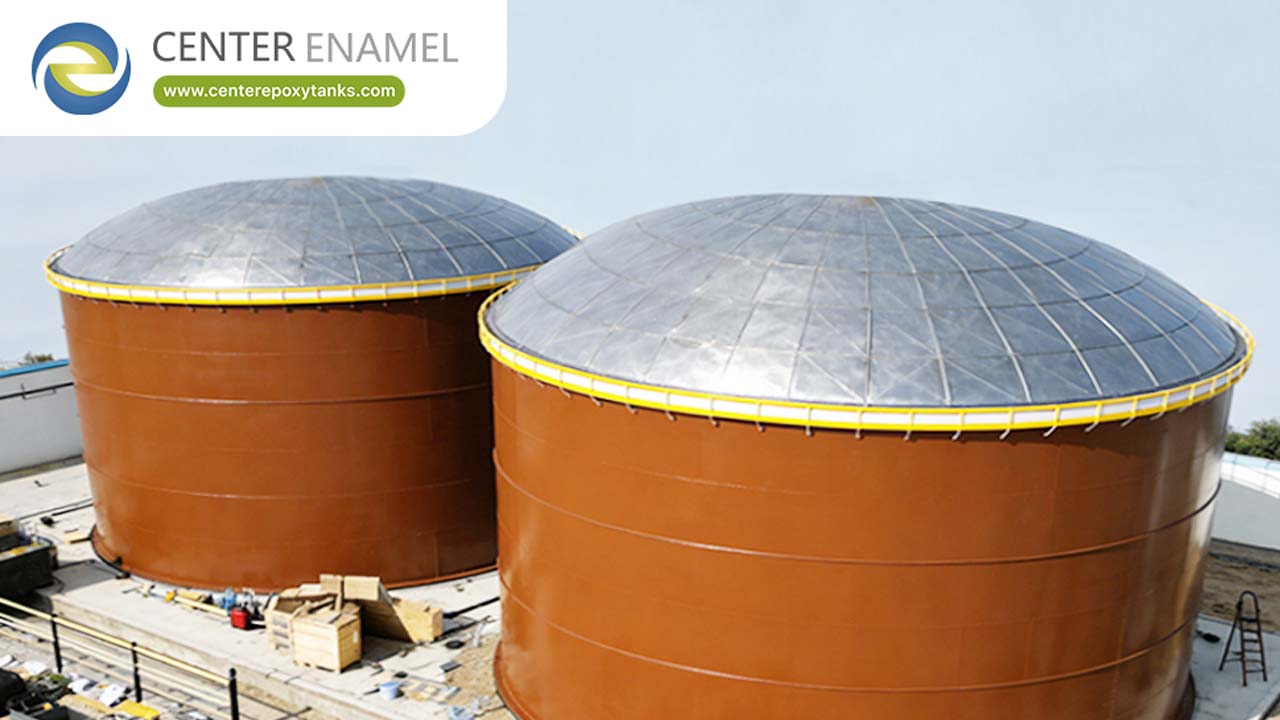
Geodesic Aluminum Dome Roofs: Fabricated from corrosion-resistant structural aluminum alloys, geodesic domes provide a curved, self-supporting geometry that completely eliminates internal support columns and internal painting requirements, making them ideal for modern chemical and water processing.
·
2. Floating Roof Atmospheric Storage Tanks
A floating roof tank is engineered specifically to contain volatile organic liquids by eliminating the internal vapor space. The roof rests directly on the liquid surface, rising and falling dynamically with inventory levels to suppress evaporation.
·
External Floating Roof Tanks (EFRTs): Featuring an open-top cylindrical shell, an EFRT houses a floating deck directly exposed to the atmosphere. They are heavily utilized in massive crude oil storage terminals where tank diameters exceed 50 meters, requiring dedicated roof drainage systems.
·
·
Internal Floating Roof Tanks (IFRs): An IFR combines a movable internal floating deck housed inside a closed-top tank shell capped by a permanent fixed outer roof or geodesic aluminum dome, providing complete weather shielding and dual-stage VOC containment.
·
·
Domed Floating Roof Hybrids: Pairing an internal floating deck with an external geodesic aluminum dome, this configuration represents the modern gold standard for refined product terminals, eliminating rainwater management issues while delivering up to 99% VOC emission reduction.
·
Data Table: Fixed Roof vs. Floating Roof Atmospheric Storage Tanks
Tank Classification | Roof Structure & Geometry | Vapor Space (Ullage) | Primary VOC Control | Typical Stored Products |
Supported Cone Roof | Permanent sloped conical plate with columns | Large headspace pocket | Requires Vapor Recovery Unit (VRU) | Water, diesel, heavy fuel oil, lubricants |
Geodesic Aluminum Dome | Curved spherical clear-span aluminum frame | Enclosed static headspace | High (When paired with internal deck) | Chemicals, aviation fuel, municipal water |
Internal Floating Roof (IFR) | Movable deck beneath fixed roof / dome | Virtually zero vapor space | Extremely high (Dual-barrier containment) | Refined fuels, gasoline, volatile chemicals |
External Floating Roof (EFRT) | Open-top movable deck exposed to atmosphere | Virtually zero vapor space | High (Suppressed via rim seals and deck) | Crude oil, bulk petroleum distillates |
Key Engineering Selection Criteria
When specifying atmospheric storage tanks for an industrial facility, engineering teams evaluate four critical parameters:
Product Volatility: Low-volatility fluids (water, diesel) are safely stored in fixed-roof tanks, whereas highly volatile products (crude oil, gasoline, aviation fuel) mandate floating roofs to prevent explosive vapor accumulation.
Environmental Compliance: Strict VOC emission mandates enforced by regulatory bodies often require transitioning from basic fixed roofs to internal floating roofs or domed structures.
Climatic Conditions: Heavy rainfall and snowfall regions favor closed-top fixed roofs or domed internal floating roofs to eliminate rainwater loading risks associated with open-top external floating roofs.
Capital & Maintenance Costs: Fixed roofs offer lower initial construction costs, while floating roof designs require ongoing rim seal inspections and maintenance but yield substantial savings through product retention.
Frequently Asked Questions (FAQ)
Q: What is the fundamental difference between fixed roof and floating roof atmospheric storage tanks?
A: A fixed roof tank has a permanently attached roof that leaves a static air space (ullage) above the liquid. A floating roof tank features a movable deck that rests directly on the liquid surface, moving dynamically with inventory to eliminate the headspace.
Q: Why are geodesic aluminum domes preferred over traditional steel cone roofs?
A: Geodesic aluminum domes are lightweight, clear-span structures requiring zero internal support columns. They are naturally corrosion-resistant without requiring paint coatings and reflect solar radiation to minimize product evaporation.
Q: Can an existing fixed-roof atmospheric tank be upgraded to a floating roof tank?
A: Yes. Many industrial facilities perform cost-effective retrofits by installing an internal floating deck inside an existing fixed-roof tank shell, creating an internal floating roof tank (IFRT) to improve VOC emission compliance.
Q: Do floating roof atmospheric tanks require external electrical power to operate?
A: No. Floating roof tanks operate entirely passively. The roof rises and falls automatically based on the hydrostatic pressure and volume of the liquid being pumped into or out of the tank.


