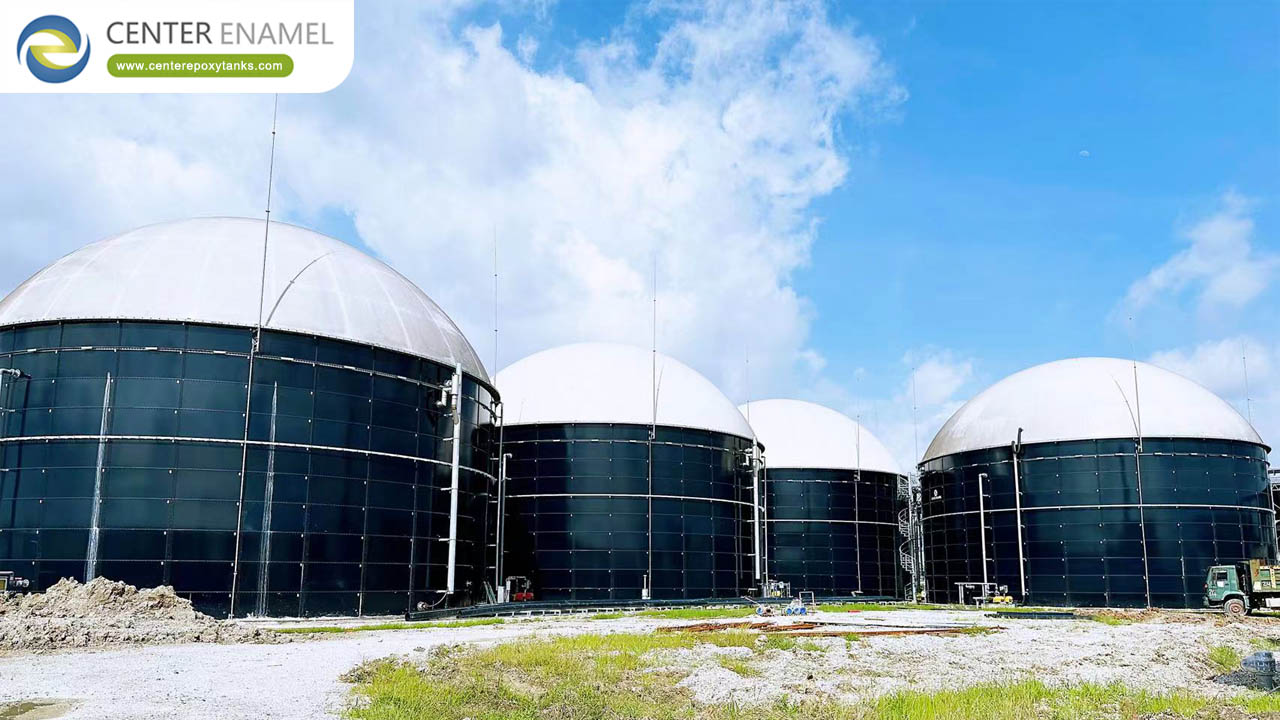
Bolted Steel Tanks as Farm Digester Tanks: The High-Efficiency Infrastructure
For modern agricultural operations, the farm-scale anaerobic digester is the core of circular energy production. While traditional concrete pits were once the default, bolted steel tanks—specifically those utilizing Glass-Fused-to-Steel (GFS) technology—have become the industry standard for reliable, high-performance biogas production. By combining the chemical inertness of glass with the structural versatility of modular steel, these tanks resolve the critical failure points of aging agricultural infrastructure.
The Engineering Advantage of Bolted Steel for Farm Digesters
Anaerobic digestion is an aggressive process. It creates high-temperature, chemically acidic environments that can rapidly degrade standard construction materials. Bolted steel tanks provide a purpose-engineered solution to these challenges.
1. Superior Chemical Inertness
The internal environment of a digester is hostile, containing high concentrations of hydrogen sulfide (H2S) and organic acids. GFS panels are fired in high-temperature kilns, creating a chemically inert, glass-like barrier that is impervious to sludge acidity. This prevents the "internal-out" corrosion that typically destroys rebar in concrete digesters.
2. Rapid, Modular Deployment
Farm operational windows are tight. Bolted steel tanks are prefabricated in controlled factory environments and arrive as a modular kit. This allows for crane-assisted assembly in a fraction of the time required to pour, cure, and seal large-scale concrete structures, significantly reducing labor costs and project lead times.
3. Scalable Operational Flexibility
Agricultural operations evolve. Unlike concrete, which is permanent and rigid, bolted steel digesters are modular. If a farm increases its herd size or expands its feedstock intake, the tank can be expanded by adding panels, protecting the long-term capital investment.
Performance Matrix: Bolted Steel vs. Concrete Digesters
Feature | Bolted Steel (GFS) | Cast-in-Place Concrete |
Corrosion Resistance | Excellent (Inert Surface) | Low (Requires Re-lining) |
Installation Speed | Fast (Weeks) | Slow (Months) |
Maintenance | Minimal | Moderate (Crack/Seal Repair) |
Expansion Capability | High (Modular Panels) | None |
Initial Cost | Moderate | High (High Labor) |
Technical Considerations for Farm-Scale Digestion
A digester is not just a storage tank; it is a complex biological process machine. When specifying a bolted steel digester, engineers prioritize three critical subsystems:
Thermal Regulation: Methanogenic bacteria thrive in stable mesophilic (35C) or thermophilic (55C) temperatures. Bolted tanks easily integrate external insulation jackets or internal heating coils to maintain thermal equilibrium regardless of the climate.
Homogeneous Mixing: To prevent sediment accumulation and "dead zones" where digestion stalls, bolted tanks are designed to accommodate various mixing technologies, including central shaft agitators, submersible propellers, or gas-injection systems.
Gas-Tight Integrity: The roof must contain methane (CH4) safely. Bolted systems utilize specialized, high-grade mastic sealants between every panel overlap. These sealants are chemically compatible with biogas, ensuring that the tank remains 100% gas-tight throughout its service life.
Frequently Asked Questions (FAQ)
Q: Can bolted steel digesters handle high-acidity manure and organic waste?
A: Yes. GFS (Glass-Fused-to-Steel) coatings are highly resistant to the acidic and corrosive properties of manure and organic slurry, preventing the structural degradation that typically affects concrete or bare steel over time.
Q: How do you ensure bolted connections stay gas-tight?
A: Bolted digesters use chemically compatible, high-performance mastic sealants applied between panel overlaps. These sealants are engineered to maintain elasticity and bond strength for decades, ensuring a permanent gas-tight seal.
Q: Is it possible to expand a bolted steel digester after it is built?
A: Yes. This is a primary benefit. If your farm expands and requires more digestion capacity, bolted panels allow for the tank height or diameter to be increased, provided the foundation was designed with sufficient load-bearing capacity for the expansion.
Q: Which is better: epoxy or glass-fused coatings for farm digesters?
A: Both provide excellent service. Glass-Fused-to-Steel (GFS) is generally considered the premium "maintenance-free" option due to its extreme hardness and chemical inertness. Fusion Bonded Epoxy (FBE) is a highly durable, cost-effective alternative widely used in agricultural and industrial wastewater applications.
Q: Do these tanks require special maintenance compared to concrete?
A: They require significantly less maintenance. While concrete needs periodic crack sealing and surface re-coating to prevent rebar corrosion, bolted GFS/FBE tanks only require standard visual inspections to ensure the integrity of the coating and seals.
Are you currently engineering a new biogas facility for your agricultural operation or retrofitting an existing digester? [Contact our engineering team] today for a technical proposal or a custom capacity analysis tailored to your farm's waste profile.
Expert Follow-Up Question: Are you planning to treat dairy/livestock manure primarily, or is your digester designed for a mixed-feedstock facility (including food waste or agricultural residues)?


