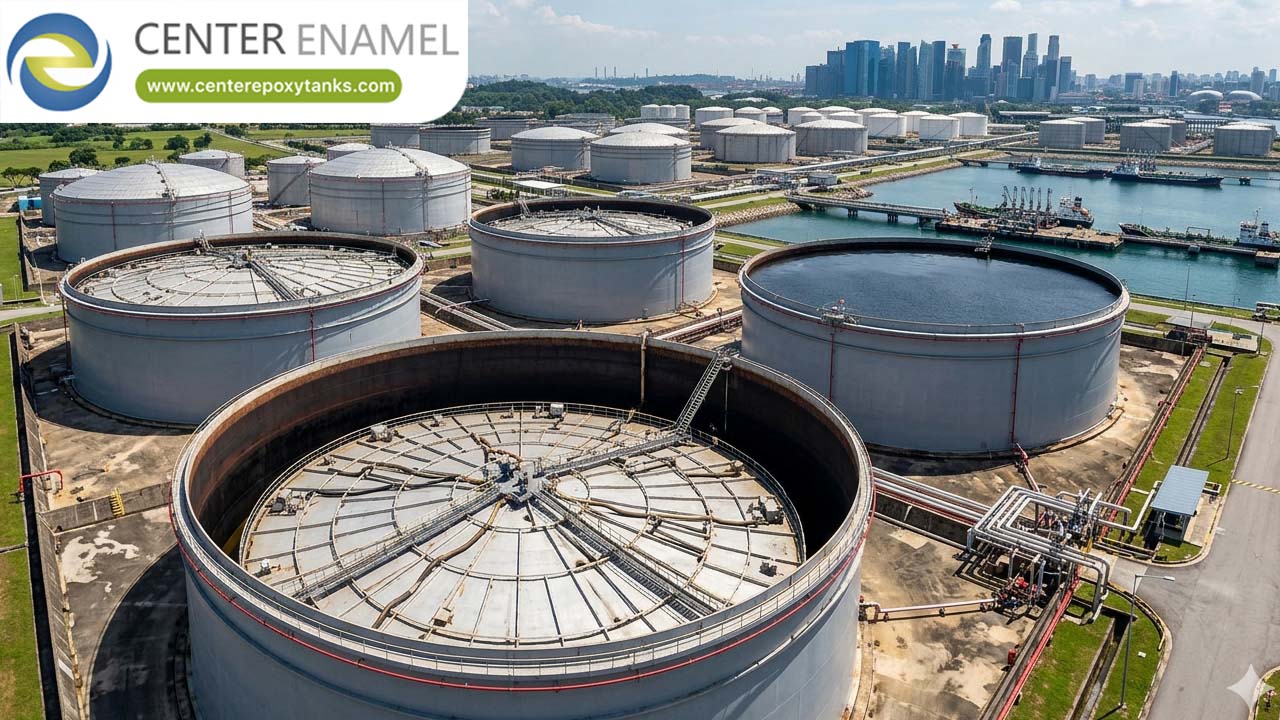
Storage Tank Floating Roof Inspection: A Comprehensive 2026 Technical Guide
In the 2026 energy landscape, the integrity of a floating roof is critical for both operational safety and environmental compliance. Because floating roofs are the primary defense against Volatile Organic Compound (VOC) emissions, their inspection is a core requirement of API 653 and global ESG (Environmental, Social, and Governance) mandates.
Shijiazhuang Zhengzhong Technology Co., Ltd (Center Enamel), a global leader in storage tank innovation for over 30 years, emphasizes that a rigorous inspection program prevents product loss, environmental fines, and catastrophic structural failure.
1. Technical Authority: Inspection Standards (API 653)
the API 653 (Tank Inspection, Repair, Alteration, and Reconstruction) standard.
Floating Roof Inspection Intervals
Inspection Type | Frequency | Focus Area |
In-Service (Routine) | Monthly | Visual check for tilting, pooling, or seal gaps. |
External Inspection | Every 5 Years | Ultrasonic thickness (UT) gauging and seal integrity. |
Internal (Out-of-Service) | 10–20 Years | Pontoon pressure testing and underside corrosion. |
2. Key Inspection Areas for Internal (IFR) & External (EFR) Roofs
A. Rim Seal Integrity
The rim seal is the most frequent point of failure. Inspectors must check for:
● Gaps: Any space between the seal and the tank shell allows vapor to escape.
● Material Degradation: Chemical wear or UV damage to the fabric or mechanical shoes.
● Tension: Ensuring mechanical shoe seals maintain consistent pressure against the shell.
B. Pontoon Buoyancy & Structural Integrity
Pontoons provide the buoyancy required to keep the roof afloat.
● Liquid Ingress: Inspectors check for "sinking" or "tilting" roofs, which indicates a breached pontoon.
● Corrosion: Ultrasonic testing (UT) is used to measure the thickness of the pontoon plates, especially at the "liquid-air interface" where corrosion is most aggressive.
C. Roof Drainage Systems (EFR Specific)
For External Floating Roofs, the primary drain system must be clear.
● Pooling: Standing water on a roof indicates a blocked drain, which can lead to structural overloading and eventual sinking of the roof.
● Hose/Joint Integrity: Checking for leaks in the articulated drainage pipes or flexible hoses.
3. Advanced 2026 Inspection Technologies
Modern inspections are moving away from hazardous "manned entry" toward digital and robotic solutions:
● Drone Inspections: High-definition thermal and optical drones provide visual access to EFRs without requiring personnel to climb the tank.
● Robotic Crawlers: Used for internal floor and underside roof inspections while the tank is in service, reducing downtime.
● Vapor Detection Sensors: Handheld or fixed VOC detectors identify invisible leaks at the rim seal that a visual inspection might miss.
4. Common Failure Modes to Monitor
1. Roof Binding: Caused by shell out-of-roundness or debris, preventing the roof from moving smoothly.
2. Galvanic Corrosion: Often seen when aluminum IFRs are improperly isolated from steel support structures.
3. Seal Hardware Fatigue: Rusting or breaking of springs and hangers in mechanical shoe seals.
5. The Center Enamel Advantage
As a premier global manufacturer, Shijiazhuang Zhengzhong Technology Co., Ltd (Center Enamel) designs tanks and roofs that are "Inspection-Friendly."
● Maintenance-Free Materials: Our Aluminum Geodesic Domes protect internal floating roofs from weather, significantly reducing the frequency of seal degradation.
● Precision Engineering: Utilizing automated CNC fabrication ensures that tank shells are perfectly circular, minimizing the risk of roof binding.
● Total System Support: We provide comprehensive documentation and inspection manuals for every API 650/653 compliant project we deliver.
Proactive Maintenance for Long-Term Safety
A floating roof inspection is more than a regulatory hurdle; it is a critical investment in asset protection. By identifying rim seal gaps or pontoon corrosion early, operators can avoid the high costs of product loss and emergency repairs.
Ensure your storage infrastructure meets the highest safety standards. Contact Center Enamel today for a technical consultation on floating roof maintenance and API-compliant storage solutions.


