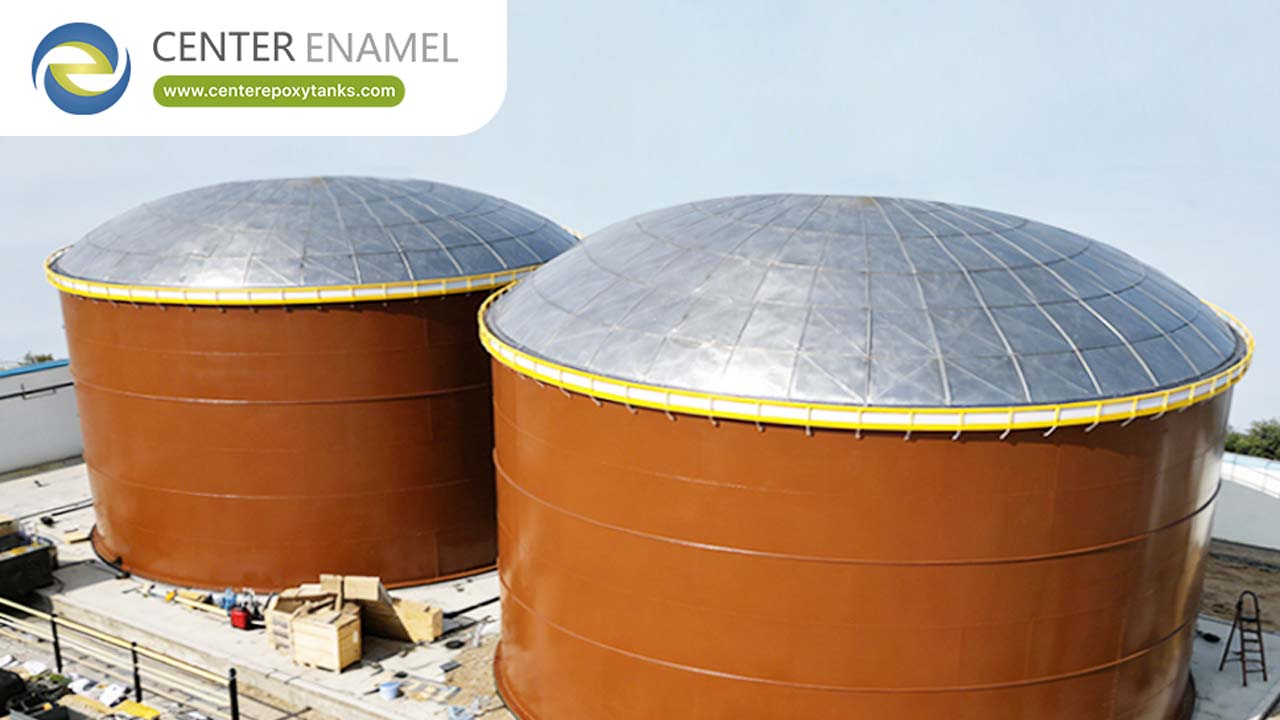
Bulk Diesel Storage Tanks: Engineering High-Capacity Fuel Infrastructure
Bulk diesel storage is infrastructure: the volumes serve a generator plant, a distribution depot or an industrial site, and the installation has to deliver fuel on demand for decades. The engineering is a system design — the tank, the containment, the transfer train and the compliance envelope have to work as one.
This article covers bulk diesel storage engineering: the tank sizing, the bunding and containment, the transfer and filtration systems, and the standards compliance that high-capacity fuel infrastructure requires.
High-Capacity Fuel Infrastructure Duty
High-capacity diesel storage serves a continuous or scheduled demand: a standby generator plant, a distribution depot with a turnover cycle, or an industrial site with process burners. The duty profile — the draw rate, the resupply interval and the reliability expectation — sets the tank and the train.
The infrastructure framing matters because the tank is one component among many: the containment, the transfer, the filtration, the venting and the monitoring all have to be engineered together, and the weakest of them sets the installation’s performance.
Tank Sizing For Bulk Storage
The sizing runs on the throughput and the resupply interval. The working volume covers the consumption between deliveries; the reserve covers the delivery slippage the supply contract realistically allows; and the dead volume below the suction is excluded from the usable capacity.
The sizing also carries the operational peaks: the maximum draw period, the turnaround refill and any strategic reserve the site holds for supply interruption. The usable capacity is the sum of these, not the nominal tank volume.
Sizing Input | Basis | Effect On Volume |
Consumption between deliveries | Average draw rate times resupply interval | Sets the working volume |
Delivery slippage reserve | Contractual reliability of the supply | Sets the reserve volume |
Dead volume below suction | Suction inlet elevation | Reduces the usable capacity |
Strategic reserve | Supply interruption policy | Sets the held-back inventory |
Bunding And Containment
The containment is the requirement that the fuel never reaches the ground. The options run from bunded enclosures around the tank to integral double-wall construction, and the selection follows the stored volume and the site classification.
The containment volume calculation includes the rainfall allowance: an open bund fills with rain, and the design provides the drain, the valve discipline or the cover that keeps the containment capacity available for fuel rather than rainwater.
Transfer And Pumping Systems
The transfer train moves the fuel in and out: the receipt line from the delivery vehicle, the supply line to the consumption point and the circulation or blending provisions where the tank configuration needs them. Each line is sized from its flow rate and its head.
The pump selection follows the duty: the receipt rate sets the delivery window, the supply rate sets the response of the consumption equipment, and the standby provision follows the reliability the site expects.
Filtration And Water Management
Filtration protects the equipment downstream. The receipt line filters the incoming delivery, the supply line filters at the rating the consumption equipment requires, and the housing and element specification follows that rating.
Water management is the companion discipline: the scheduled draws from the low point, the breathing control that limits the condensation, and the treatment where microbial growth has established in the tank bottom.
Venting And Emission Control
The venting set covers the filling and emptying excursions and the thermal breathing between them. The pressure and vacuum vents are sized from the flow rates, and the flame arrestor is fitted where the installation classification calls for it.
The vapour connection is the compliance question: where the site is regulated for emissions, the vent routes to a vapour recovery unit and the tank specification includes the connection and the back-pressure the device imposes.
Fire And Safety Provisions
The fire provisions follow the stored volume and the site: the separation distances, the venting and ignition control, the firefighting access and — at larger volumes — the fixed protection on the tank surface.
The electrical classification is part of the safety envelope: the tank area classification sets the equipment ratings, and the transfer equipment is selected to the classification the site defines.
Standards And Compliance
The standards set covers the tank construction, the installation and the fire protection. The tank follows a storage tank code, the installation follows the fire code separation and containment rules, and the equipment follows the area classification.
The compliance file is the installation record: the tank certificate, the installation inspection, the containment verification and the fire protection commissioning, assembled as the document the insurer and the regulator will ask for.
Instrumentation And Monitoring
The instrumentation covers level with high and low alarms, the leak detection where the containment is interstitial, and the temperature where the fuel properties require heating. The readings are what the operations team runs the installation from.
The monitoring also covers the condition data: the water draws, the filter differential and the sampling results, which together show whether the fuel and the installation are staying within their specification.
Instrument | Function | Specification Note |
Level with high and low alarms | Inventory with overfill protection | Alarm set points from the operating envelope |
Interstitial leak detection | Containment integrity on double-wall tanks | Sensor positions and alarm routing |
Temperature measurement | Fuel condition where heating is fitted | Sensor position representative of the volume |
Filter differential | Transfer train condition | Range set by the element change criterion |
Commissioning And Handover
The commissioning proves the installation: the tank leak test, the transfer train performance, the containment verification, the venting and the fire protection are all function-tested before the fuel is admitted.
The handover is a documentation event as much as a physical one: the as-built drawings, the certificate pack, the operating procedures and the maintenance schedule are delivered as a set, so the operations team inherits a documented installation.
Center Enamel Fuel Infrastructure Engineering
Center Enamel engineers and fabricates high-capacity diesel storage systems with the tank, the coating and the documentation that fuel duty requires. The engineering covers the tank design, the interface detailing and the export delivery across fuel, water and chemical service.
Our engineering team supports tank sizing, compliance configuration and delivery scheduling for fuel infrastructure projects. Contact our engineering team for engineering guidance and quotation on your next diesel storage installation.
About Company
Shijiazhuang Zhengzhong Technology Co.,Ltd(Center Enamel) is a professional manufacturer dedicated to the design and fabrication of bolted storage tanks since 2008. Our products range includes Glass-Fused-to-Steel (GFS) tanks, fusion bonded epoxy tanks, stainless steel tanks, galvanized steel tanks and aluminum geodesic dome roofs. With professional enameling R&D team and nearly 200 enameling patents, Shijiazhuang Zhengzhong Technology Co.,Ltd has become the leader in bolted tanks industry of Asia. Our products are certified to ISO9001, NSF61, EN1090, ISO28765, WRAS ,FM, LFGB, BSCI, IS0 45001 and other international standards.
Shijiazhuang Zhengzhong Technology Co., Ltd is not only the first manufacturer in China which produces Glass-Fused-to-Steel tanks, but also the most experienced professional bolted tanks manufacturer in Asia.The engineering & design, product testing and quality system of Center Enamel Glass-Fused-to-Steel tanks is in strict accordance with AWWA D103-09, OSHA, ISO 28765, NSF/ANSI 61, NFPA and other international standards. Until 2023, Center Enamel bolted tanks have been exported to more than 100 countries including USA, Australia,Canada, Malaysia, Indonesia, Russia, UAE, Panama,Brazil and South Africa etc., the superior tank quality and prompt service gains us worldwide recognition.
As an outstanding containment and cover system provider with decades of industry experience, Shijiazhuang Zhengzhong Technology Co., Ltd sincerely expects to establish long-term cooperation with the local partners throughout the world and make continuous contribution to the development of the industry.
Suggested CTA
Center Enamel delivers welded carbon steel engineered for diesel storage duty, with fuel infrastructure engineering and fabrication. Contact our engineering team for engineering guidance on your next bulk diesel storage tanks project — including sizing, standards compliance and delivery scheduling.
Frequently Asked Questions
Q: How is a bulk diesel storage tank sized?
A: From the consumption between deliveries plus a reserve for delivery slippage, excluding the dead volume below the suction. Operational peaks and any strategic reserve the site holds add to the usable capacity.
Q: What containment does bulk diesel storage need?
A: Bunding or integral double-wall construction sized to the stored volume and the site classification, with the rainfall allowance accounted for through drains, valve discipline or a cover.
Q: How is water controlled in a diesel installation?
A: Through breathing control that limits condensation, scheduled low-point draws, and fuel treatment where microbial growth has established. The water regime is a maintenance schedule, not a product.
Q: What fire provisions apply to large diesel volumes?
A: Separation distances, venting and ignition control, firefighting access, and at larger volumes fixed protection on the tank surface. The electrical area classification sets the equipment ratings.
Q: What instrumentation does the installation need?
A: Level with high and low alarms, interstitial leak detection where the containment is double-wall, temperature where the fuel requires heating, and the condition data — water draws, filter differential and sampling.
Q: Why choose Center Enamel for fuel infrastructure?
A: Center Enamel engineers and fabricates high-capacity diesel storage with certified fabrication and export delivery experience. Contact our engineering team for engineering guidance and quotation.