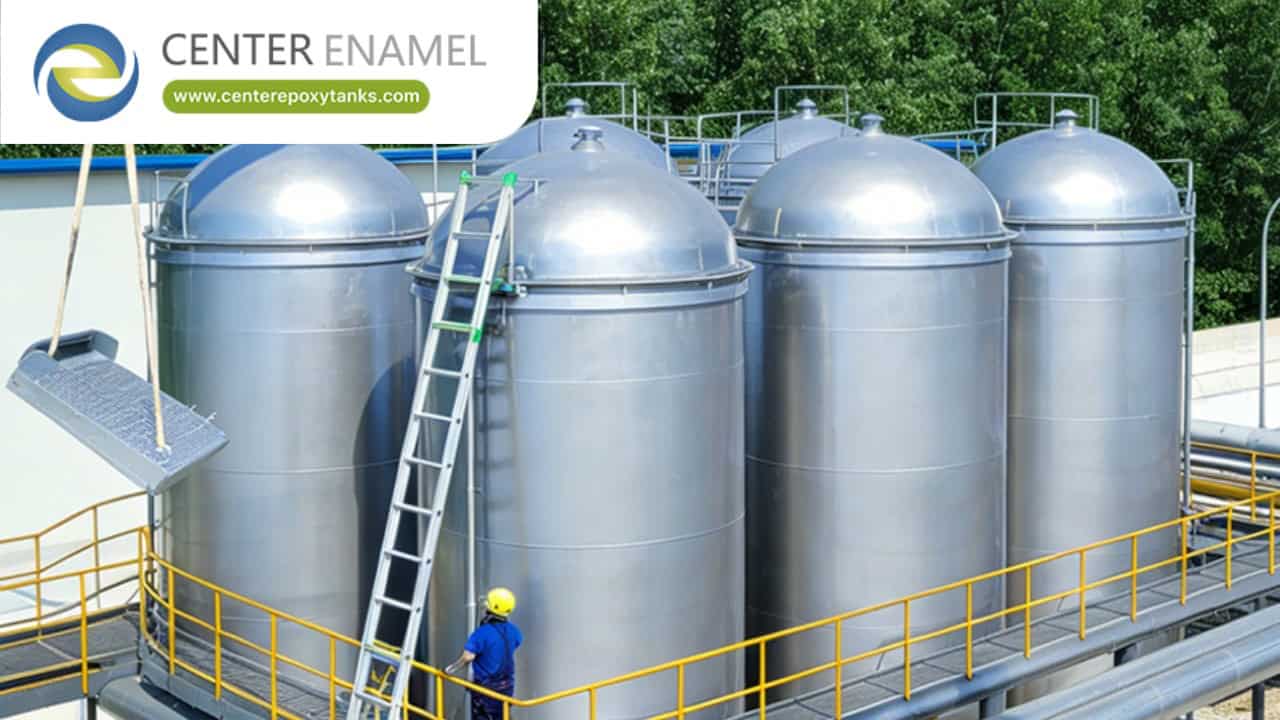
Stainless Steel Cooking Oil Tanks: Food-Grade Storage Design and Hygiene Standards
Cooking oil is food, and its storage tank is food-contact equipment: every weld, gasket, and vent surface must be cleanable, inert, and auditable. Carbon steel's rust and coating chemistry are excluded by definition — which is why edible oil storage worldwide is a stainless steel discipline.
Stainless steel cooking oil tanks are food-grade storage vessels in 304 (and 316L where chloride duty applies), built with sanitary welds, smooth Ra < 0.8 um product-contact surfaces, CIP cleaning capability, nitrogen blanketing, and temperature management — protecting oil quality from oxidation, contamination, and thermal abuse through every storage day.
1. What Defines Food-Grade Tank Construction?
Hygiene is engineered into surfaces and details.
· Material specification: SS304 plate as the food-contact standard; 316L where chlorides or brine duty appear; gaskets in food-grade elastomers (EPDM, PTFE).
· Sanitary surfaces: Product-contact welds ground and polished smooth; interiors free of crevices, dead legs, and drain traps that harbor residue.
· Cleanability: CIP spray systems with dedicated solution circuits; tanks designed for full drainage through sloped bottoms and bottom outlets.
· Access and inspection: Sanitary manways, sight glasses, and instrument ports allowing verification without breaking hygiene.
2. How Is Oil Quality Protected in Storage?
Oxidation and heat are the quality enemies.
· Nitrogen blanketing: Inert headspace cuts oxygen contact — the primary driver of rancidity — and is standard on premium oil storage.
· Temperature control: Insulation and gentle heating keep oils pumpable without hot spots; fried-oil and tropical-fat duties carry jacketed zones.
· Light exclusion: Opaque tanks or cladding block photo-oxidation of sensitive oils.
· FIFO turnover: Level management and outlet design ensure first-in-first-out flow so no oil lingers past its window.
3. What Codes and Documentation Apply?
Food storage runs on audit trails as much as steel.
· Food-contact compliance: Materials meet food-contact regulations (FDA, EU frameworks) with certificates on file; surfaces satisfy 3-A-style sanitary criteria.
· Weld documentation: Weld maps, finish records, and polish grit verification for every product-contact surface.
· Cleaning validation: CIP cycle parameters documented and swab-tested at commissioning and periodically after.
· Traceability: Heat numbers on plate, gasket certificates, and calibration records assembled into the food-safety file auditors expect.
Data Table: Cooking Oil Tank Design Features
Feature | Standard | Purpose |
Shell material | SS304 / 316L | Inert food contact |
Interior finish | Ra < 0.8 um, ground welds | Cleanability |
Blanketing | Nitrogen | Oxidation control |
Heating | Jacket/trace, gentle zones | Pumpability |
Drainage | Sloped bottom, bottom outlet | Full emptying |
CIP | Spray system, no dead legs | Validated cleaning |
Frequently Asked Questions (FAQ)
Q1: Why are cooking oil tanks made of stainless steel?
Because cooking oil is a food: stainless is inert to fats, will not rust or shed coating into the product, and can be polished to sanitary finishes that clean completely. Carbon steel and coatings would contaminate the oil — food regulation and practical quality both mandate stainless.
Q2: How is cooking oil protected from going rancid in storage?
By managing its three enemies: oxygen, heat, and light. Nitrogen blanketing removes oxygen from the headspace, insulation and gentle heating hold temperature stable without hot spots, and opaque stainless construction excludes light. Combined with FIFO turnover, storage stretches oil shelf life to its specification.
Q3: What surface finish do food-grade oil tanks need?
Product-contact surfaces ground and polished smooth — commonly to Ra below 0.8 micron — with welds blended so CIP spray reaches every point. The goal is zero crevices and dead zones where residue can lodge and bacteria or oxidation byproducts can develop between cleans.
Q4: Do cooking oil tanks need heating?
Depends on the oil: liquid vegetable oils store at ambient, while tropical fats, tallow blends, and some frying oils congeal and need jacketed or traced heating to stay pumpable. Heating must be gentle and distributed — localized hot spots degrade oil quality as surely as contamination.


