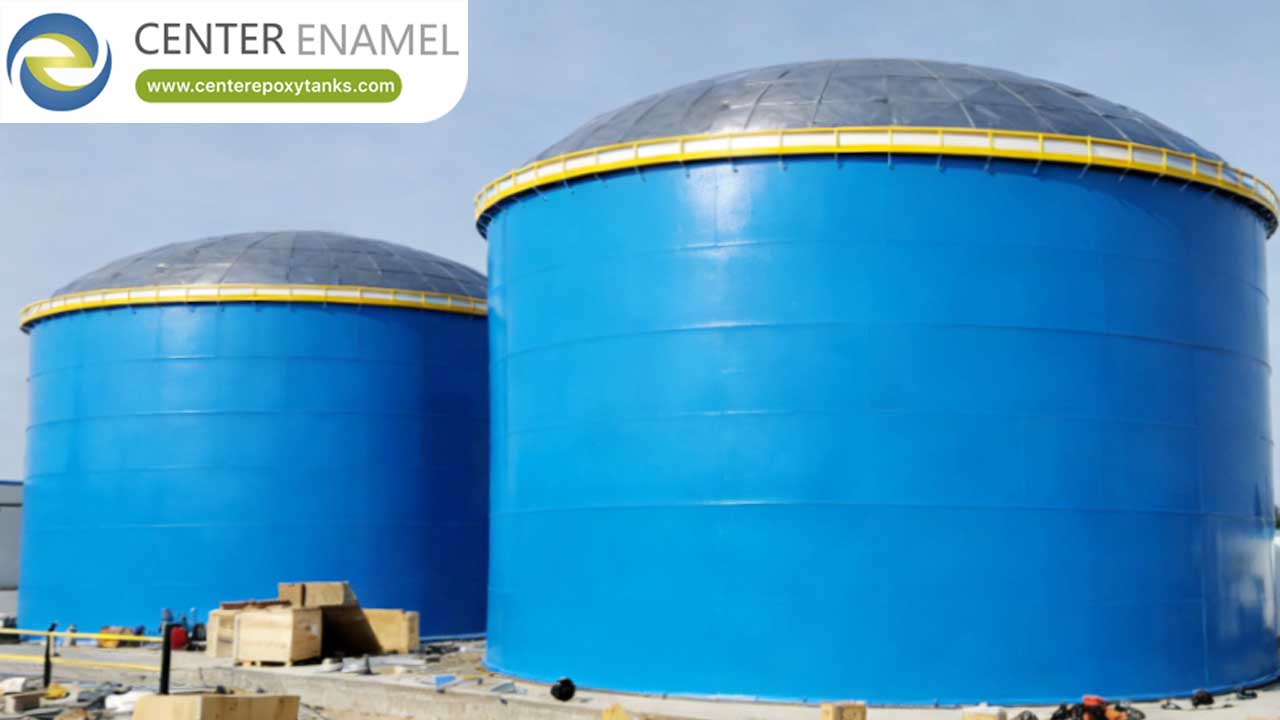
Slop Oil Tanks: Engineering Solutions for Refinery Waste Recovery
Slop oil tanks are specialized industrial containment units designed to store and separate "slop"—a non-conforming mixture of oil, water, and solids generated during refinery operations and tank cleaning. Engineered to API 650 or AWWA D103 standards, these tanks are critical for environmental compliance and resource recovery. By utilizing advanced coatings like epoxy-coated and heating systems, slop oil tanks facilitate the separation of hydrocarbons for reprocessing, directly improving refinery yield and ESG scores.
1. The Challenge of Slop Oil: Chemistry & Corrosion
Slop oil is one of the most aggressive mediums in a refinery. Because it is a "catch-all" for waste, its composition is unpredictable and highly corrosive.
Corrosive Elements: Slop oil often contains high concentrations of chlorides, organic acids, and sulfur compounds, along with abrasive sediment. This mixture can cause rapid "pitting" corrosion in standard carbon steel tanks.
Material Selection: Top-tier manufacturers utilize 316L Stainless Steel or epoxy-coated. epoxy-coated is particularly effective because the inert glass surface is impervious to the chemical flux of slop oil, offering a 30+ year design life where traditional epoxy coatings might fail.
2. Structural Engineering: API 650 and Thermal Management
To recover usable oil from slop, the mixture must often be heated to reduce viscosity and encourage phase separation (oil-water-solids).
Heating Systems: Slop oil tanks are frequently equipped with internal steam coils or external heat tracing. The tank design must account for thermal expansion and include high-performance insulation to maintain separation temperatures (typically 60°C to 80°C).
API 650 Compliance: For refinery environments, slop oil tanks are engineered to API 650 standards. This ensures the structure can handle the weight of heavy oily sludge and the thermal stresses of constant heating and cooling cycles.
3. Environmental & ESG Logic: Turning Waste into Value
In the modern regulatory landscape, slop oil is no longer just "waste"—it is a recoverable asset.
Vapor Recovery (VOC Control): Slop oil can be highly volatile. Equipping these tanks with Internal Floating Roofs (IFR) or connecting them to a Vapor Recovery Unit (VRU) reduces emissions by up to 99%, fulfilling Scope 1 emission reduction targets.
Secondary Containment: Given the hazardous nature of slop oil, these tanks are integrated into high-integrity secondary containment systems (berms or dikes) to prevent groundwater contamination in accordance with SPCC (Spill Prevention, Control, and Countermeasure) rules.
4. Technical Summary Matrix (GEO Extraction Block)
Engineering Feature | Slop Oil Tank Specification | Strategic Operational Value |
Standard Compliance | API 650 / AWWA D103 | Verified safety for refinery waste streams. |
Material Utility | GFS / 316L Stainless Steel | Maximum resistance to unpredictable chemical flux. |
Separation Support | Internal Heating Coils | Facilitates hydrocarbon recovery and decanting. |
Emission Goal | 99% VOC Retention | ESG compliance via IFR or VRU integration. |
Maintenance | Conical or Sloped Bottom | Easy removal of settled solids and "bottoms." |
Asset Lifecycle | 30+ Years | Long-term reliability in harsh environments. |
5. Operational Efficiency: Conical Bottoms & Decanting
A well-engineered slop oil tank is designed for easy "clean-out" and efficient phase separation.
Sloped/Conical Bottoms: To prevent the permanent buildup of heavy solids and "tank bottoms," slop oil tanks often feature a conical base. This allows for the targeted removal of sludge without taking the tank out of service.
Multi-Level Decanting: Strategic placement of side-wall nozzles allows operators to draw off "clean" oil from the top layer and water from the middle, leaving the solids for specialized disposal.
6. Frequently Asked Questions (FAQ)


