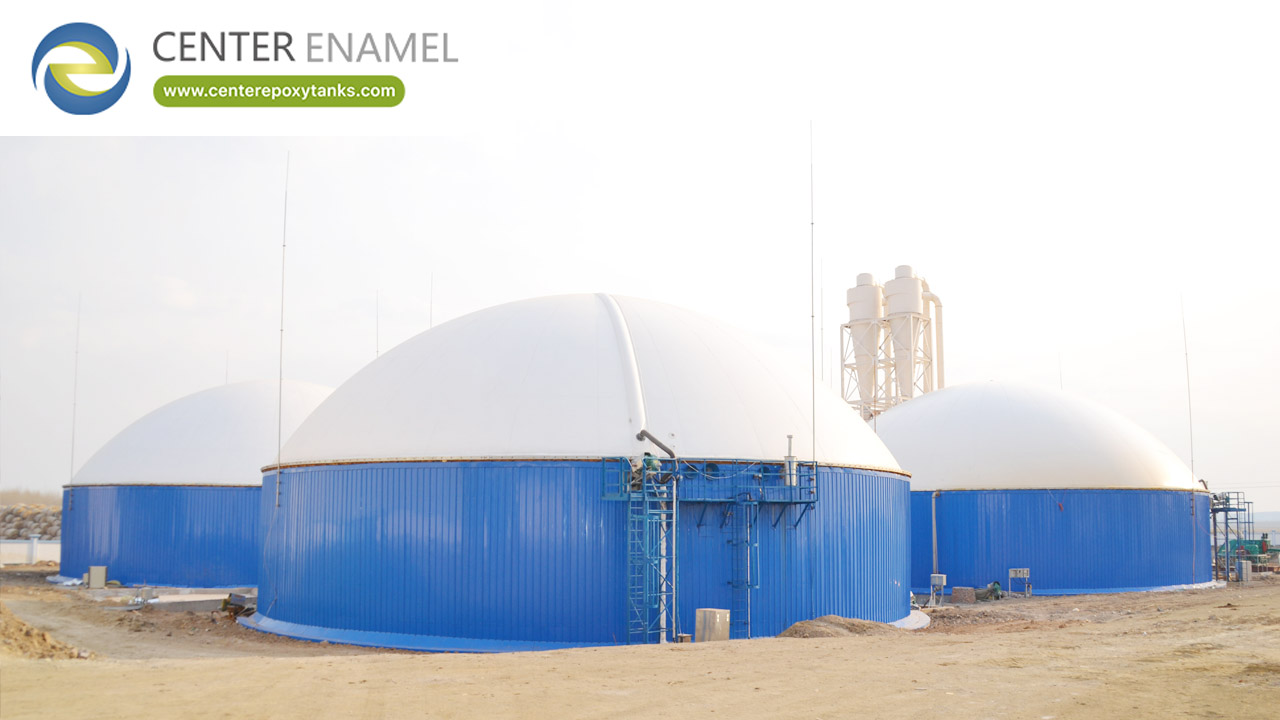
What is a Single Membrane Roof?
In the industrial and environmental engineering sectors, a single membrane roof is a gas-tight, flexible cover system used primarily on storage tanks, such as anaerobic digesters, wastewater treatment tanks, and slurry storage vessels.
Unlike rigid steel or concrete roofs, a single membrane roof is constructed from a high-strength, flexible fabric—typically PVC or PVDF-coated polyester. It is tensioned across the top of the tank to create a sealed environment. Its primary function is to contain gases (such as biogas, odors, or volatile vapors) while protecting the liquid inside from external environmental factors like rain, dust, and UV radiation.
How It Works: The Engineering Behind the Membrane
A single membrane roof functions as a static barrier. It is fastened to the tank perimeter using high-tension aluminum or steel profiles, ensuring a gas-tight seal that prevents leakage.
Containment: It traps the gas generated within the tank (e.g., biogas in a digester) or prevents odors from escaping (e.g., in wastewater facilities).
Structural Support: In most configurations, the membrane is supported by a central column or a network of tensioning straps to ensure it maintains a proper shape, preventing the pooling of water or debris.
Environmental Shielding: The fabric is UV-resistant and weather-proof, ensuring that the stored contents are not contaminated by rain or airborne particulate matter.
Single Membrane vs. Double Membrane: Understanding the Difference
When evaluating storage solutions for biogas or wastewater, it is critical to understand the functional difference between a single membrane and a double membrane system.
Feature | Single Membrane Roof | Double Membrane Roof |
Function | Static gas-tight containment. | Dynamic gas storage & pressure regulation. |
Storage Volume | Fixed (Little to no gas storage). | Variable (Inflates/deflates with gas levels). |
Cost | Cost-effective; lower investment. | Higher investment due to dual-layer tech. |
Best For | Odor control, basic rain protection. | Biogas facilities requiring gas buffer capacity. |
When to Choose a Single Membrane Roof
A single membrane roof is an ideal solution for projects that require a simple, reliable, and cost-effective method of sealing a tank. Common use cases include:
Wastewater Treatment: To contain odors and prevent the spread of atmospheric contaminants.
Water Storage: Protecting process water or fire-fighting reserves from debris and sunlight-induced algae growth.
Slurry/Manure Storage: Preventing ammonia emissions and protecting stored liquid from dilution by rainwater.
Low-Pressure Biogas Systems: When the facility already has external gas storage or does not require the tank roof to act as a gas buffer.
Frequently Asked Questions (FAQ)
Q: Is a single membrane roof durable enough for harsh outdoor environments?
A: Yes. These membranes are manufactured from heavy-duty, high-tenacity polyester fabrics coated with PVC or PVDF. They are designed to withstand extreme temperature fluctuations, high UV exposure, and heavy snow or wind loads, typically lasting 10 to 15 years depending on environmental conditions.
Q: Can a single membrane roof support a snow load?
A: Yes, but design is key. The roof must be designed with adequate tensioning and, in many cases, a central support pole or a network of tension straps to prevent "ponding" or excessive sagging under the weight of snow or rain.
Q: What is the main maintenance requirement for these roofs?
A: Maintenance is relatively low. It primarily involves periodic inspections of the perimeter anchor system to ensure it remains gas-tight, checking the tension straps for wear, and cleaning the fabric surface if debris accumulation becomes significant.
Q: Does a single membrane roof allow for pressure regulation?
A: Generally, no. Because it is a static cover, a single membrane roof does not change volume. If you require the roof to act as a storage vessel that expands and contracts based on gas production, a double membrane roof (gas holder) is required.
Are you evaluating the right cover system for your storage infrastructure? [Contact the Center Enamel engineering team] to receive a technical consultation on whether a single membrane or double membrane system best fits your project requirements.
Given your focus on expanding global B2B partnerships, would you like me to draft an article comparing the lifecycle costs and ROI of membrane covers versus rigid aluminum geodesic domes for your potential clients?


