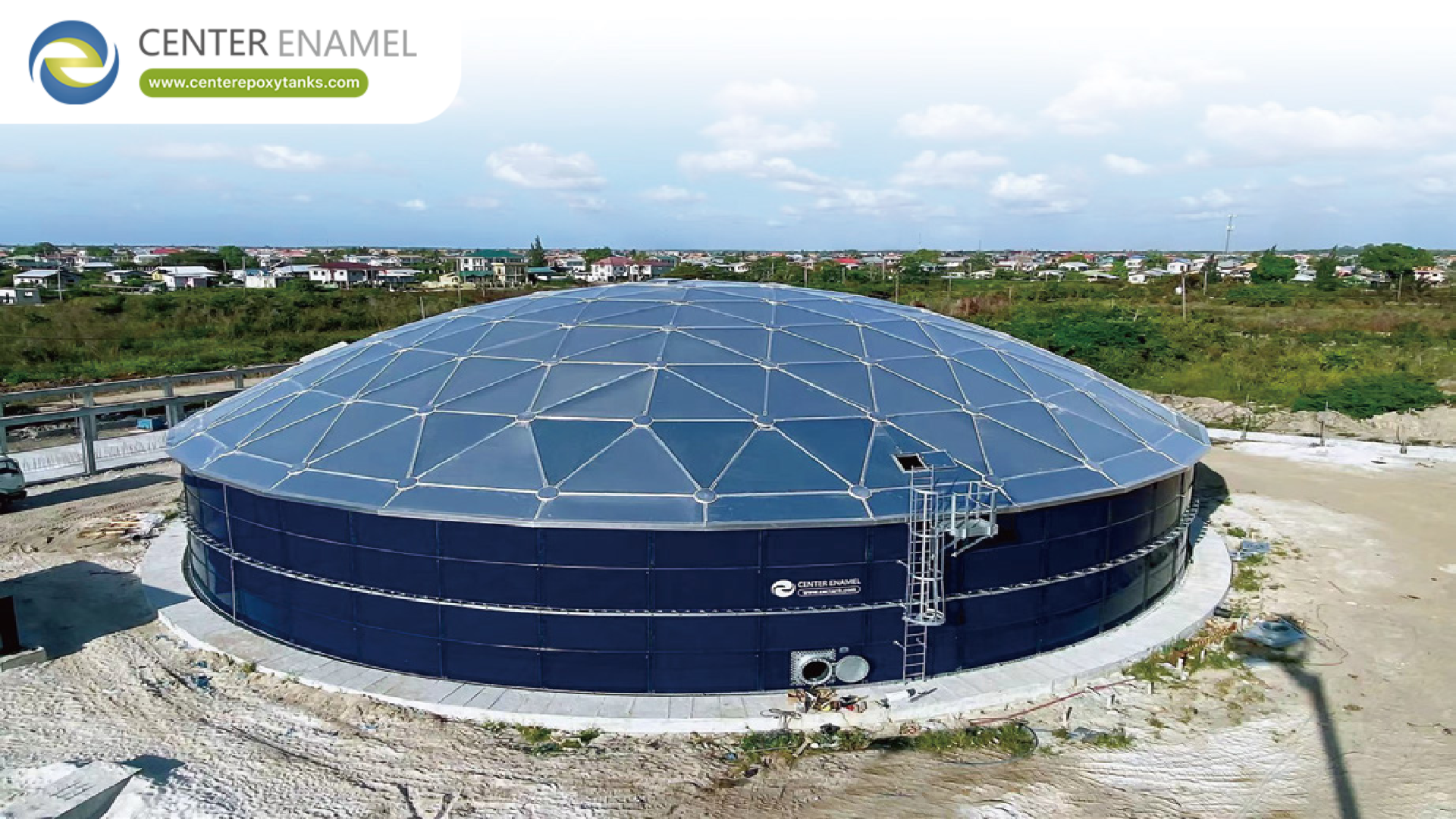
In the aerospace and defense sectors, the uncompromising quality of turbine fuel is the absolute baseline for operational safety. Jet A-1, a kerosene-type fuel used globally in civil and military aviation, must meet exceptionally stringent international standards such as AFQRJOS, JIG, and ASTM D1655. The presence of even trace amounts of particulate matter, moisture, or oxidative gums can lead to fuel system icing, engine flameouts, or accelerated component wear. For airport fuel farms and strategic reserve terminals, the structural enclosure of the Jet A-1 aviation fuel storage tank is not merely a container—it is the primary defense system against fuel degradation.
Shijiazhuang Zhengzhong Technology Co., Ltd (Center Enamel), acting as a premier China Floating Roofs Manufacturer, has pioneered the development of high-integrity Floating Roofs specifically engineered for the high-stakes demands of aviation fuel logistics. By providing a continuous, impermeable barrier between the liquid fuel and the atmosphere, our technology eliminates hazardous vapor spaces, blocks the ingress of moisture, and ensures that Jet A-1 remains in a "ready-to-refuel" state. Through precision engineering and a commitment to global standards, we provide the infrastructure reliability required to keep the world’s fleets flying safely.
Industry Pain Points: The Strategic Risks of Jet Fuel Contamination
Maintaining a massive Jet A-1 aviation fuel storage tank network involves overcoming critical industry pain points that can compromise aviation safety and terminal profitability:
Particulate "Shedding" and Fuel Cleanliness: Traditional fixed-roof tanks made of carbon steel are susceptible to internal oxidation. In the humid headspace, rust and scale can form and "shed" into the fuel. These microscopic particulates can bypass primary filtration, leading to engine injector damage.
Moisture Ingress and Microbial Proliferation: Jet fuel is naturally hygroscopic. Diurnal temperature fluctuations cause "tank breathing," drawing in humid ambient air. As moisture condenses and settles at the fuel-water interface, it promotes the growth of Hormoconis resinae (fuel fungus), which creates corrosive sludge and clogs aircraft filters.
Oxidative Instability and Thermal Degradation: Constant exposure to oxygen in a fixed-roof headspace triggers the formation of peroxides and gums. This oxidative process reduces the thermal stability of the Jet A-1, potentially pushing the fuel out of the required safety specifications for high-altitude flight.
Inventory Loss and VOC Emissions: Even with the low volatility of kerosene, the cumulative loss of high-value "light ends" due to evaporation represents a significant financial drain. Furthermore, airports are under increasing pressure to control Volatile Organic Compound (VOC) emissions and odors to comply with urban air quality standards.
Fire Hazards and Explosive Vapor Spaces: An air-vapor mixture in the headspace of a fuel tank creates a persistent risk of ignition, especially during high-flow filling operations where static electricity can accumulate.
Product Definition: The Engineering Logic of Aviation Floating Roofs
To resolve these vulnerabilities, Center Enamel defines aviation containment excellence through our advanced Floating Roofs. These structures are dynamic, buoyant, and impermeable decks designed to float directly on the surface of the Jet A-1.
Internal Floating Roof (IFR) Configuration
For aviation applications, we utilize the Internal Floating Roof architecture. The IFR operates beneath a fixed outer roof, providing a "Double-Shield" system. The fixed roof protects the tank from wind, rain, and debris, while the floating deck eliminates the vapor space and blocks the ingress of atmospheric moisture and oxygen.
High-Buoyancy Geodesic Space-Frames
As a leading China Floating Roofs Manufacturer, we utilize a geodesic space-frame design supported by independent, closed-cell pontoons. This ensures the roof remains perfectly level and stable even during the rapid intake and discharge cycles typical of busy airport fuel hydrant systems.
Non-Sparking, Non-Corrosive Alloys
Our roofs are fabricated from high-specification aluminum or stainless steel alloys. These materials are chosen for their non-sparking properties (essential for fire safety) and their total chemical compatibility with Jet A-1. Unlike steel, these alloys do not rust or flake, ensuring the fuel's particulate count remains within the strict limits required for high-precision engines.
Precision Sealing and Odor Control
The critical interface between the floating deck and the tank shell is secured by specialized rim seals. These seals are engineered from elastomers that are resistant to the solvent properties of kerosene, providing a gas-tight fit that suppresses over 98% of potential vapor loss and eliminates fuel-related odors.
Product Application and Integrated Solution Advantages
The application of Center Enamel Floating Roofs within a Jet A-1 aviation fuel storage tank environment provides a unified containment ecosystem.
Total Light and Moisture Exclusion: By creating a completely dark, vapor-free environment, our roofs halt the biological activity and condensation cycles that lead to microbial growth, ensuring the fuel meets the "Clear and Bright" standard.
Integrated Solution Advantages: Our roofs are designed for total compatibility with modern airport infrastructure, including automated tank gauging (ATG) systems, high-level alarms, and specialized sampling ports for real-time quality control.
Synergy with Aluminum Dome Roofs: When paired with our Aluminum Dome Roofs, the storage system benefits from maximum solar reflectance. This keeps internal fuel temperatures stable, further reducing the risk of thermal degradation and oxidative reactions.
Brand Backer and Engineering Confidence: By choosing a single-source China Floating Roofs Manufacturer, facility managers eliminate the technical conflicts that arise when sourcing components from separate vendors, ensuring a synchronized, 20-year-plus service life.
Product Advantages and Performance Parameters
Choosing Center Enamel Floating Roofs for aviation infrastructure provides transformative technical advantages:
Superior Particulate Purity: The use of aluminum ensures that the roof structure will never rust or flake. This eliminates the risk of metallic contamination, protecting the high-precision fuel systems of modern aircraft.
Significant Vapor Suppression and Inventory Protection: Our sealing systems drastically reduce VOC emissions and evaporative loss, preserving the fuel’s energy density and flashpoint while ensuring compliance with environmental regulations.
Maintenance-Free Lifecycle: Due to the inherent durability of the alloy, our roofs require no painting or sandblasting throughout their service life. This results in a significantly lower total cost of ownership and maximizes tank uptime.
Enhanced Operational Safety: By removing the explosive vapor space, our floating roofs inherently prevent the formation of flammable atmospheres, providing a critical layer of safety for high-traffic airport environments.
Environmental Risk Assessment: Every project undergoes a rigorous risk assessment to ensure that the sealing systems prevent any environmental seepage and maintain the highest standards of resource protection.
Manufacturing Excellence and Company Core Competitiveness
The core competitiveness of Shijiazhuang Zhengzhong Technology Co., Ltd (Center Enamel) is rooted in our role as a global leader in the storage industry for over thirty years.
Advanced CNC Precision Fabrication: Our manufacturing facility utilizes automated CNC technology to produce every strut, node, and panel. This ensures a dimensional accuracy of mere millimeters, which is critical for the leak-free, high-speed assembly required in strategic fuel projects.
Massive Production Power: As a specialized China Floating Roofs Manufacturer, we operate large-scale, ISO-certified facilities capable of supporting massive international airport projects simultaneously in over 100 countries.
Factory-Controlled Quality Assurance: By producing components in a controlled environment, we ensure that every installation is consistent and reliable. Every pontoon undergoes pressure testing, and every seal material is verified for chemical compatibility with Jet A-1.
Global Supply Chain Integrity: With three decades of experience, we provide seamless logistics and technical support, ensuring that our containment solutions are delivered and installed to the highest international aviation standards.
International Standards, Installation, and Maintenance
At Center Enamel, we understand that aviation infrastructure must meet the highest global engineering and safety protocols:
Compliance with Global Standards: Our designs follow API 650 Appendix H, JIG (Joint Inspection Group) requirements, and relevant AWWA standards, providing the brand backer required for acceptance by international airline majors and airport authorities.
Simplified and Safe Installation Process: The modular, bolted construction eliminates the need for on-site welding ("hot work"). This "cold work" approach is essential for safety when retrofitting existing Jet A-1 aviation fuel storage tank units that may have residual vapors.
Low Maintenance Requirements: The use of non-corrosive alloys ensures that the roofs remain structurally sound for decades with only minimal periodic inspections, ensuring maximum reliability for the fuel supply chain.
Customized Storage Tank Schemes: We offer specialized designs for different storage schemes, providing flexible solutions tailored to the unique requirements of the aviation sector, including retrofits for existing welded tanks.
Engineering a Secure Future for Aviation Fuel
The strategic implementation of high-performance Floating Roofs for Jet A-1 aviation fuel storage tank infrastructure is a definitive investment in safety, environmental compliance, and economic efficiency. By addressing the critical industry pain points of particulate contamination, moisture ingress, and explosive vapor spaces, Center Enamel provides an infrastructure solution that ensures aviation fuel remains pure and stable.
As a leading China Floating Roofs Manufacturer, our commitment to advanced CNC manufacturing, international standard compliance, and integrated solution delivery makes us the partner of choice for modern airport infrastructure development globally. Through our precision engineering and thirty years of expertise, we help facilities protect their most valuable resources while maintaining the highest levels of operational excellence.


