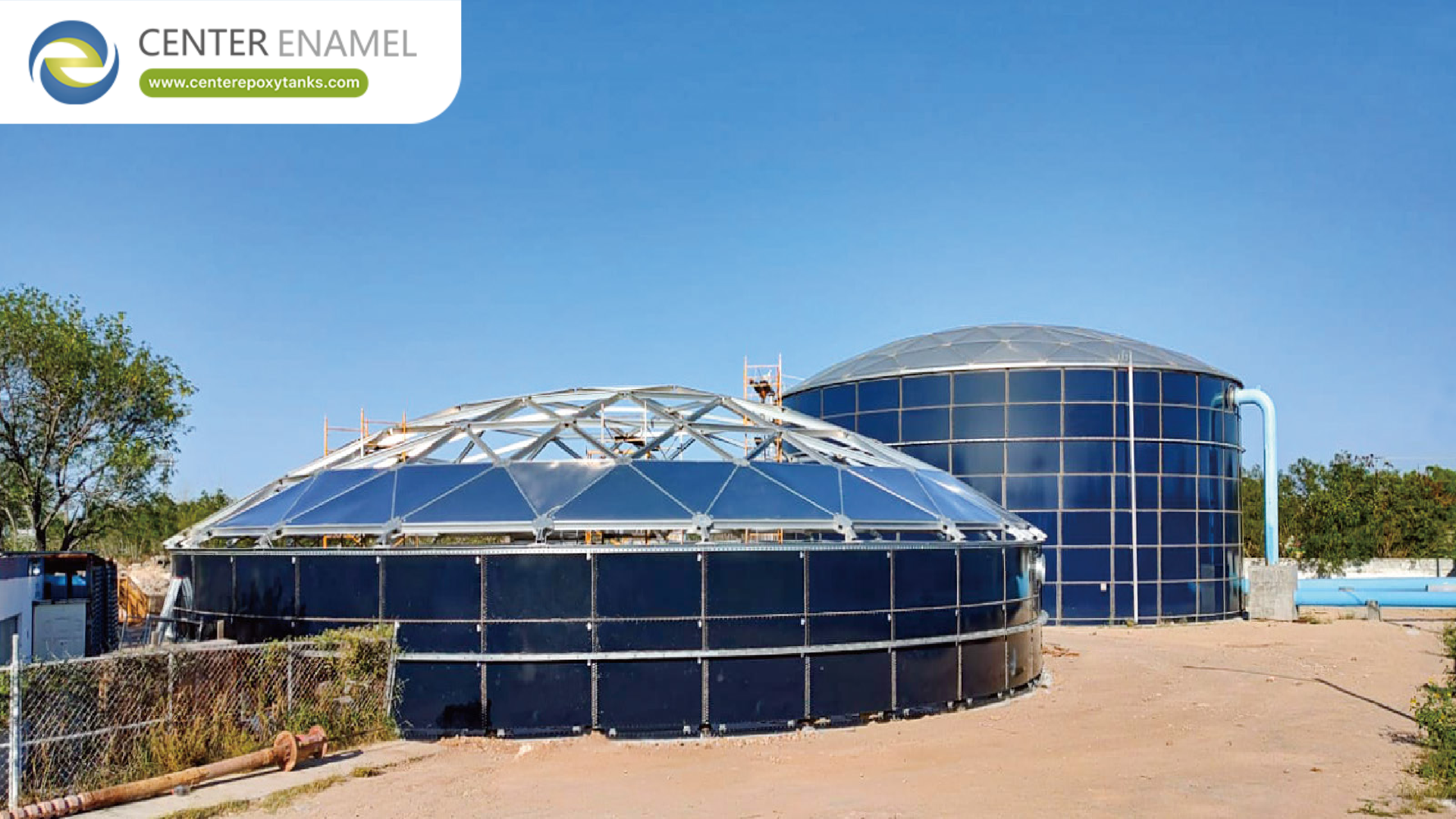
In the global food commodities market, soybean oil stands as the most widely consumed vegetable oil, serving as a vital ingredient for everything from household cooking to industrial food production and biofuels. However, the chemical composition of soybean oil—rich in polyunsaturated fatty acids—makes it highly susceptible to environmental degradation. For refineries, large-scale food processors, and international trade terminals, the integrity of the Soybean Oil Storage Tanks is the single most important factor in preventing economic loss and ensuring consumer safety. When soybean oil is exposed to the elements, it undergoes rapid chemical changes that can render an entire multi-million dollar shipment off-specification.
Shijiazhuang Zhengzhong Technology Co., Ltd (Center Enamel), as a premier China Floating Roofs Manufacturer, delivers a sophisticated engineering solution to these storage challenges. Our high-efficiency Floating Roofs provide a continuous, impermeable barrier that sits directly on the liquid surface, effectively "sealing" the oil away from the destructive forces of oxygen, moisture, and light. By combining advanced geodesic engineering with food-grade materials, we ensure that soybean oil assets maintain their freshness, nutritional value, and market grade throughout their storage lifecycle.
Industry Pain Points: The Strategic Risks of Soybean Oil Storage
Operating high-capacity Soybean Oil Storage Tanks involves navigating a complex landscape of operational and chemical risks. Traditional storage methods often fail to address several persistent industry pain points:
1. Oxidative Rancidity and Sensory Degradation
Soybean oil is highly reactive to oxygen. In a standard fixed-roof tank, the large vapor space allows for constant air contact with the oil surface. This triggers the oxidation of fatty acids, leading to the development of "off-flavors," unpleasant odors, and the formation of harmful peroxides. This oxidative rancidity drastically reduces the shelf life and marketability of the oil.
2. Hydrolytic Rancidity and Moisture Ingress
Moisture is the second major enemy of soybean oil. Temperature fluctuations cause the tank to "breathe," drawing in humid ambient air. As this moisture condenses on the internal tank walls and mixes with the oil, it triggers hydrolysis. This process increases the Free Fatty Acid (FFA) content, which lowers the oil's quality grade and necessitates expensive, energy-intensive re-refining.
3. Thermal Instability and Energy Inefficiency
To prevent the precipitation of waxes and maintain the oil in a pumpable state, soybean oil often requires controlled heating. In an open-headspace tank, heat is lost rapidly through the roof. Maintaining the target temperature requires constant energy input, leading to high operational costs and a larger carbon footprint for the facility.
4. Particulate and Biological Contamination
Industrial and municipal environments are high-dust zones. Without a hermetic seal, wind-blown particulates, insects, and even bird droppings can enter the oil supply. Furthermore, traditional carbon steel roofs can rust over time, allowing metallic scales to fall into the food-grade product, violating safety protocols and damaging downstream processing equipment.
5. Volatile Loss and Community Odor Control
While soybean oil has a lower vapor pressure than fuels, the loss of subtle aromatic light-ends affects the sensory quality of premium oils. Additionally, large-scale storage hubs must manage VOC emissions and odors to comply with localized environmental regulations and maintain positive community relations.
Product Definition: The Engineering Logic of Floating Roofs
To resolve these vulnerabilities, Center Enamel defines food-grade containment excellence through our advanced Floating Roofs. These structures are dynamic, buoyant, and impermeable decks designed to move vertically with the liquid level, effectively eliminating the reactive headspace.
Internal Floating Roof (IFR) Architecture
For soybean oil applications, we utilize the Internal Floating Roof configuration beneath a fixed outer roof. This "Double-Shield" design ensures the floating deck is protected from external wind and rain, while the IFR suppresses vapor and blocks the ingress of atmospheric oxygen.
High-Buoyancy Geodesic Space-Frames
As a leading China Floating Roofs Manufacturer, we utilize a geodesic space-frame design supported by independent, closed-cell pontoons. This ensures the roof remains perfectly level and stable, even as the oil's viscosity changes with seasonal temperature variations. The high buoyancy-to-weight ratio ensures the roof is responsive to even slight changes in volume during loading and unloading.
Food-Safe, Non-Corrosive Alloy Construction
Our roofs are fabricated from high-specification aluminum or stainless steel. These materials are naturally non-corrosive and do not require anti-corrosion coatings that could leach into the oil. Unlike carbon steel, aluminum does not rust, ensuring zero particulate contamination is introduced into the soybean oil.
Precision Rim Sealing Systems
The interface between the deck and the tank shell is secured by specialized primary and secondary seals. We utilize food-grade, FDA-compliant elastomers that provide a hermetic seal. This blocks the ingress of moisture and pollutants while preventing the escape of the oil’s natural aromatic compounds.
Product Application and Integrated Solution Advantages
The application of Center Enamel Floating Roofs within a Soybean Oil Storage Tanks environment provides a unified containment ecosystem that prioritizes product stability.
Total Light and Oxygen Exclusion: By creating a completely dark, vapor-free environment, our roofs halt the biological activity and oxidative cycles that lead to rancidity, preserving the oil's nutritional profile.
Integrated Solution Advantages: Our roofs are designed for total compatibility with modern refinery infrastructure, including automated temperature monitoring, high-level alarms, and specialized sampling ports for real-time quality assurance.
Synergy with Aluminum Dome Roofs: When paired with our Aluminum Dome Roofs, the storage system benefits from maximum solar reflectance. This keeps internal temperatures stable, further reducing the risk of thermal degradation and oxidative reactions.
Brand Backer and Engineering Confidence: By choosing a single-source China Floating Roofs Manufacturer, facility managers eliminate the technical conflicts that arise when sourcing components from separate vendors, ensuring a synchronized, 20-year-plus service life.
Product Advantages and Performance Parameters
Choosing Center Enamel Floating Roofs for soybean oil infrastructure provides several transformative technical advantages:
Superior Purity Maintenance: The use of non-corrosive alloys ensures that the roof structure will never introduce rust or scale into the oil, maintaining the highest food-safety standards.
Reduction in FFA Formation: By blocking moisture ingress and air contact, our roofs minimize the formation of Free Fatty Acids, preserving the premium grade of the oil and reducing refining costs.
Significant Energy Savings: The floating deck acts as an insulating blanket on the oil surface, significantly reducing heat loss to the headspace and lowering the cost of maintaining the oil in a liquid state.
Maintenance-Free Lifecycle: Due to the inherent durability of the alloy, our roofs require no painting or sandblasting throughout their service life. This results in a significantly lower total cost of ownership (TCO) compared to traditional steel covers.
Lightweight Geodesic Engineering: The high strength-to-weight ratio allows for the installation of large-diameter roofs without overstressing the tank shell, which is ideal for both new builds and retrofitting older storage assets.
Manufacturing Excellence and Company Core Competitiveness
The core competitiveness of Shijiazhuang Zhengzhong Technology Co., Ltd (Center Enamel) is rooted in our role as a global leader in the storage industry for over thirty years.
Advanced CNC Precision Fabrication: Our manufacturing facility utilizes automated CNC technology to produce every strut, node, and panel of our Floating Roofs. This ensures a dimensional accuracy of mere millimeters, critical for the leak-free assembly required in the food industry.
Massive Production Power: As a specialized China Floating Roofs Manufacturer, we operate large-scale, ISO-certified facilities capable of supporting massive international food-processing projects in over 100 countries.
Factory-Controlled Quality Assurance: By producing components in a controlled environment, we ensure that every installation is consistent and reliable. Every pontoon undergoes pressure testing, and every seal material is verified for chemical compatibility with soybean oil.
Global Supply Chain Integrity: With three decades of experience, we provide seamless logistics and technical support, ensuring that our containment solutions are delivered and installed to the highest international standards.
International Standards, Installation, and Maintenance
At Center Enamel, we understand that food-grade infrastructure must meet the highest global engineering and safety protocols:
Compliance with Global Standards: Our designs follow API 650 Appendix H and relevant AWWA standards, while utilizing materials that comply with food-safety guidelines, providing the brand backer required by global food conglomerates.
Simplified and Safe Installation Process: The modular, bolted construction eliminates the need for on-site welding ("hot work"). This "cold work" approach is essential for safety when working in active food-processing environments.
Low Maintenance Requirements: The use of non-corrosive alloys ensures that the roofs remain structurally sound for decades with only minimal periodic inspections, ensuring maximum reliability for the food supply chain.
Customized Storage Tank Schemes: We offer specialized designs for different storage schemes, providing flexible solutions tailored to the unique requirements of the edible oil sector, including integration with Epoxy Coated Tanks.
Engineering a Secure Future for Soybean Oil Storage
The strategic implementation of high-performance Floating Roofs for Soybean Oil Storage Tanks is a definitive investment in product quality, consumer safety, and economic efficiency. By addressing the critical industry pain points of oxidation, moisture ingress, and structural corrosion, Center Enamel provides an infrastructure solution that ensures soybean oil remains fresh and stable.
As a leading China Floating Roofs Manufacturer, our commitment to advanced CNC manufacturing, international standard compliance, and integrated solution delivery makes us the partner of choice for modern food-processing infrastructure development globally. Through our precision engineering and thirty years of expertise, we help facilities protect their most valuable resources while maintaining the highest levels of operational excellence.


