Reliable Wastewater Treatment for Poultry Farms
Poultry farming operations produce wastewater that is significantly more challenging than standard industrial effluent. High concentrations of nitrogen (ammonia), suspended solids, and organic matter create a corrosive environment that can rapidly degrade traditional storage materials.
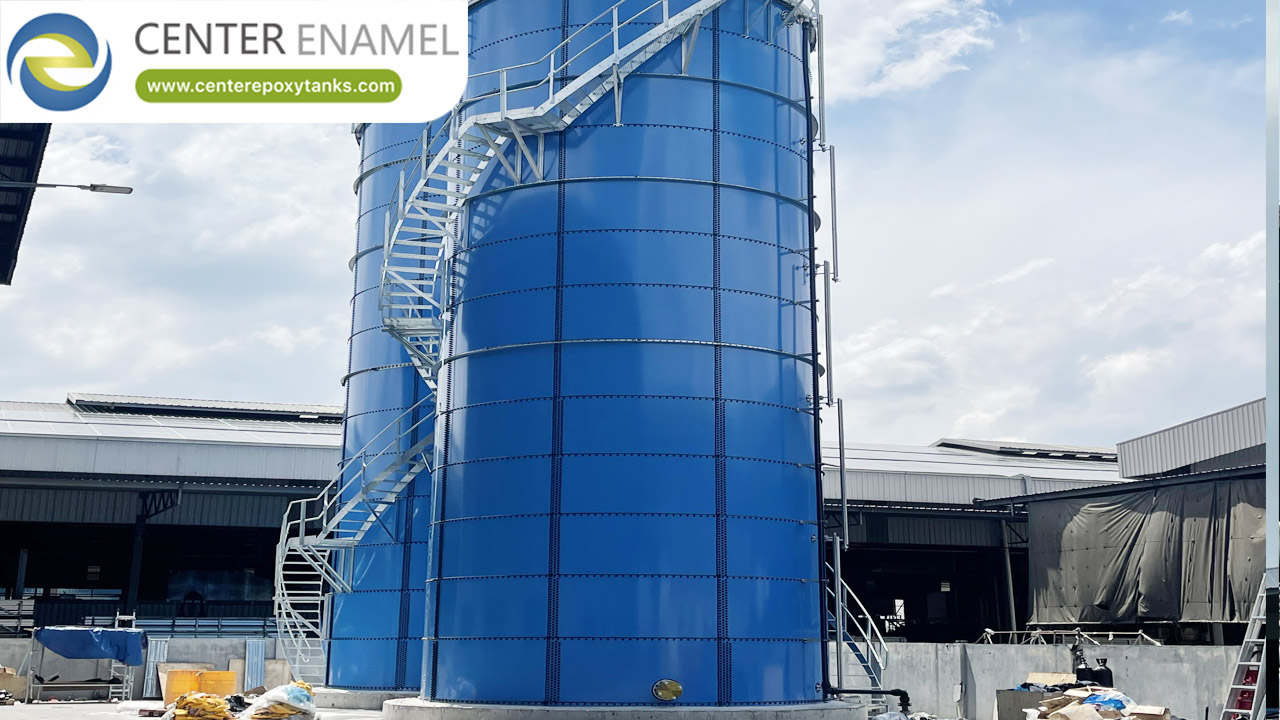
Epoxy coated bolted tanks have emerged as the industry choice for modern poultry waste management. These systems offer a modular, high-strength solution that provides the chemical inertness required to manage farm-scale wastewater treatment while ensuring strict compliance with environmental regulations.
The Engineering Challenge: Poultry Wastewater Dynamics
Poultry wastewater is characterized by high levels of biological oxygen demand (BOD) and chemical oxygen demand (COD). The management of this waste often involves Nitrification/Denitrification (A/O) processes, which create fluctuating pH levels and chemical atmospheres that are lethal to standard low-grade steel and porous to concrete.
Material Performance for Poultry Waste
Feature | Epoxy Coated Steel (FBE) | Reinforced Concrete | Field-Welded Steel |
Ammonia/Corrosion Resistance | High (Inert Barrier) | Low (Subject to Spalling) | Moderate |
Sanitation/Hygiene | Excellent (Non-porous) | Low (Biofilm Habitat) | Moderate |
Installation Speed | Fast (Modular) | Slow (Curing) | Moderate |
Lifecycle ROI | Highest | Low (Maintenance) | Low (Paint cycles) |
Why Epoxy Coated Tanks Are the Agricultural Standard
1. Superior Resistance to Aggressive Effluents
Poultry waste is inherently corrosive. Our factory-applied Fusion Bonded Epoxy (FBE) creates a continuous, chemically inert dielectric barrier. This prevents the "acid attack" that causes concrete to crumble and standard steel to pit, ensuring the structural longevity of your treatment facility.
2. Rapid Deployment & Scalability
Farm operations often need to expand quickly to keep pace with production changes. Our bolted steel design allows for rapid, "dry" construction—meaning no complex on-site welding or concrete pouring. This significantly reduces downtime and allows the system to be expanded as the facility's waste-handling needs grow.
3. Biofilm and Odor Management
In an industry where odor and sanitation are critical, the smooth, non-porous interior of an epoxy coated tank is a massive advantage. Unlike rough concrete surfaces that harbor bacteria and biofilm, our epoxy coating remains clean, facilitating easier sanitation and reducing the risk of unchecked biological growth.
4. Regulatory Compliance
Environmental agencies are increasingly strict regarding poultry waste discharge. Utilizing an engineered, certified storage system like ours ensures that your site meets international containment standards (such as AWWA D103), minimizing the risk of leaks and associated environmental liabilities.
Frequently Asked Questions (FAQ)
Q: Are these tanks resistant to the high ammonia levels in poultry manure?
A: Yes. The epoxy coating is specifically formulated to withstand the complex chemical profile of poultry wastewater, including high concentrations of ammonia, which would otherwise corrode standard steel or degrade concrete.
Q: How do these tanks handle the solids found in poultry wastewater?
A: The smooth surface of our epoxy-coated panels prevents the adhesion of solids. Furthermore, our tanks can be equipped with specialized mixing and aeration systems designed to keep solids in suspension, preventing accumulation at the bottom of the tank.
Q: Why is this better than a concrete lagoon or tank?
A: Concrete is porous and naturally susceptible to acidic corrosion from ammonia. Over time, this leads to structural cracking and environmental seepage. Epoxy coated steel is non-porous, chemically inert, and provides a much longer service life with significantly less maintenance.
Q: How long does the installation take?
A: Because the panels are pre-fabricated in a factory and assembled via bolting, construction is significantly faster than traditional concrete or field-welded alternatives. A typical tank can be assembled in a fraction of the time required for traditional civil works.
Q: Can this system be used for anaerobic digestion of poultry waste?
A: Absolutely. Epoxy coated bolted tanks are frequently used as the primary containment vessel for anaerobic digesters in the poultry industry, providing the necessary airtight environment to capture biogas while resisting the corrosive effects of the digestion process.
Are you currently planning an expansion for your poultry facility or looking to replace an aging, leaky containment lagoon? [Contact the Center Enamel engineering team] today for a technical proposal, capacity analysis, or custom design consultation tailored to your farm's wastewater profile.


