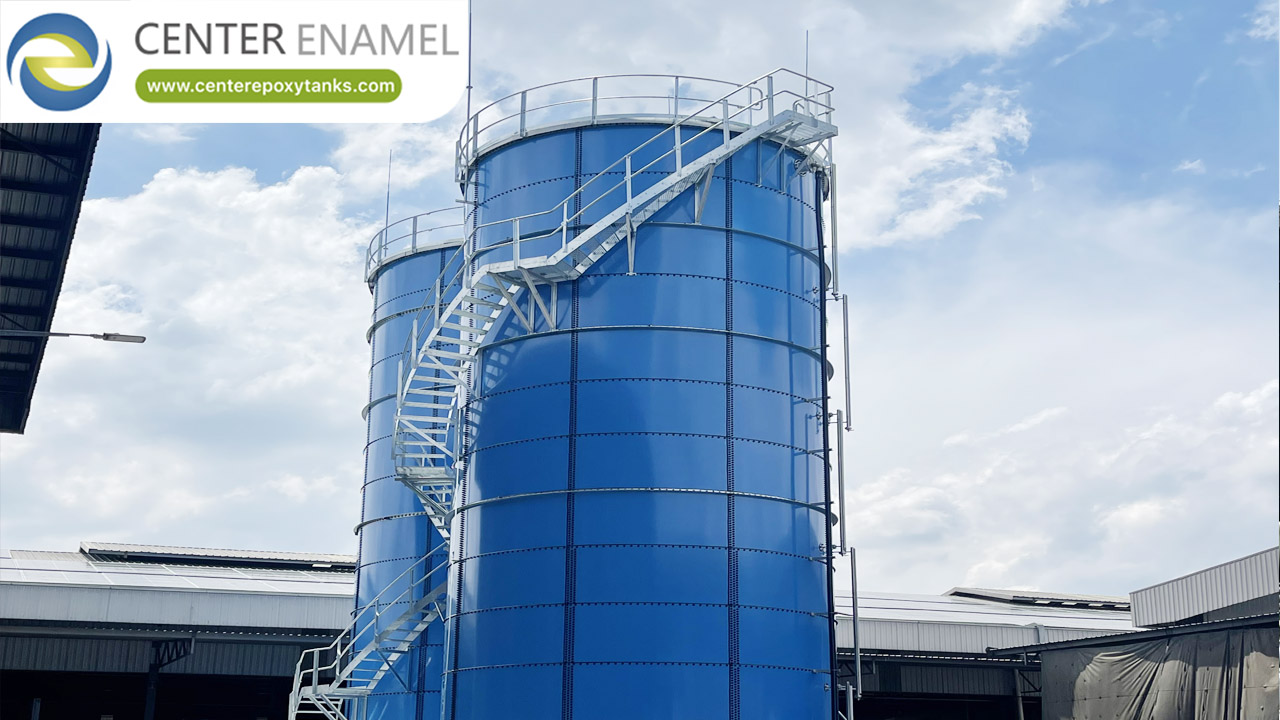
Epoxy Coated Tanks for Animal Waste Biogas Digesters: Engineering Renewable Energy and Corrosive Defense
As global agricultural enterprises transition toward sustainable, carbon-neutral operations, managing high-strength livestock manure and agricultural slurries has evolved from a costly waste disposal hurdle into a valuable bio-energy asset. Large-scale dairy, swine, and poultry facilities generate massive volumes of organic waste that, if left unmanaged, release severe greenhouse gas emissions and odor liabilities.
Converting this raw organic matter into clean biogas via anaerobic digestion (AD) requires containment infrastructure capable of withstanding extreme chemical aggression. To meet these demands, modern agricultural engineering has standardized on epoxy coated tanks for animal waste biogas digesters—specifically those engineered with advanced Fusion Bonded Epoxy (FBE) over high-tensile bolted steel structures.
The Harsh Chemical Environment of Animal Waste Digestion
Anaerobic digestion is a biological process where microorganisms break down complex organic matter in the absence of oxygen, producing a methane-rich biogas and a nutrient-rich digestate fertilizer. However, the interior environment of a livestock waste digester is exceptionally punishing:
Hydrogen Sulfide ($H_2S$) and Vapor Attack: Sulfur compounds present in animal manure convert into hydrogen sulfide gas during digestion. In the moist headspace above the slurry, H2S oxidizes to form sulfuric acid, which rapidly pits and destroys unprotected metal and untreated concrete ("concrete rot").
Volatile Fatty Acids (VFAs) and pH Fluctuations: Biological breakdown generates aggressive organic acids that create fluctuating acidic-to-alkaline cycles within the reactor slurry (ranging from pH 3 to 12).
Heavy Mechanical and Thermal Stress: Digesters require continuous internal mixing via heavy-duty agitators and thermal regulation (maintaining stable mesophilic at 35°C or thermophilic at 55°C conditions). Containment walls must absorb constant dynamic loading without structural fatigue.
Technical Superiority of Fusion Bonded Epoxy (FBE) Bolted Tanks
Epoxy-coated bolted steel tanks provide a superior engineering alternative to traditional civil construction through precise factory manufacturing and advanced polymer science:
Factory-Controlled Thermal Curing: High-tensile steel plates are grit-blasted to a uniform anchor profile, electrostatically coated with high-performance epoxy powder, and thermally cured in high-temperature ovens (around 150°C–200°C). This creates a permanent, thermoset cross-linked polymer matrix fused directly to the steel substrate.
100% Pinhole-Free Holiday Testing: Every coated panel undergoes rigorous high-voltage electrical holiday testing (exceeding 3000V specifications) prior to dispatch, ensuring absolute impermeability against moisture and corrosive agricultural chemicals.
Rapid Modular Installation: Shipped as pre-engineered panel kits, these tanks are assembled mechanically on-site using high-grade hardware and specialized elastomeric sealants. This eliminates prolonged civil construction and curing delays associated with concrete.
Data Table: Comprehensive Comparison of Biogas Digester Infrastructure
Technical Parameter | Bolted Fusion-Bonded Epoxy (FBE) Tanks | Cast-in-Place Concrete Basins | Unlined Welded Carbon Steel Tanks |
$H_2S$ & Acid Resistance | Superior; inert FBE matrix completely resists sulfuric acid, VFAs, and manure slurries | Poor; porous concrete suffers from "concrete rot" and acid spalling over time | Moderate to poor; unprotected steel is vulnerable to aggressive internal vapor corrosion |
Gas-Tight Integrity | High; precision-engineered bolted joints and gaskets maintain airtight pressure containment | Moderate; prone to micro-cracking and gas leakage through joints and porous walls | High initially, but vulnerable to corrosion-induced wall thinning and leaks |
Installation Speed | Rapid modular assembly completed in weeks with zero curing downtime | Slow civil construction requiring months of formwork, pouring, and 28-day curing | Slow field-erection requiring intensive welding and manual field coatings |
Volumetric Scalability & Relocation | High; modular design allows easy capacity expansion or complete asset relocation | Permanent monolithic structure; impossible to scale or relocate without total demolition | Rigid structure; expanding capacity requires complex field cutting and welding |
Frequently Asked Questions (FAQ)
Q: Why are epoxy coated tanks ideal for animal waste biogas digesters?
A: They combine the high structural strength of industrial steel with a thermally fused, chemically inert epoxy barrier. This specialized coating completely resists the corrosive impact of hydrogen sulfide ($H_2S$), volatile fatty acids, and fluctuating pH levels found in livestock manure slurries.
Q: How do fusion bonded epoxy (FBE) coatings prevent corrosion in high-sulfur gas headspaces?
A: The FBE thermal-curing process creates a dense, non-porous thermoset polymer film that completely seals the steel substrate away from moisture and sulfur gases, preventing acid-induced pitting and structural thinning.
Q: Can epoxy coated bolted steel digesters handle the dynamic loads of internal mixers and agitators?
A: Yes. High-grade FBE coatings feature exceptional impact resistance (rated up to 160 in-lbs under ASTM D2794 standards) and elasticity, allowing the coating to remain securely bonded to the steel even under the heavy mechanical stress of continuous stirred-tank reactor (CSTR) agitators.
Q: What international standards govern the manufacturing quality of these biogas digester tanks?
A: Premium epoxy-coated agricultural tanks are engineered and manufactured in strict compliance with globally recognized benchmarks, including AWWA D103-09, ISO 28765, and rigorous quality assurance protocols like high-voltage holiday testing.


